
MINNESOTA EMERGENCY — HOUSE EXPLOSION PUTS 2 HUNDRED FAMILIES AT RISK OF FIRE AND WINTER EVACUATION!
OWATONNA, Minnesota — November 28, 2026 — A powerful explosion shattered the Thanksgiving holiday in a southern Minnesota neighborhood, destroying a residential property, damaging surrounding homes and temporarily disrupting electricity as emergency responders confronted an unusual disaster just as communities across the state prepared for the approaching winter.
Firefighters, police officers and emergency medical personnel responded to the incident Thursday afternoon after residents reported a tremendous blast that could be heard well beyond the immediate neighborhood. The force of the explosion scattered debris across nearby properties, prompting authorities to assess the condition of surrounding buildings and public utilities.
According to the Owatonna Fire Department, the incident occurred near the 100 block of 20th Street Northwest. The Minnesota State Fire Marshal's Office has taken responsibility for investigating the cause of the explosion, while local agencies have been assessing its immediate consequences.
The incident has brought renewed attention to three interconnected threats that can emerge following a residential explosion: secondary fires, interruptions to electricity and heating, and the possibility that damaged properties may become temporarily uninhabitable. In Minnesota, where maintaining reliable indoor heating becomes increasingly important as winter approaches, those concerns carry particular significance.
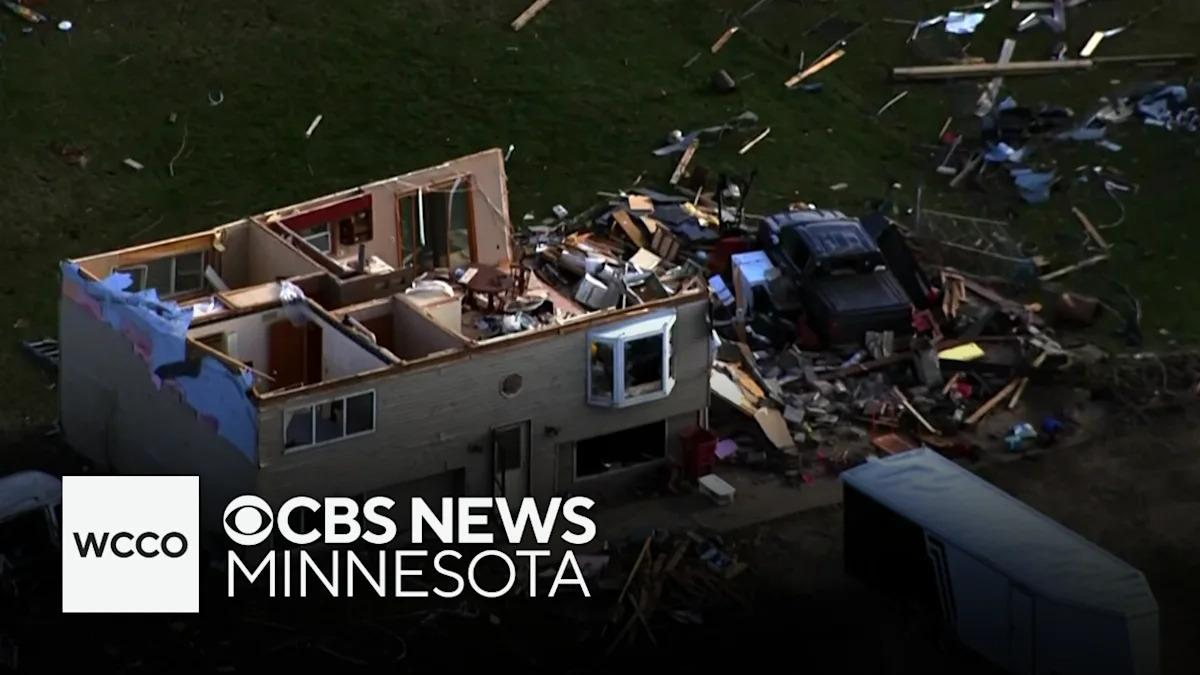
Thanksgiving afternoon is ordinarily a time when American residential neighborhoods become quieter as families gather inside their homes. In Owatonna, a community in southern Minnesota's Steele County, that familiar atmosphere was abruptly interrupted by an explosion shortly before 5 p.m. on Thursday.
The blast was reported at approximately 4:36 p.m., bringing firefighters and police officers to a residential property that had been almost entirely reduced to debris. The destruction extended beyond the original building, with officials subsequently confirming varying degrees of damage to neighboring homes. Electricity was also temporarily interrupted in the surrounding area.
The force of the explosion attracted attention from residents living several miles away. Regional television coverage included accounts of people who heard the blast from nearly 12 miles from the damaged property, illustrating how widely the sound traveled across the area.
For emergency personnel, the immediate responsibility involved more than responding to the destroyed house. Authorities also needed to evaluate whether adjacent structures, electrical equipment and residential utility connections presented additional dangers. Firefighters had to consider the possibility of secondary emergencies while police officers managed access to the neighborhood.
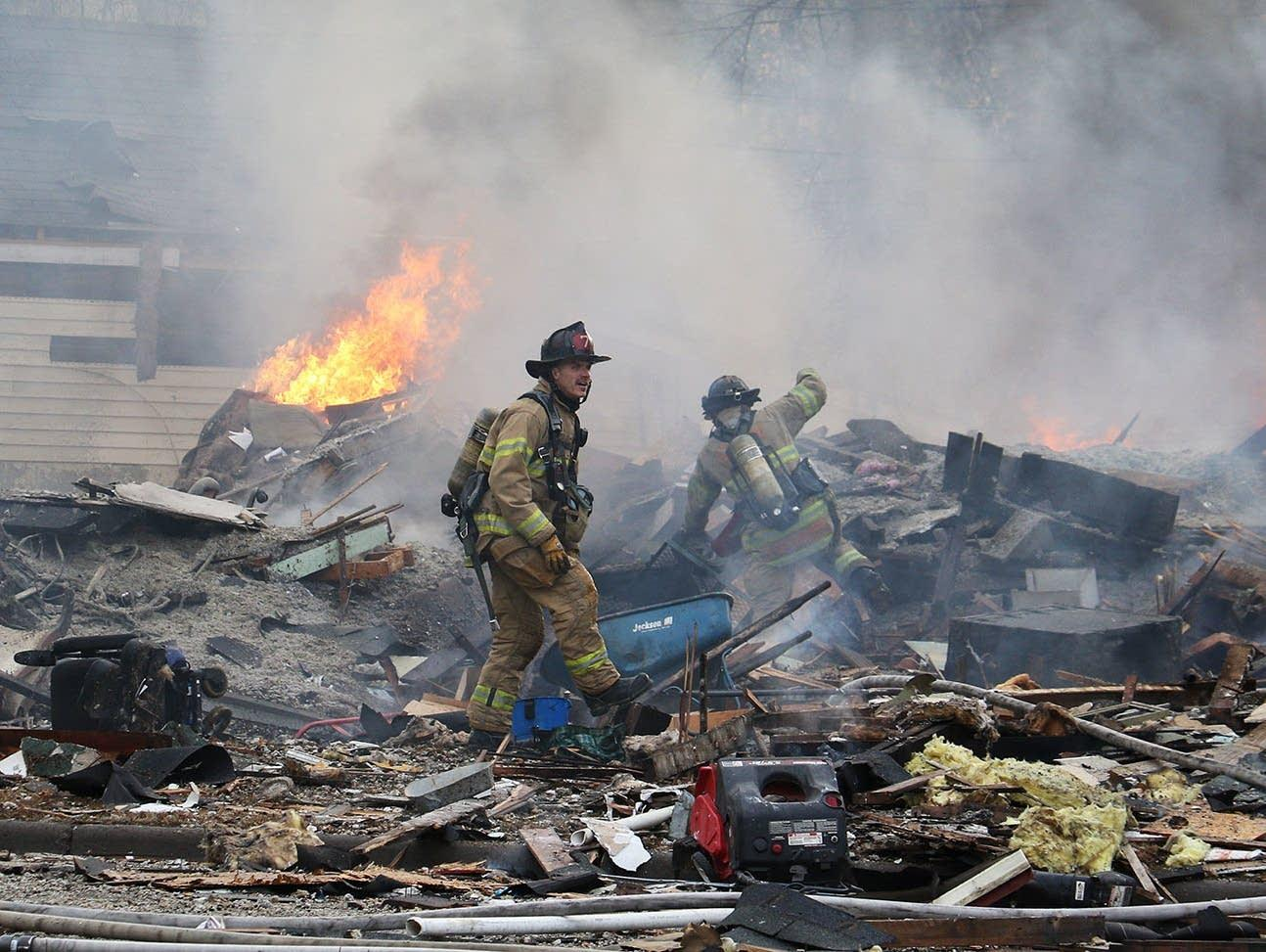
The incident quickly became a regional news story, raising questions about how a single residential explosion could create such extensive disruption and what investigators might discover among the remains of the property.
Among those affected was neighboring resident Shwan Gaines, who was away from home when the explosion occurred. According to CBS Minnesota, Gaines received notifications from his home security system and discovered that his camera had recorded the incident. Debris could be seen traveling across his property during the brief recording.
His immediate concern was whether his neighbor had survived. Gaines contacted the homeowner and discovered that the man had been elsewhere when the explosion destroyed his residence. Another neighborhood resident, Tim Willett, reported feeling the force of the blast approximately five blocks away.
Their accounts provided an indication of the incident's intensity while also highlighting the uncertainty experienced by residents trying to establish what had happened. A destructive event lasting only seconds had left a homeowner confronting the loss of his property and neighbors questioning the condition of their own residences.
The Thanksgiving incident therefore created two separate challenges: responding to the immediate emergency and determining how safely the surrounding neighborhood could return to normal activity.
Residential explosions can create hazards extending beyond the property where the original incident occurred. Depending on the circumstances, damaged electrical equipment, compromised utility connections and unstable building materials may require additional attention from emergency responders.
The danger to neighboring residences depends on several factors, including their distance from the original incident, the extent of physical damage and whether potentially hazardous utilities remain active. Buildings close to an explosion may experience broken windows, damaged exterior walls or other structural problems requiring assessment.
Emergency personnel must also determine whether any remaining fire could spread to adjacent structures. Residential neighborhoods present particular challenges because homes, garages, vehicles and other structures may be located relatively close together.
An interruption to electricity during late November carries particular significance in Minnesota. Residential heating systems frequently depend on electrical components, even when their primary energy source is natural gas or propane.
Modern furnaces may require electricity to operate thermostats, circulation fans and electronic controls. A household can therefore lose heating during a power outage even when its natural gas service remains available. Electric heating systems face a more direct interruption whenever electricity is unavailable.
In homes with damaged windows or compromised exterior walls, indoor temperatures may decline more rapidly because the building can no longer retain heat efficiently. Extended exposure to cold can also create risks for plumbing, household equipment and residents who are particularly sensitive to low temperatures.
Local news reports confirmed that the Thanksgiving explosion caused a temporary electrical interruption in the surrounding neighborhood. Owatonna Public Utilities participated in the emergency response alongside other municipal and regional agencies.
Restoring electricity following a residential emergency may require more than reconnecting affected customers. Utility personnel must determine whether damaged equipment can safely return to service and whether individual properties require additional inspections.
The duration of such interruptions depends on the condition of electrical infrastructure and the complexity of any necessary repairs. A localized outage may be resolved relatively quickly, while significant infrastructure damage could require a longer recovery period.
There has been no official announcement establishing that 100 Owatonna households remained without electricity or heating for several days.
The loss of residential heating during cold weather can become a public health concern, particularly for older adults, young children and individuals with underlying medical conditions. Households without access to alternative accommodation may experience increasing difficulties if indoor temperatures continue declining.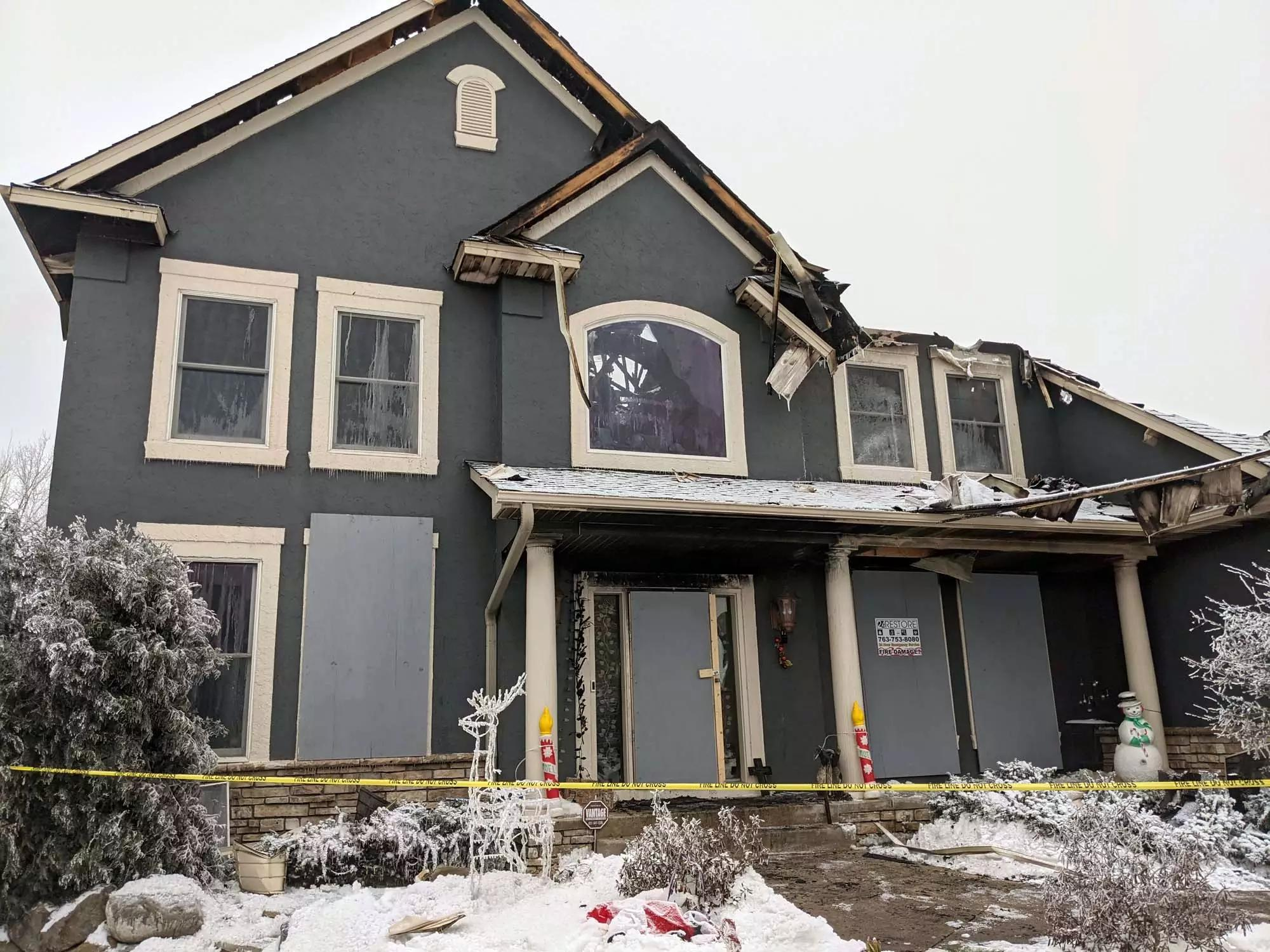
Another concern involves the use of inappropriate emergency heating equipment. Residents attempting to maintain comfortable indoor temperatures sometimes turn to devices designed for outdoor use, creating additional dangers unrelated to the original power failure.
The Minnesota Department of Health similarly emphasizes the importance of properly maintained heating equipment and carbon monoxide detection. Minnesota law requires an operational carbon monoxide alarm within 10 feet of rooms legally used for sleeping.
For residents experiencing an extended power interruption, moving temporarily to a location with reliable electricity and heating may be necessary if indoor conditions become unsafe.
These considerations demonstrate why restoring residential utilities following an explosion involves both engineering and public health responsibilities. Electricity and heating must be restored without introducing additional dangers to households already affected by the original emergency.
For the homeowner whose property was destroyed, the Thanksgiving explosion has consequences extending far beyond the immediate emergency response. The loss of a residence can mean finding alternative accommodation, replacing personal belongings and beginning an extensive insurance and reconstruction process.
Neighboring residents may face different circumstances depending on the condition of their properties. Some buildings could require relatively minor repairs, while others may need professional assessments before they can safely accommodate their occupants.
Damage involving windows, walls, electrical connections or heating equipment may create difficulties even when a building remains structurally standing. During colder weather, a residence with compromised insulation or damaged heating equipment may become unsuitable for normal occupancy.
Temporary displacement can also create significant financial pressure. Families may need to pay for accommodation, transportation, meals and essential household items while continuing to meet existing financial obligations.
Homeowners insurance may cover certain additional living expenses following a covered loss, although the availability and extent of that coverage depend on individual policies and the circumstances surrounding the damage.
The practical challenges can become more complicated during the holiday season, when families may already have travel arrangements, visitors and additional expenses. Finding suitable temporary accommodation for children, older relatives or pets may require considerable coordination.
The scale and unusual nature of the Owatonna incident required assistance from several regional organizations. Local firefighters and police officers were joined by personnel from neighboring communities and agencies responsible for medical services, transportation and utility infrastructure.
According to local reporting, participating organizations included the Medford and Waseca fire departments, the Minnesota State Patrol, Mayo Clinic Ambulance and Owatonna Public Utilities. The coordinated response allowed personnel with different responsibilities to address the emergency simultaneously.
Firefighters were responsible for controlling the immediate scene and evaluating fire-related hazards. Police officers managed public access and supported the investigation. Medical personnel remained available in case injuries were discovered, while utility workers addressed infrastructure concerns.
Such coordination is particularly important following residential explosions because several potential hazards can exist at the same location. Damage to a building may affect its electrical connections, while debris and unstable structural components can complicate access for emergency personnel.
Authorities also have to consider the safety of residents attempting to return to damaged properties. Emergency restrictions may remain necessary until the immediate hazards have been addressed, even if the original fire has been extinguished.
One of the central questions following the destruction of the Owatonna home concerns whether a residential fuel system played a role in the incident. Natural gas and propane are widely used throughout Minnesota for household heating, cooking and other domestic purposes.
Although these energy sources are used safely in millions of American homes, damaged equipment or compromised fuel connections can create dangerous conditions requiring immediate professional attention.
A complete investigation may involve examining utility records, household equipment, witness statements and available surveillance footage. Specialists may also evaluate whether the damage resulted from conditions developing inside the property or from another source.
For residents concerned about their own properties, the distinction remains important. A confirmed problem involving shared utility infrastructure could have different implications from an isolated malfunction inside one residence.
Determining the cause of a destructive residential explosion can involve a lengthy examination of physical evidence. Investigators may need to reconstruct events preceding the incident while working with a property that has sustained extensive damage.
Investigators must also distinguish between the original cause of an incident and damage that occurred afterward. Equipment found damaged among the debris may have contributed to the emergency, or it may simply have been destroyed during the explosion.
Establishing that distinction is particularly important when questions of legal responsibility or insurance coverage arise. A conclusion involving equipment failure could have different implications from one involving accidental damage, maintenance problems or another underlying circumstance.
The Minnesota State Fire Marshal's investigation will be central to answering these questions. Its findings could also help determine whether the incident reveals a broader safety concern requiring attention from property owners, utility companies or regulatory authorities.
The available information presents a serious but more localized emergency than some descriptions circulating online suggest. One residence was completely destroyed, adjacent properties sustained varying levels of damage, and the neighborhood experienced a temporary electrical outage.
Despite the extraordinary destruction, authorities reported no injuries. The homeowner was away from the property when the explosion occurred, a circumstance that prevented the incident from producing an even greater human tragedy.
The City of Owatonna subsequently indicated that there was no continuing hazard or threat to the general public. The statement provided reassurance to surrounding residents while the State Fire Marshal continued examining the circumstances behind the explosion.
No official report has established that hundreds of homes face imminent fires or that 100 households are experiencing days without electricity and heating. The cause of the explosion remains under investigation.
For the families affected by the Thanksgiving incident, the next important developments will involve property inspections, insurance assessments and the findings of state investigators. Those findings may ultimately establish whether the destruction resulted from an isolated residential emergency or a preventable problem requiring broader safety measures.
The explosion lasted only moments, but its consequences could remain with the affected homeowner and neighboring residents for months. As Minnesota enters the winter season, determining what caused the disaster remains central to both the neighborhood's recovery and the prevention of similar incidents elsewhere.
Comments (0)
Loading comments...
May You Like

AMERICAN FLAG BURNING IN CHICAGO — FREE SPEECH OR DISRESPECT TOWARD AMERICA?

1,000+ MILITARY FAMILY RECORDS BREACHED, 200+ MILITARY SITES AT RISK!

Latest Posts









Popular Posts




