
NAACP Calls for Trump's Removal Under 25th Amendment, Raising Questions About Presidential Fitness and Constitutional Power
October 22, 2026 | Washington, D.C. | U.S. Politics
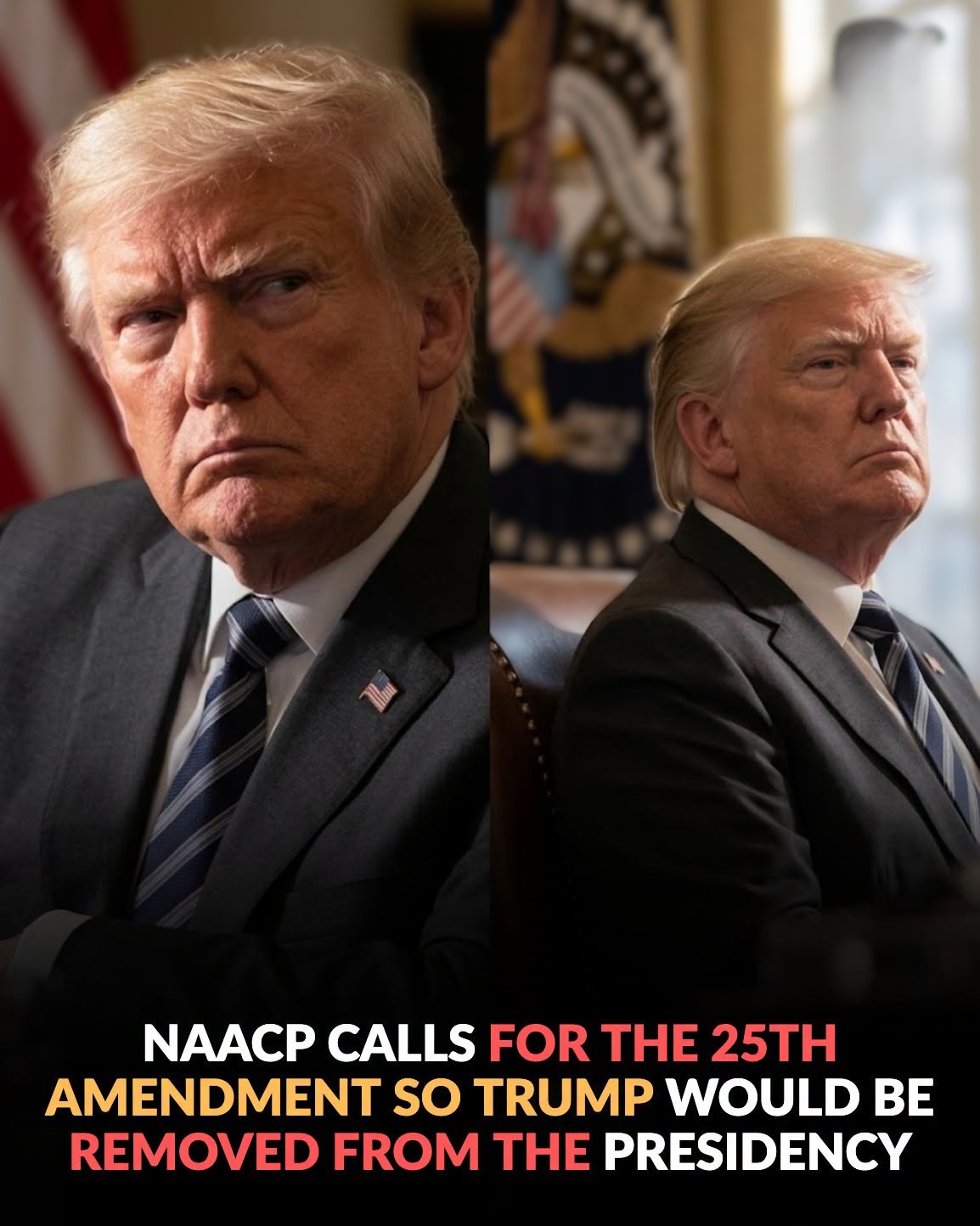
The NAACP has formally called for President Donald Trump to be removed from office through the 25th Amendment, citing concerns about his judgment, public statements, and ability to fulfill presidential responsibilities.
The extraordinary demand, originally announced on April 7, 2026, marked the first time in the civil rights organization's history that it had advocated invoking the constitutional provision.
The statement has attracted renewed attention amid continuing political controversy surrounding Trump's leadership, military decisions, and increasingly confrontational relationship with critics of his administration.
The organization argued that presidential conduct had become a matter of national security rather than ordinary partisan disagreement, urging senior government officials to consider their constitutional responsibilities.
Why the NAACP Wants Trump Removed

NAACP President and CEO Derrick Johnson expressed serious concerns about Trump's leadership, arguing that the president's rhetoric and behavior threatened public confidence and international stability.
The organization pointed specifically to Trump's controversial statements concerning Iran, including threats against civilian infrastructure that prompted widespread criticism from political leaders and international observers.
Its leadership argued that presidential decision-making carries extraordinary consequences, particularly when military operations and international conflicts place millions of civilian lives at potential risk.
The NAACP consequently urged Vice President JD Vance and Cabinet members to examine whether constitutional intervention was necessary to protect the country and preserve governmental stability.
Its statement did not constitute a medical diagnosis or legal determination that Trump was incapacitated. Instead, it represented the organization's formal political and constitutional position.
Understanding the 25th Amendment
The 25th Amendment, ratified in 1967, establishes procedures governing presidential succession and situations in which a president becomes unable to perform the duties of office.
Under Section Four, the vice president and a majority of principal executive department officers can formally declare that the president cannot discharge presidential responsibilities.
That declaration would transfer presidential powers to the vice president as acting president, although the sitting president retains the constitutional right to challenge the determination.
If the president contests the declaration and the vice president and Cabinet maintain their position, Congress must resolve the dispute under the amendment's prescribed procedures.
Maintaining the transfer against presidential opposition ultimately requires a two-thirds majority in both the House of Representatives and Senate, making involuntary removal exceptionally difficult.
White House Rejects Questions About Trump's Fitness

The White House has rejected suggestions that Trump is incapable of performing his duties, portraying criticism of his fitness as politically motivated opposition to his administration.
Administration spokesperson Davis Ingle previously defended the president's work, emphasizing his electoral mandate and continued commitment to implementing the political agenda supported by Republican voters.
Constitutional experts have also emphasized that controversial statements or unpopular political decisions do not automatically establish the presidential inability contemplated by the 25th Amendment.
Calls for Constitutional Intervention Continue
The NAACP is not alone in demanding constitutional intervention. Government accountability organization Common Cause issued a separate April statement urging Vance and Cabinet officials to act.
More recently, political commentator Lawrence O'Donnell renewed calls for invoking the amendment following Trump's public remarks, demonstrating that the controversy continues beyond the original April announcement.
Despite these demands, there has been no confirmed activation of Section Four against Trump, and public advocacy alone cannot initiate the constitutional transfer of presidential authority.
The debate ultimately raises fundamental questions about presidential accountability, constitutional safeguards, and the responsibilities of senior officials when serious concerns emerge about a sitting president's leadership.
Comments (0)
Loading comments...
May You Like

WWE BRONSON REED—STAR COLLAPSES AT COMPANY EVENT, FATAL DRUG REACTION SUSPECTEDs!!

WWE BRONSON REED DEAD AT 38, STIMULANTS DETECTED, $10M INSURANCE PAYOUT FROZEN!

WWE BRONSON REED DEAD AT 38, STIMULANTS DETECTED, $11M INSURANCE PAYOUT FROZEN!










Popular Posts


