Nancy Mace Sparks Backlash With Comments on Postpartum Mental Illness and Child Custody
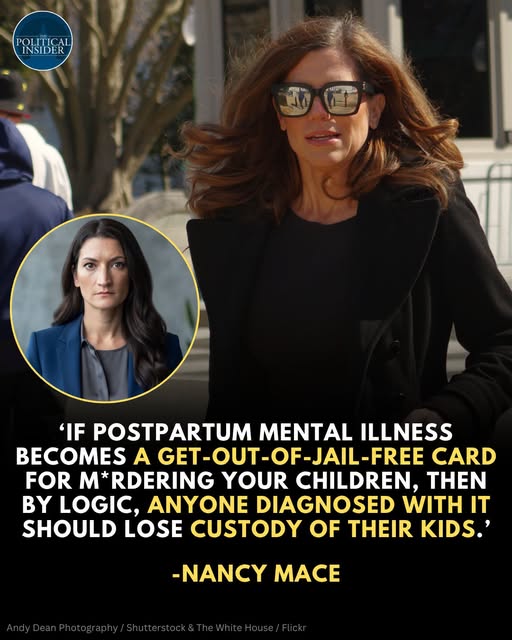
WASHINGTON — September 5, 2026 — Republican Rep. Nancy Mace has drawn widespread attention after arguing that people diagnosed with postpartum mental illness should lose custody of their children if the condition is used as a defense against murdering them.
Mace made the remarks while discussing the highly publicized case of Lindsay Clancy, a Massachusetts mother accused of killing her three children in January 2023. In a post shared this week, Mace wrote that if postpartum mental illness becomes a “get-out-of-jail-free card” for killing children, then, by her logic, anyone diagnosed with the condition should lose custody of their children. She also said she had confronted the issue during an appearance on Piers Morgan Uncensored.
The comments came amid the Clancy trial
Mace's remarks followed the conclusion of Clancy's murder trial, which ended Friday with a mistrial after jurors failed to reach a unanimous verdict.
Clancy, 36, is accused of strangling her three children — 5-year-old Cora, 3-year-old Dawson and 8-month-old Callan — in their Duxbury, Massachusetts, home in January 2023. She then attempted suicide by jumping from a second-story window, leaving her paralyzed.
The central issue at trial was Clancy's mental state at the time of the killings.
Her defense argued that she was suffering from postpartum psychosis, a severe psychiatric condition, and therefore should be found not guilty by reason of insanity. Defense attorneys presented evidence about her deteriorating mental health, psychiatric treatment and medications in the months before the killings.
Prosecutors presented a different picture, arguing that Clancy deliberately planned the killings and understood what she was doing. They pointed to evidence including her actions before the murders and argued that she was suffering from depression but was not psychotic.
Jury deadlock leaves case unresolved
After approximately six weeks of testimony and seven days of deliberations, the jury remained divided. Judge William Sullivan ultimately declared a mistrial on September 4.
The decision does not end the criminal case. Prosecutors could seek a new trial, while the court is scheduled to consider the next steps later this month.
The case has also become a national discussion about postpartum mental illness, criminal responsibility and the ability of the healthcare system to identify women experiencing severe psychiatric symptoms after childbirth.
Mace calls for accountability
Mace has taken an uncompromising position on the case, saying Clancy should face severe punishment rather than receive legal protection because of her mental health.
In another statement, Mace said that Clancy “deserves the death penalty” and argued that her children should not be treated as secondary to debates over her mental state.
Her comments have generated strong reactions online, with critics arguing that postpartum mental illness is not synonymous with violent behavior and that broad custody restrictions could discourage mothers from seeking psychiatric treatment.
Supporters of Mace, meanwhile, say the criminal justice system must distinguish between explaining a person's behavior and excusing it.
A broader debate over postpartum psychosis
Medical experts describe postpartum psychosis as a rare but potentially severe psychiatric emergency. The Clancy case has brought renewed attention to how such conditions are diagnosed, treated and considered in criminal proceedings.
The legal question remains highly specific to each individual case: a diagnosis alone does not automatically determine criminal responsibility or custody. In Clancy's case, the jury was tasked with determining whether her mental illness prevented her from understanding the wrongfulness of her actions.
With the mistrial leaving the case unresolved, the debate surrounding Clancy — and Mace's forceful comments about postpartum mental illness — is likely to continue.
Bottom line: Mace's statement was made in direct response to the Clancy case and its insanity defense. It represents Mace's political argument, not a change in U.S. law requiring people diagnosed with postpartum mental illness to automatically lose custody of their children.
Comments (0)
Loading comments...
May You Like

Russian Drone Strikes Kyiv Bridge as German Chancellor Arrives in Ukraine

Barack Obama Draws Attention With New Literary Podcast

Obama Steps Back Into the Political Spotlight as Democrats Target Trump’s