
NATO WARNING: 1,100 RUSSIAN MISSILES HIT UKRAINE, BUT 3 DEVICES REPORTED IN POLAND!
Three Russian Aerial Objects Crash in Poland, Raising New Questions About NATO's Eastern Air Defenses
WARSAW — November 21, 2026 — Poland is investigating three Russian aerial objects that entered its airspace during a large overnight assault on Ukraine, an incident that has intensified security concerns along NATO's eastern frontier. Polish officials say the objects included a confirmed Kh-101 cruise missile, another suspected missile and a jet-powered drone.
The objects came down at three locations in southeastern Poland on November 20, while European troops were conducting military exercises nearby.
Prime Minister Donald Tusk described the incursions as a possible deliberate provocation, citing their timing during exercises involving Ukraine's European partners. NATO Secretary General Mark Rutte called the incident dangerous and expressed solidarity with Poland.
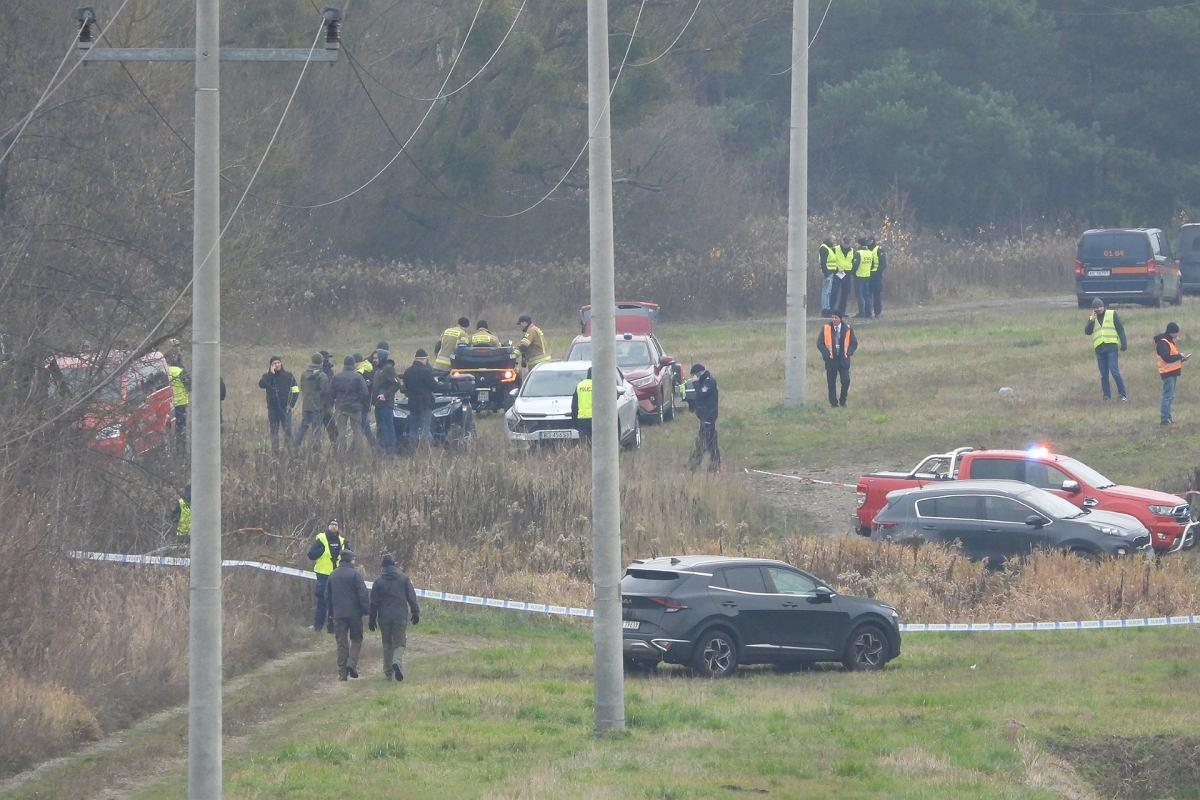
Polish authorities identified three locations associated with the airspace violations.
The first was near Nowy Lipowiec, in Biłgoraj County, southeastern Poland.
The second was near Rudnik nad Sanem, farther west.
The third was near Mołodycz, in Jarosław County.
All three locations are in the country's southeastern region, not far from Ukraine.
Interior Minister Marcin Kierwiński said investigators were examining the sites.
The incidents occurred during Russia's overnight missile and drone attacks on Ukraine.
Polish officials said the objects originated from Russia.
They also emphasized that the available evidence did not indicate a continuing aerial threat after the incident.
The discovery nevertheless raised questions about the protection of NATO territory.
The most clearly identified object was a Russian Kh-101 cruise missile.
Polish Defense Minister Władysław Kosiniak-Kamysz confirmed its presence near Nowy Lipowiec.
The Kh-101 is an air-launched cruise missile used by Russian forces against targets in Ukraine.
It is designed to travel long distances and follow a programmed flight path.
The missile's appearance on Polish territory was significant because Poland is a NATO member.
A Russian missile entering its airspace creates a security incident even when no one is injured.
The investigation must determine the missile's exact trajectory, its condition at impact and the circumstances that brought it across the border.
Those findings could help clarify whether the incursion resulted from navigation, interception or deliberate targeting.
The second object was reported near Rudnik nad Sanem.
Polish officials initially described it as likely another missile.
Its precise type remained less certain in early reporting.
Authorities examined the location after reports of an explosion or impact near railway infrastructure.
Infrastructure Minister Dariusz Klimczak said a railway traffic controller heard a loud bang.
Investigators did not find visible damage to the railway at the time of the initial inspection.
The distinction between a missile and a drone matters because the two systems have different capabilities and flight characteristics.
Identifying the object could help investigators reconstruct the route it followed.
It could also clarify whether it was part of the same Russian strike package that produced the other incursions.
The third object came down near Mołodycz.
Polish defense officials described it as most likely a jet-powered drone.
That assessment differed from the identification of the Kh-101 missile near Nowy Lipowiec.
Jet-powered drones can travel at higher speeds than many propeller-driven systems.
Their performance can create additional challenges for air-defense tracking and interception.
The Institute for the Study of War reported that Polish officials considered the object possibly a Geran-5 drone.
That identification was not presented as a final forensic conclusion.
Investigators still needed to examine the wreckage and available radar information.
The reported presence of a jet-powered drone highlighted the range of aerial threats approaching NATO territory during Russia's campaign against Ukraine.
The first reports emerged before authorities had completed their examinations.
Residents described loud sounds and possible explosions.
Emergency services responded to suspected impact locations.
At that stage, officials were still determining what had fallen.
That uncertainty led to early descriptions of unknown or unidentified objects.
As investigators gathered information, the picture became clearer.
Poland's defense minister identified a Kh-101 missile and described the other two objects as a likely missile and drone.
The remaining uncertainty concerned their exact technical characteristics, flight paths and intended destinations.
The incident therefore shifted from an unidentified-object report to a documented Russian airspace violation.
The central question became why the objects entered Poland.
Residents near Nowy Lipowiec reported hearing an explosion early on November 20.
Video shared online showed a bright flash and an apparent blast in the distance.
Polish news agency PAP also documented the response near the suspected impact area.
Emergency vehicles and military helicopters were deployed.
Police restricted access while investigators examined the site.
The Associated Press reported that nearby schools suspended classes as a precaution.
The suspected impact location was in a rural area approximately 60 kilometers from the Ukrainian border.
The incident caused alarm among residents but did not produce reported casualties.
Authorities began examining the wreckage to determine what had happened and whether any additional danger remained.
Residents in the affected region described hearing unfamiliar sounds before the reported impacts.
One woman told Reuters she heard a whistling noise followed by a muffled thud while preparing her children for school.
Another local official described black smoke rising after an object fell.
Those accounts helped establish what people experienced on the ground.
They did not independently identify the objects.
That required military and forensic assessment.
Witness reports are particularly useful for establishing approximate timing and locations.
However, sound and appearance alone cannot reliably distinguish between different missile and drone types.
Investigators therefore combined local reports with radar records and examination of debris.
The Polish military described the overnight Russian assault on Ukraine as one of the largest since the full-scale invasion began.
Operational commander General Ireneusz Nowak said the attack involved 26 Kalibr cruise missiles and 72 Kh-101 missiles.
He also cited 503 drones, including 202 jet-powered systems.
Those figures describe the reported strike package directed at Ukraine, not the number of weapons that entered Poland.
Polish forces tracked 11 aerial objects considered capable of threatening the country's airspace.
Three were confirmed to have crossed the border.
That distinction is important.
Hundreds of Russian weapons were involved in the wider assault, but only three were identified as violating Polish airspace during the incident.
Polish commanders said their forces identified 11 aerial objects that could potentially enter national airspace.
That figure was an early warning assessment, not a count of confirmed violations.
Military radar operators must track threats before knowing whether they will cross a border.
An object approaching from Ukraine may change course, continue toward another target or fall short of Polish territory.
The military must evaluate those possibilities while preparing an appropriate response.
Of the 11 objects considered potentially threatening, three crossed into Poland, according to Polish officials.
The distinction helps explain why NATO aircraft and air-defense systems were activated even though the number of confirmed incursions was smaller.
The response was based on the potential threat as it developed.
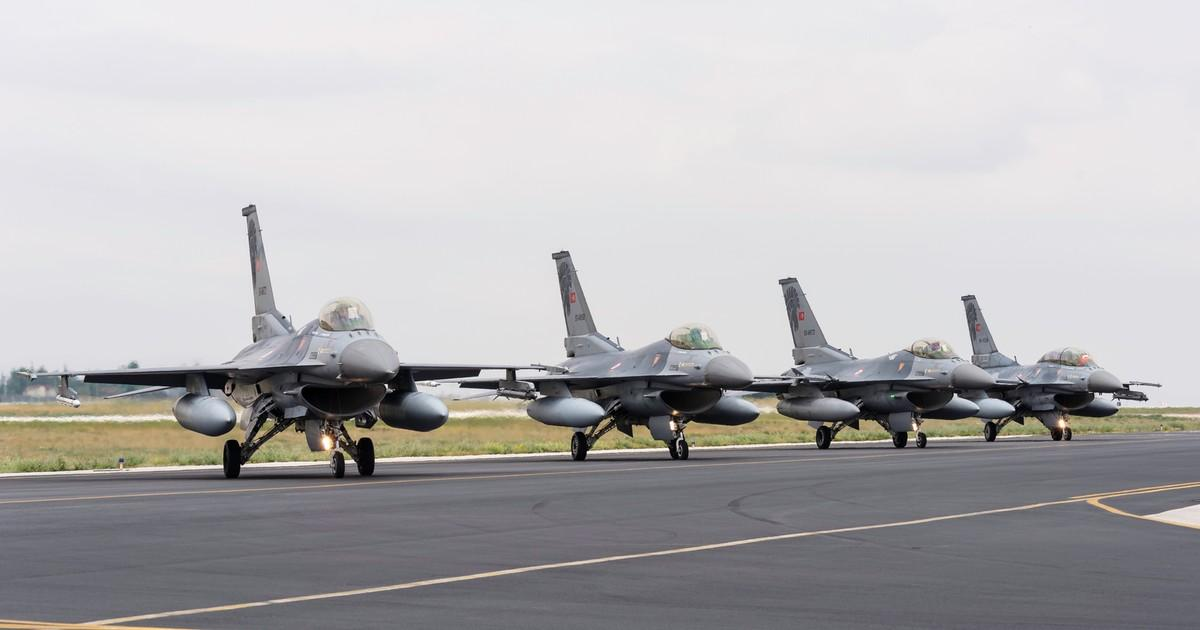
Polish and allied aircraft were activated during the incident.
The Institute for the Study of War reported that Polish, Swedish and Dutch aircraft responded while NATO ground-based radar systems tracked the threat.
These measures formed part of the alliance's air-defense arrangements along its eastern frontier.
Aircraft can be scrambled to identify, monitor or intercept approaching objects.
However, activation does not necessarily mean weapons will be fired.
Commanders must assess the object's trajectory, location and the consequences of interception.
The presence of allied aircraft demonstrated that the incident was not treated solely as a local Polish emergency.
It involved NATO's wider system for monitoring and protecting allied airspace.
One of the most important questions concerns why the objects were allowed to fall on Polish territory.
According to the Institute for the Study of War, Polish operational commander General Ireneusz Nowak said the conditions did not meet Poland's rules of engagement.
Those rules govern when military personnel may use force against an aerial threat.
Interception is not always the safest option.
Destroying a missile or drone in flight can scatter debris over populated areas.
Commanders must consider the object's projected impact location and the risk created by defensive action.
The public reporting does not establish every decision made by individual radar operators or pilots.
Polish authorities have not released a complete account of the engagement calculations.
The incident has nevertheless raised questions about whether current procedures provide sufficient protection.
Destroying an incoming object does not make its material disappear.
A missile or drone may break into multiple pieces after interception.
Those fragments can fall over roads, houses, farmland or other infrastructure.
Some components may retain hazardous material.
The risk is particularly important when an object is already approaching an unpopulated area.
Military commanders may conclude that interception creates a greater immediate danger than allowing the object to continue.
That calculation depends on information available at the time.
It does not establish that every decision was correct.
In the November 20 incident, all three objects came down without reported casualties.
Poland's investigation may help clarify the circumstances behind the response.
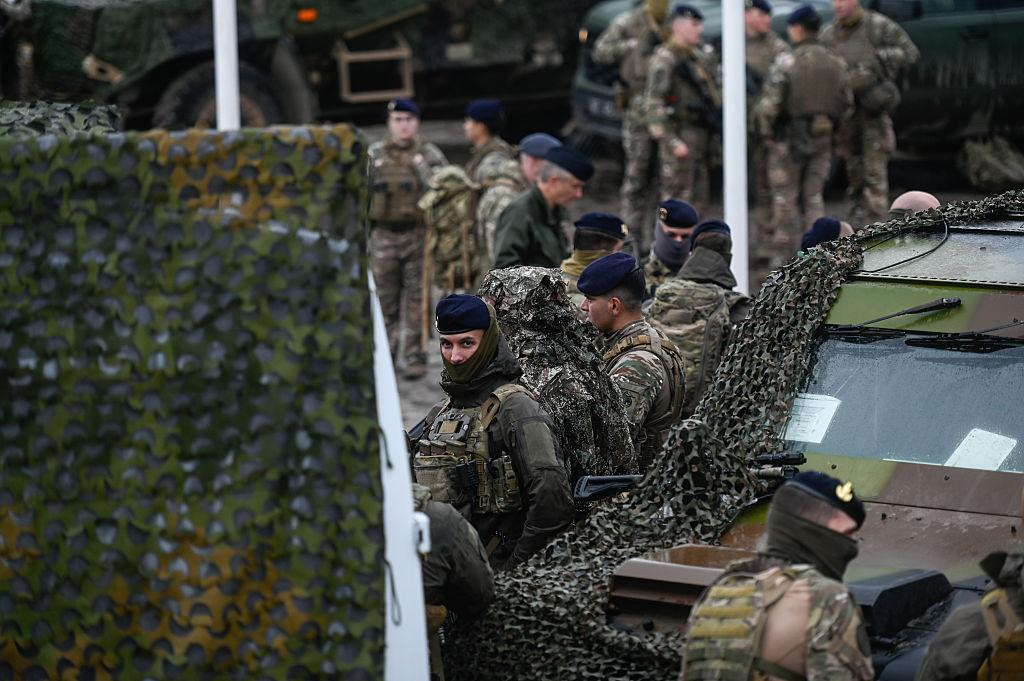
The airspace violations occurred while European countries were conducting a major military exercise in Poland.
The exercise, known as Koalicja, involved forces from 11 European countries.
The Associated Press reported that approximately 2,800 troops participated in a two-week training program.
The exercise was intended to test plans for a possible multinational mission in Ukraine after a future ceasefire or peace agreement.
It was led by France and Britain.
Participating troops practiced deployment, command coordination, anti-drone defense and other operational tasks.
The exercise was not a NATO combat operation in Ukraine.
It was part of planning by European countries seeking to prepare for potential future security arrangements.
Polish officials said the timing of the Russian objects' arrival was unlikely to be coincidental.
The incident occurred as senior European defense officials were visiting the exercise area.
Representatives from France, Britain and Baltic countries were among those involved.
Polish Prime Minister Donald Tusk suggested that the airspace violations might have been deliberate.
Defense Minister Kosiniak-Kamysz also described the episode as a provocation.
Their interpretation focused on the relationship between the Russian strike and the European military gathering.
However, the exact intent behind the objects' flight paths had not been established through a completed investigation.
The timing was significant evidence for officials assessing the incident, but it did not independently prove the purpose of every object.
The Kh-101 missile came down near Nowy Lipowiec, approximately 60 kilometers from the Ukrainian border.
The Associated Press placed the location about 75 kilometers from the military exercise.
Other objects fell near Rudnik nad Sanem and Mołodycz.
The distances matter because the incidents occurred in a region supporting military and logistical activity related to Ukraine.
Poland has played an important role in transporting assistance to its eastern neighbor.
The proximity of Russian weapons to Polish territory therefore raises concerns extending beyond the individual impact locations.
That question requires evidence concerning the objects' trajectories and targeting.
The incident also affected operations at Rzeszow airport in southeastern Poland.
Polish Infrastructure Minister Dariusz Klimczak said air traffic controllers were evacuated during the emergency.
Rzeszow is a significant regional transport center.
Its airport has also played a logistical role in international support for Ukraine.
An airspace threat near such infrastructure can require precautionary measures even without a confirmed strike against the facility.
Evacuating personnel does not mean the airport was hit.
The reporting did not establish damage to the airport from the three objects.
The disruption nevertheless demonstrated how an aerial incursion can affect civilian operations beyond the immediate crash sites.
Officials also examined a possible impact near railway infrastructure at Rudnik nad Sanem.
A railway traffic controller reportedly heard a loud explosion.
Investigators inspected the area for damage.
The initial examination did not identify visible damage to the railway.
That finding was important because transport networks in southeastern Poland support civilian and commercial activity as well as regional logistics.
A strike against railway infrastructure could have broader consequences.
However, the available reporting did not establish that a railway was deliberately targeted.
The investigation focused on identifying the object and reconstructing its arrival.
The absence of visible damage also helped officials assess the immediate consequences.
The Polish incident occurred during a much larger Russian attack against Ukraine.
Russian missiles and drones struck targets across Ukrainian territory.
The Associated Press reported that the attacks killed three people and injured nine.
Bridges and transport infrastructure were among the damaged facilities.
Those consequences provide important context for the Polish airspace violations.
The weapons entering Poland were associated with a broader military operation that caused casualties in Ukraine.
The humanitarian impact of the attack was therefore much greater than the consequences recorded on Polish territory.
For Polish officials, the concern was that weapons used in the neighboring war had crossed into NATO territory.
That development created additional security and diplomatic risks.
Poland is a member of the North Atlantic Treaty Organization.
Its eastern border is part of the alliance's frontier with the region affected by Russia's war in Ukraine.
Poland has increased defense spending and invested in military modernization.
It also hosts allied forces and infrastructure.
An unauthorized Russian military object entering Polish airspace therefore affects more than Poland's national security.
It raises questions about the alliance's collective air-defense arrangements.
NATO members coordinate surveillance, aircraft deployments and other defensive measures.
The November 20 incident tested those systems during a period of intense military activity in Ukraine.
The alliance's response is significant because it must protect member territory while avoiding unintended escalation.
NATO's Article 5 establishes the principle of collective defense.
It states that an armed attack against one member is considered an attack against all members.
However, not every airspace violation automatically constitutes an armed attack.
The circumstances, consequences and intentions of an incident matter.
NATO members must assess the available evidence and determine the appropriate response.
A missile entering allied territory can produce diplomatic protests, military consultations and defensive adjustments without automatically leading to collective military action.
In the November 20 case, Poland condemned the incursions and sought additional support for its eastern defenses.
The reporting reviewed did not establish that NATO had invoked Article 5.
The immediate response focused on investigation, military readiness and allied consultations.
NATO Secretary General Mark Rutte described the incident as dangerous.
He expressed solidarity with Poland and planned to visit Warsaw.
His response emphasized the alliance's concern about Russian objects entering a member state's airspace.
Polish officials also said they would seek stronger NATO support for the eastern flank.
The discussions could include air-defense capabilities, surveillance and coordination.
However, the reporting did not establish that a specific new deployment had already been approved.
Statements of solidarity and decisions to provide additional military resources are separate developments.
The outcome of consultations will determine whether the incident produces changes in NATO's posture.
Prime Minister Donald Tusk said the Russian origin of the objects was clear.
He also suggested that the incident might have been intentional.
His assessment was influenced by the timing of the incursions during the European military exercise.
Tusk discussed the situation with NATO officials and European leaders.
His comments reflected the Polish government's interpretation of the security implications.
They were not presented as the conclusion of a completed forensic investigation.
The distinction matters because identifying the origin of a weapon is different from establishing the reason it followed a particular route.
Poland's investigation must still examine the available technical evidence.
Reuters reported that the Russian embassy in Warsaw did not immediately respond to a request for comment following the incident.
That left the Polish government's account as the principal official explanation available in the initial reporting.
The absence of an immediate response should not be treated as an admission of intent.
Nor does it invalidate the physical evidence that Polish authorities said they had recovered.
Investigators can identify weapons through components, markings and other technical characteristics.
Determining why those weapons crossed the border is a separate question.
Any subsequent Russian explanation would need to be evaluated against the evidence and radar information.
At the time of the initial reports, that broader assessment remained incomplete.
Polish authorities began examining the three impact locations after the November 20 incidents.
Military investigators and prosecutors were involved in establishing the circumstances.
The investigation includes identifying the objects, determining their condition and reconstructing their flight paths.
Wreckage may contain information about manufacturing, propulsion and guidance systems.
Radar records can help establish where the objects traveled before crossing the border.
Investigators may also examine whether the weapons were armed and whether their explosive components functioned.
The findings could help determine whether the incursions resulted from an intentional course or another explanation.
The Kh-101 identification provides a significant technical detail.
Unlike an unidentified fragment, a recognizable cruise missile can be associated with a known Russian weapons system.
That helps investigators understand the object's likely capabilities and possible flight characteristics.
However, identifying the missile model does not reveal its intended target.
A cruise missile can change direction during flight.
Its final location may not correspond to the coordinates originally programmed into its guidance system.
Investigators would need additional information to determine whether the missile was intended to strike Poland.
The Polish government's assessment of possible provocation is therefore important, but the technical investigation remains necessary.
Poland's eastern frontier presents substantial air-defense challenges.
Missiles and drones can approach from different directions and at different altitudes.
Some fly low enough to complicate radar detection.
Others may change course or follow indirect routes.
Defenders must identify threats, assess their trajectories and decide whether to engage.
The decisions often must be made within minutes.
The November 20 incident demonstrated the difficulty of distinguishing objects that might enter Polish airspace from those remaining over Ukraine.
Polish forces tracked 11 potentially threatening objects, of which three crossed the border.
That process required continuous assessment during a much larger Russian attack.
Russia's use of large numbers of drones has altered the demands placed on regional air-defense systems.
Drones may be less expensive than the missiles used to intercept them.
They can also be launched in large numbers to complicate defensive operations.
Jet-powered drones introduce additional challenges because of their speed.
The reported presence of such a drone among the objects entering Poland illustrates the diversity of threats facing NATO's eastern members.
Defending against them requires more than fighter aircraft.
Radar systems, electronic warfare, ground-based defenses and coordination between countries all play roles.
The November 20 incident has renewed attention to how those capabilities work together.
This was not the first incident involving Russian military objects entering NATO territory during the war.
Poland and other countries on the alliance's eastern flank have reported earlier drone incursions.
In September 2025, Poland reported that 19 Russian drones entered its airspace during an overnight attack.
Some were shot down by Polish and allied forces.
That incident prompted international concern about the possibility of escalation.
The November 2026 violations occurred against that background.
They reinforced questions about whether repeated incursions reflect navigation failures, deliberate pressure or a combination of circumstances.
Each incident requires separate assessment.
The European military exercise continued to attract attention because of its purpose.
Participating countries were testing arrangements for a possible future mission in Ukraine.
The Associated Press reported that the proposed force would focus on helping rebuild Ukraine's military and supporting security after a settlement.
It was not intended to operate as a conventional peacekeeping force monitoring a ceasefire.
The exercise also tested coordination between different national militaries.
Russia has opposed the prospect of foreign troops operating in Ukraine.
That political and military context contributed to Polish officials' concern about the timing of the airspace violations.
The incident presents several questions for NATO planners.
One concerns whether radar coverage and early warning arrangements performed as intended.
Another concerns the speed of communication between Polish and allied forces.
A third involves the rules governing interception near populated areas.
The alliance may also examine whether additional air-defense assets would improve protection in southeastern Poland.
However, the reporting does not establish that NATO has approved specific changes in response.
Any new deployment would depend on consultations among member states.
The immediate objective is to understand the incident and reduce the risk of further violations.
An aerial incursion can become dangerous even when it causes no casualties.
Military forces may have only limited time to determine whether an object poses an immediate threat.
A decision to intercept can create risks on the ground.
Political leaders must then determine how to respond without escalating the confrontation unnecessarily.
The November 20 incident placed those questions before Poland and NATO.
The fact that the objects landed without reported injuries reduced the immediate human consequences.
It did not eliminate the wider security concern.
The most important unresolved issue is why the three objects entered Polish airspace.
Polish officials have suggested deliberate provocation.
The timing during European military exercises is central to that assessment.
Investigators still need to establish the full trajectories and technical circumstances.
The exact identification of the second object also requires clarification.
Authorities may examine whether the objects carried functioning warheads and how they came down.
NATO's response will depend partly on those findings.
For residents near the impact locations, the immediate question is whether another incident could occur.
For European governments, the broader issue is how to prevent the war in Ukraine from creating a direct confrontation with NATO.
The three objects were not unexplained machines discovered in a secret installation.
They were Russian aerial weapons that entered Poland during a large attack on Ukraine.
Polish officials identified one as a Kh-101 cruise missile, described another as a likely missile and assessed the third as probably a jet-powered drone.
They came down near Nowy Lipowiec, Rudnik nad Sanem and Mołodycz.
Comments (0)
Loading comments...
May You Like

IOWA MILITARY EMERGENCY: 51 TONS OF UNSTABLE SUSPECTED BIOWEAPON WASTE FOUND AFTER 5-TON BLAST!

PACIFICA PIER IN CALIFORNIA COLLAPSE REVEALS MASSIVE CRACK BENEATH THE OCEANs!

TRUMP CALLED FOR KIMMEL’S FIRING—THE FCC ACTED THE VERY NEXT DAY












