Nearly 40 Million Barrels Move Through Strait of Hormuz as U.S. and Iran Face Renewed Tensions
Nearly 40 Million Barrels Move Through Strait of Hormuz as U.S. and Iran Face Renewed Tensions
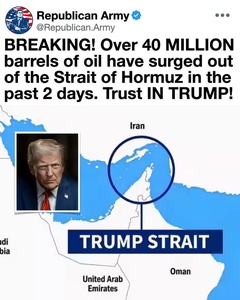
A U.S. official said nearly 40 million barrels of oil had transited the Strait of Hormuz during a recent 48-hour period, highlighting the strategic importance of the waterway amid continuing tensions with Iran.
The figure emerged as Washington and Tehran continued indirect discussions through mediators over the future of the Strait, nuclear negotiations and the broader conflict between the two countries.
According to the U.S. official, Washington believed it was in a strong position regarding the strategic waterway and therefore was not rushing to accept an agreement with Tehran.
The comments came shortly after Iran presented a proposal aimed at reopening the Strait of Hormuz within seven days, subject to several conditions involving the United States and the ongoing conflict.
President Donald Trump rejected the Iranian proposal, saying its conditions were unacceptable. Iranian officials, meanwhile, maintained that Tehran remained willing to pursue negotiations rather than resolve the dispute through military force.
The Strait of Hormuz is one of the world's most important energy routes, connecting the Persian Gulf with the Gulf of Oman and the wider global maritime trade network.
Before the conflict, roughly one-fifth of global oil shipments passed through the waterway, making disruptions there capable of affecting energy markets far beyond the Middle East.
Despite months of disruption, recent shipping data indicate that Gulf oil exports have recovered substantially. Kpler data cited by the Guardian showed regional crude exports reaching about 16.5 million barrels per day during September.
That figure was close to prewar levels for producers excluding Iran, although the routes used to move the oil have changed significantly since the conflict began.
Oil producers have increasingly relied on alternative pipelines, offshore transfers and ship-to-ship operations to move crude while reducing their dependence on the most vulnerable sections of the waterway.
Saudi Arabia has also increased exports through alternative routes and offshore transfers, while other Gulf producers have adjusted shipping strategies in response to continuing security risks.
Reuters reported that Saudi Aramco planned roughly 60 million barrels of crude exports through ship-to-ship transfers near Oman during September and October, helping maintain supplies to Asian buyers.
The recovery in crude flows, however, has not eliminated problems in refined petroleum markets. Diesel and other refined products remain considerably more disrupted than crude oil shipments.
That distinction has become increasingly important as consumers and businesses face elevated fuel costs despite evidence that some crude supplies are once again moving at near-normal rates.
Oil prices have also remained sensitive to developments surrounding the Strait. Reuters reported that Brent crude recently settled above $100 per barrel as geopolitical concerns and supply disruptions continued to influence traders.
The United States has continued using military assets to support maritime movements, while tensions remain over Iran's efforts to control access through the Strait.
Reuters reported that vessel traffic remains well below prewar levels, although some tankers have continued transporting commodities through the waterway under difficult and increasingly complex security conditions.
Trump has repeatedly highlighted American control over the Strait in public statements. In September, he posted an image on Truth Social labeling the waterway the “Trump Strait.”
The label is not an official geographic renaming. It appeared as part of Trump's social-media messaging while Washington and Tehran were publicly debating the future of the waterway.
Meanwhile, diplomatic channels remain active. Qatar has played a role in facilitating indirect discussions, although disagreements over sanctions, military activity and the reopening of Hormuz continue to complicate negotiations.
The nearly 40-million-barrel figure therefore provides one snapshot of renewed oil movement through the Strait, but it does not by itself mean that the waterway has returned completely to normal.
For global energy markets, the central question remains whether increased tanker movements and alternative export routes can continue despite security threats and the unresolved dispute between Washington and Tehran.


Comments (0)
Loading comments...
May You Like

FIGHT OVER OBAMA’S IRAN POLICY

Obama Steps Back Into the Political Spotlight as Democrats Target Trump’s Senate Majority

South Korea–Ukraine Rift Deepens Over North Korean POW Transfer as PURL Draws New Scrutiny