Netanyahu Accused of Ignoring Major Hamas Warning
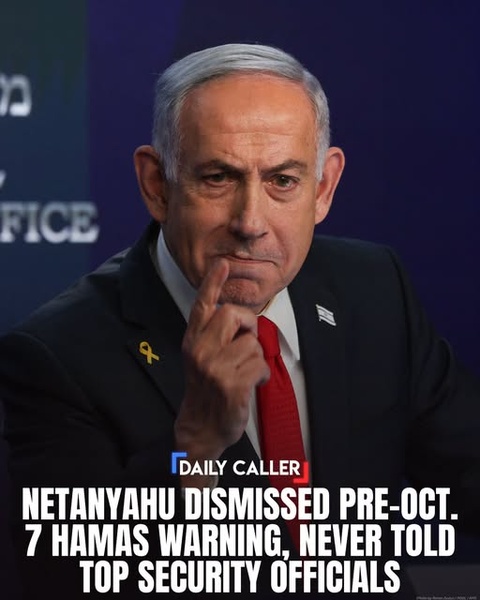
JERUSALEM — Israeli Prime Minister Benjamin Netanyahu is facing renewed scrutiny over the catastrophic security failures surrounding Hamas' October 7, 2023, attack after a new report alleged that he personally received an unusually specific warning from the president of the United Arab Emirates days before the assault — and did not pass the information to Israel's top security officials.
The allegation, published by Haaretz and based on reporting for a forthcoming book by journalists Shlomi Eldar and Ruth Yuval, claims that UAE President Sheikh Mohamed bin Zayed Al Nahyan warned Netanyahu during a roughly 45-minute conversation that Hamas leader Yahya Sinwar was preparing a major operation.
According to the report, Netanyahu responded calmly and did not alert the heads of the Shin Bet, Mossad or the Israel Defense Forces.
Netanyahu's office has categorically denied the allegation, saying the prime minister never received such a warning from the UAE and did not have the reported conversation with bin Zayed.
The explosive claim comes as Israel continues to debate who was responsible for the intelligence and security failures that allowed Hamas to launch the deadliest attack in Israel in decades.
A Warning That Allegedly Came Days Before October 7
According to the Haaretz report, the alleged warning was delivered approximately 10 days before the October 7 attack.
The UAE president was reportedly told by intermediaries that Sinwar was preparing a major Hamas operation. Bin Zayed allegedly took the information seriously enough to contact Netanyahu directly.
The reported conversation lasted about 45 minutes.
According to the account, bin Zayed warned that the planned operation could cause massive bloodshed, destabilize the region and threaten the broader diplomatic process represented by the Abraham Accords.
The report says Netanyahu did not respond with an emergency mobilization of Israel's security establishment and did not tell the country's senior security chiefs about the warning.
If independently established, such an account would raise significant questions about the government's handling of intelligence in the days immediately preceding October 7.
Netanyahu's Office Denies the Entire Account
The prime minister's office has strongly rejected the report.
In statements reported by Israeli and international media, Netanyahu's office said the allegation was false and denied that he received a warning from the UAE about an impending Hamas attack.
The office also disputed the claim that Netanyahu spoke with bin Zayed during the period described in the report.
That denial is crucial.
The reported UAE warning has not been established as a proven fact. At this stage, it remains an allegation based on the reporting of Haaretz and the forthcoming book, while Netanyahu's office explicitly disputes the account.
The UAE has not publicly confirmed the reported conversation.
The Timing Could Hardly Be More Politically Sensitive
The allegation arrives at a particularly consequential moment in Israeli politics.
The October 7 attack remains one of the most politically explosive issues surrounding Netanyahu's leadership.
Hamas-led militants crossed the Gaza border on October 7, 2023, killing about 1,200 people in Israel and taking 251 hostages, according to widely cited Israeli figures. The attack triggered Israel's subsequent military campaign in Gaza and a conflict that has profoundly reshaped the Middle East.
The question of whether the disaster could have been prevented — or at least mitigated — has remained unresolved.
Opposition politicians have repeatedly demanded an independent state commission of inquiry into the failures before and during the attack.
The new allegation has now added another potentially explosive element to that debate.
Opposition Leaders Demand Answers
Israeli opposition figures reacted furiously to the report.
Former military chief and opposition politician Gadi Eisenkot, former Prime Minister Naftali Bennett, Avigdor Lieberman and Yair Golan called for a thorough investigation.
In a joint statement, the opposition leaders demanded answers about what Netanyahu knew, when he knew it and what actions were taken afterward.
The political argument is increasingly focused on a basic question:
Was October 7 simply an intelligence failure — or were critical warnings available to senior political leaders but not acted upon?
That distinction could have enormous consequences for Netanyahu's political legacy.
This Was Not the Only Warning Before October 7
The new allegation should also be viewed within the larger history of warnings and intelligence failures surrounding the attack.
Israeli officials were already receiving indications of unusual Hamas activity before October 7.
According to reporting by The Times of Israel, an Israel Defense Forces memo describing suspicious Hamas activity reached an intelligence officer in Netanyahu's office approximately three hours before the attack, but the information was not passed on to the prime minister. Netanyahu's office later acknowledged receiving the memo while arguing that it had not been presented as an urgent warning.
Former Shin Bet chief Ronen Bar also said that security agencies were alerted during the early morning hours of October 7 to unusual Hamas preparations and possible offensive intentions.
In an affidavit cited by The Times of Israel, Bar said that instructions were issued to update the prime minister's military secretary.
These documented pre-attack warnings make the new UAE allegation particularly significant — but they also demonstrate why each claim needs to be distinguished carefully from established evidence.
Netanyahu Is Now Offering a Different Explanation
The latest controversy comes just days after Netanyahu himself accused Israel's security leadership of failing to wake him in the hours immediately before the attack.
Netanyahu has argued that senior defense officials believed Hamas was deterred and deliberately avoided waking him because they feared he would order a broad military mobilization that could provoke Hamas into attacking.
He has suggested that, had he been alerted, he would have ordered communities near Gaza to be warned and the military to prepare for an attack.
Netanyahu has increasingly emphasized the alleged failures of the security establishment as he defends his own record.
That argument has itself become controversial.
Critics accuse him of attempting to shift responsibility for the failures away from the political leadership.
The October 1 Meeting Is Also Under Scrutiny
Another piece of the prewar timeline has attracted attention.
According to reporting cited by The Times of Israel, Netanyahu held a security meeting on October 1, 2023, just six days before the Hamas assault.
Security officials reportedly discussed taking more aggressive action against Hamas, including targeting senior figures.
But Netanyahu did not order an immediate operation and instead emphasized avoiding escalation and maintaining relative calm around the holidays, according to leaked material cited in the report.
That history has become part of the broader dispute over whether Israel's leadership underestimated Hamas before October 7.
Netanyahu has repeatedly rejected the suggestion that he personally believed Hamas had been permanently deterred.
What Did Netanyahu Actually Know?
This is now the central question.
The new Haaretz allegation, if eventually corroborated, would suggest that Netanyahu received information from an influential regional leader identifying Sinwar and a planned major Hamas operation before October 7.
But the allegation must be separated from what is already established.
There were multiple intelligence warnings before the attack.
There were discussions among Israeli security officials about Hamas.
There were unusual signs of preparation.
And there were warnings in the early hours of October 7 itself.
What remains disputed is how those warnings were interpreted, who received them, what Netanyahu personally knew and what decisions were made in response.
Netanyahu Has Resisted a State Commission of Inquiry
The political fight over accountability has persisted for nearly three years.
Netanyahu has resisted calls for a state commission of inquiry into the October 7 failures, while arguing that such an investigation should not be conducted while Israel remains engaged in major security challenges.
Opponents argue that only an independent commission with broad investigative powers can establish responsibility across the political, military and intelligence establishments.
The latest allegations are likely to intensify those demands.
A Potentially Devastating Political Question
The most serious implication of the report is not simply whether Netanyahu received one warning.
It is whether a warning that allegedly identified Hamas, Sinwar and preparations for a major operation was available to Israel's political leadership and nevertheless failed to trigger a meaningful response.
If the allegation is disproven, Netanyahu's office will have strong grounds to argue that the latest controversy is another politically motivated attempt to rewrite the events of October 7.
If the account is eventually corroborated, however, it could fundamentally alter the debate over Netanyahu's responsibility.
For now, the evidence remains contested.
The headline claim that Netanyahu “dismissed” a pre-October 7 Hamas warning should therefore be treated as an allegation, not an established fact. His office denies receiving the reported UAE warning, while the journalists behind the report say their account is based on multiple sources, including senior officials.
But one thing is already clear: the question of what Netanyahu knew before October 7 is far from settled — and the political battle over responsibility for Israel's greatest security failure in decades is entering another explosive chapter.
Comments (0)
Loading comments...
May You Like

Shocking news from Ohio: an unexpected development ahead of Trump's rally

TRUMP HIT WITH 26 ARTICLES OF IMPEACHMENT

TRUMP’S OHIO WARNING UNDER THE SPOTLIGHT