
Netanyahu Loses Parliamentary Majority in Israel Election, but Political Battle Is Far From Over
November 7, 2026 | Israel Politics | Middle East
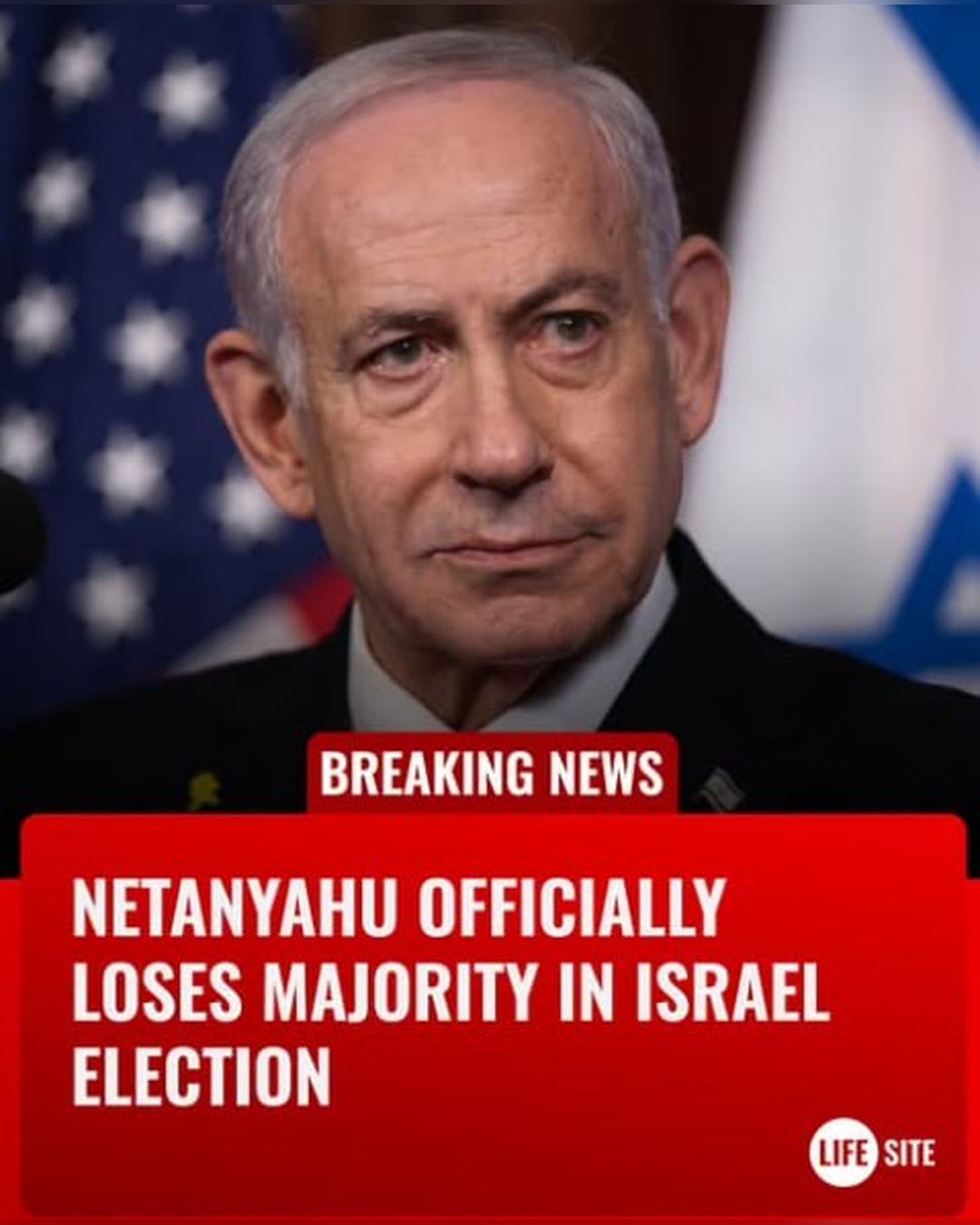
Israeli Prime Minister Benjamin Netanyahu has suffered a major political setback after his governing coalition failed to secure a parliamentary majority in the country's October 27 election.
The final results confirmed that Netanyahu's Likud party won 27 seats, making it the largest individual party in the 120-member Knesset, Israel's parliament.
However, Likud and its traditional political allies secured only 53 seats, eight short of the 61 required to command a parliamentary majority.
The opposition bloc led by former military chief Gadi Eisenkot secured 48 seats, while Arab-led parties won a record combined total of 19 seats.
The results represent a significant reversal for Netanyahu, whose outgoing governing coalition previously controlled 68 parliamentary seats and relied on support from religious and nationalist parties.
Despite losing its majority, Netanyahu's political career is not automatically over. Under Israel's parliamentary system, the incumbent government remains in office until a successor successfully forms a coalition.
This means Netanyahu can continue serving as caretaker prime minister while negotiations determine whether his opponents can assemble a viable alternative government.
Eisenkot has emerged as the leading challenger after his Yashar party won 21 seats, positioning him as a potential candidate to replace Netanyahu.
The opposition faces its own difficulties, however, because its parties disagree on several major issues, including military policy, religious legislation, and cooperation with Arab representatives.
The 19 seats held by Arab-led parties could become decisive. Their support may provide the parliamentary numbers needed to replace Netanyahu, although cooperation remains politically controversial.
During consultations with President Isaac Herzog, 67 lawmakers reportedly recommended Eisenkot as the candidate best positioned to form the next government, compared with 46 supporting Netanyahu.
The difference strengthened Eisenkot's position, but Herzog warned that political disagreements and mutual vetoes could prevent either candidate from assembling a stable coalition.
On November 7, Herzog was expected to select a candidate on Sunday to attempt to form a government, giving the political process another important turning point.
Under Israeli law, the candidate receiving the mandate initially has 28 days to assemble a coalition, with a possible additional 14-day extension.
If negotiations fail, another politician may receive an opportunity to form a government. Continued deadlock could eventually force Israel into another parliamentary election.
Netanyahu's political difficulties are also unfolding against the background of his ongoing corruption trial and criticism of his government's handling of national security.
His opponents have argued that the election represents public dissatisfaction with his leadership, particularly following the security failures surrounding Hamas's October 7, 2023, attack.
Netanyahu's supporters, meanwhile, maintain that his experience and security policies remain important during a period of regional conflict involving Iran and other Middle Eastern actors.
The political uncertainty could have significant consequences for Israel's foreign policy, especially its relationship with the United States and its approach toward Iran.
Even without a parliamentary majority, Netanyahu's caretaker government retains considerable executive authority, including the ability to make important security and foreign policy decisions.
This creates an unusual situation: Netanyahu has lost his parliamentary majority, but he has not yet surrendered the powers of the prime minister's office.
For Israel, the immediate challenge is determining whether a new coalition can emerge from deeply divided political factions or whether the country will face another election.
Comments (0)
Loading comments...
May You Like

NYC EMERGENCY—MILLIONS FACE EVACUATION RISKS, MACY'S GIANT BALLOONS REMOVED FOR SAFETY!

BANGCHAK REFINERY DISASTER IN THAILAND—120,000 BARRELS A DAY SHUT DOWN, U.S. OIL PRICES SURGE 10%!

FCC CLEARS SPACEX FOR ONE MILLION AI SATELLITES AS ASTRONOMERS SOUND ALARM

Latest Posts








Popular Posts




