
New Epstein Report Details Grave Allegations Against Trump — What the Claims Do and Don’t Establish
New Epstein Report Details Grave Allegations Against Trump — What the Claims Do and Don’t Establish
A newly released Democratic staff report presents allegations from multiple women, including Beatrice Keul. The White House rejects the claims; key questions remain unresolved.
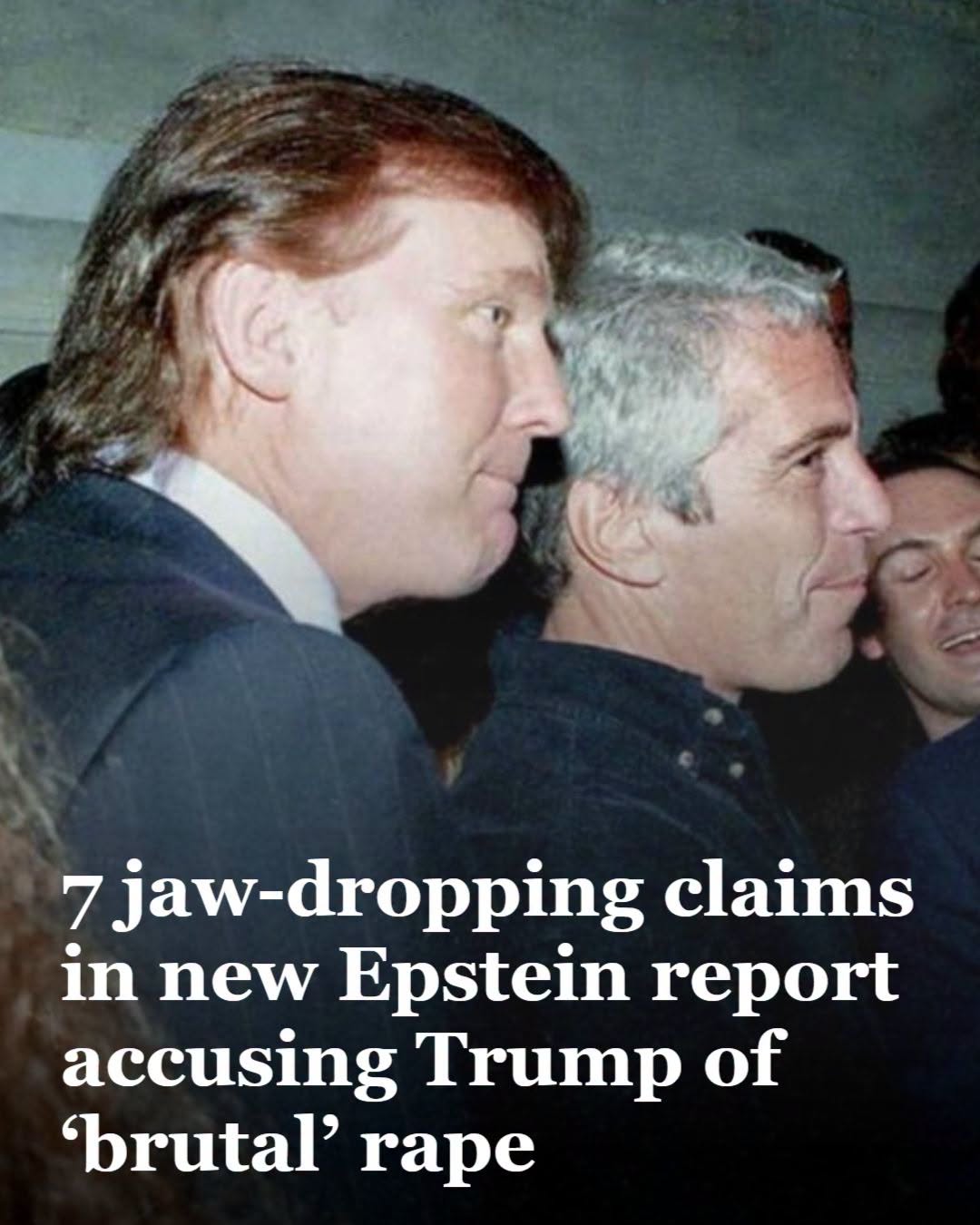
A new report released by Democratic staff on the House Judiciary Committee has renewed scrutiny of Donald Trump’s past relationship with Jeffrey Epstein. The document presents allegations from multiple women and argues that records held by federal authorities deserve further examination. The claims are serious, politically consequential and disputed.
A new account from Beatrice Keul
The report says Beatrice Keul, a former Miss Switzerland contestant and model, told committee staff that Trump raped her in a hotel suite in November 1993. Keul was 24 at the time, according to the account summarized in the report. The allegation is not a judicial finding, and Trump has not been charged in connection with this claim.
According to the report, Keul attended the Donald J. Trump American Dream Pageant and met Trump during an event at the Plaza Hotel. She said he offered to help her obtain a U.S. visa and gain admission to New York University. The report says Epstein later approached her and introduced himself as Trump’s close friend.
Keul alleges that a Trump representative later invited her upstairs, where the assault occurred. Her account, as summarized by committee Democrats, says she suffered bruising and bleeding and that Trump subsequently urged her to keep quiet. These details remain allegations attributed to Keul and are not independently established by a court.

Why the report is drawing attention
The committee Democrats’ staff report is broader than one allegation. It describes accounts involving 11 women and argues that some accounts, FBI records and other documents raise questions about the social and professional networks surrounding Trump, Epstein and people connected to the modeling industry in the 1990s.
Democrats say five women directly accused Trump of rape or sexual assault in Epstein’s company or presence. Other accounts described in the report concern encounters in which women said Epstein or Ghislaine Maxwell appeared to offer introductions to Trump or suggested he was aware of Epstein’s conduct. Each account has its own evidence, history and limitations.
Earlier allegations and the importance of context
Keul had previously spoken publicly about an unwanted sexual encounter with Trump in a 2024 interview. In that earlier account, she said Trump made advances and groped her, but that she managed to stop the encounter. The newer account presented to committee staff is more severe. Reporting on the new report notes that it does not publish full transcripts of the committee interviews or explain in detail why the accounts differ.
That discrepancy is relevant to evaluating the allegation, but it does not by itself resolve whether it is true or false. A careful assessment would require examining the full interview records, any contemporaneous documentation, corroborating witnesses and responses from the people accused.

Other women named in the report
The document also revisits claims previously made by Stacey Williams, who said Trump groped her in Trump Tower while Epstein was present. Jill Harth filed a lawsuit in 1997 alleging that Trump forcibly kissed and fondled her. Trump has denied wrongdoing. The existence of an allegation or lawsuit should not be confused with a criminal conviction.
The report discusses accounts given to the FBI by women identified using pseudonyms, including a woman who said she was 14 when Epstein introduced her to Trump at Mar-a-Lago. It also references claims by Maria Farmer and other women about encounters or introductions in Epstein’s orbit. Some of these accounts have not been tested in court, and the report itself distinguishes between different kinds of evidence.
The White House denies the allegations
White House spokeswoman Lauren Bis rejected the claims in the report, saying none of the allegations were true. The statement characterized the report as a partisan effort and repeated the administration’s position that Trump had been fully exonerated in connection with Epstein. The denial is an important part of the public record; it does not, on its own, independently prove or disprove each allegation.
Trump has repeatedly denied wrongdoing related to Epstein. The White House has also said Trump ended his association with Epstein after deciding he was a “creep.” The report from committee Democrats challenges that account and calls for further investigation. At this stage, readers should distinguish between the report’s conclusions, the underlying witness accounts and any independently verified findings.
A partisan staff report, not a court verdict
The report was released by Democrats on the House Judiciary Committee, led by Ranking Member Jamie Raskin. It is a staff report from one side of a sharply divided committee, not a finding adopted by the full House Judiciary Committee and not a verdict issued by a court. That distinction does not mean the claims should be ignored; it means the source and its institutional status should be made clear.
Democrats argue that the Justice Department has withheld records and mishandled inquiries into possible Epstein co-conspirators. They call for an independent special counsel and greater cooperation with state and foreign prosecutors. Those are the report’s allegations and recommendations, and they remain subject to political dispute and factual scrutiny.
What is known about the Epstein files
The Justice Department’s public Epstein Library contains material released under the Epstein Files Transparency Act. The department has warned that the collection includes documents submitted by members of the public, which can contain false or sensational claims, alongside investigative records. A name appearing in a file is not proof that the person committed a crime.
In January 2026, the Justice Department said it had published more than three million additional pages responsive to the law. It also said the production could include fake or falsely submitted material and described some allegations against Trump as unfounded. That official caveat is especially important when documents are circulated online without their surrounding context.
A report that quotes or summarizes a witness account is not the same thing as corroboration. Investigators and journalists would normally look for contemporaneous messages, travel records, photographs, medical records where relevant, testimony from other witnesses and consistency across separate accounts. Some records may be unavailable or redacted to protect victims’ privacy.
The separate E. Jean Carroll case
The report also references the civil case brought by writer E. Jean Carroll. In 2023, a civil jury found Trump liable for sexual abuse and defamation in Carroll’s case and awarded damages. That verdict is a separate legal matter from Keul’s allegation and should not be presented as proof of the newer claim.
The distinction matters because legal proceedings have different parties, evidence and findings. The Carroll verdict is a documented court outcome; Keul’s allegation, as presented in the newly released report, has not been adjudicated. Responsible reporting should preserve that difference rather than blending separate cases into a single conclusion.
What happens next
The report’s release is likely to intensify congressional debate over the Epstein files, document disclosure and whether additional investigations are warranted. Any further inquiry would need to establish which records exist, whether they were lawfully withheld and whether evidence supports specific allegations. Calls for investigation are not the same as a determination of guilt.
For Keul’s account, important unanswered questions include what additional corroborating material is available, whether witnesses can confirm parts of the timeline and whether the full interview record will be released. The public should be cautious about viral headlines that turn a report’s claims into established facts.
The central takeaway
The new report raises grave allegations and questions about the extent of Trump’s past connections to Epstein’s social circle. The White House denies the claims, and Keul’s allegation has not resulted in a criminal charge or court finding. The public record therefore contains both a detailed accusation and a firm denial, with important evidentiary questions still unresolved.
The most responsible way to follow the story is to read the report alongside the underlying records and independent coverage, note who is making each claim, and watch for verifiable evidence or formal findings. The seriousness of the allegation warrants scrutiny; the seriousness of the allegation also makes precision, fairness and care essential.
Comments (0)
Loading comments...
May You Like

WWE BRONSON REED DEAD AT 38, STIMULANTS DETECTED, $10M INSURANCE PAYOUT FROZEN!

EAST COAST STORM CRISIS—5 MILLION AT RISK OF BLACKOUTS, WATER, AND HEATING FAILURES!










Popular Posts



