
New Greenland Security Deal Expands U.S. Military Access — Here’s What Actually Changes
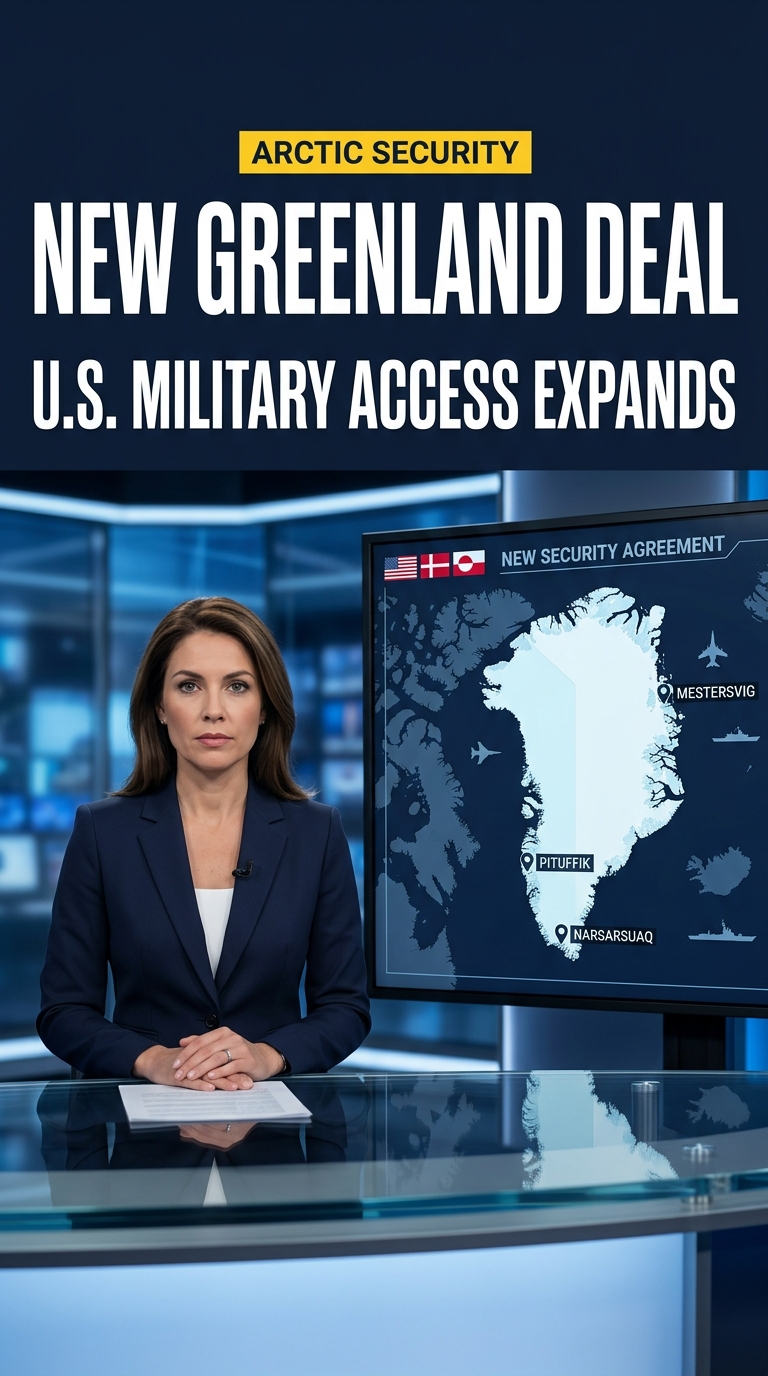
A new security agreement signed by the United States, Denmark and Greenland is set to reshape the American military footprint in the Arctic.
The agreement, signed in New York on September 22 by President Donald Trump, Danish Prime Minister Mette Frederiksen and Greenland Prime Minister Jens-Frederik Nielsen, expands the framework that has governed U.S. defense activity on Greenland for decades.
Its most visible change is geographic.
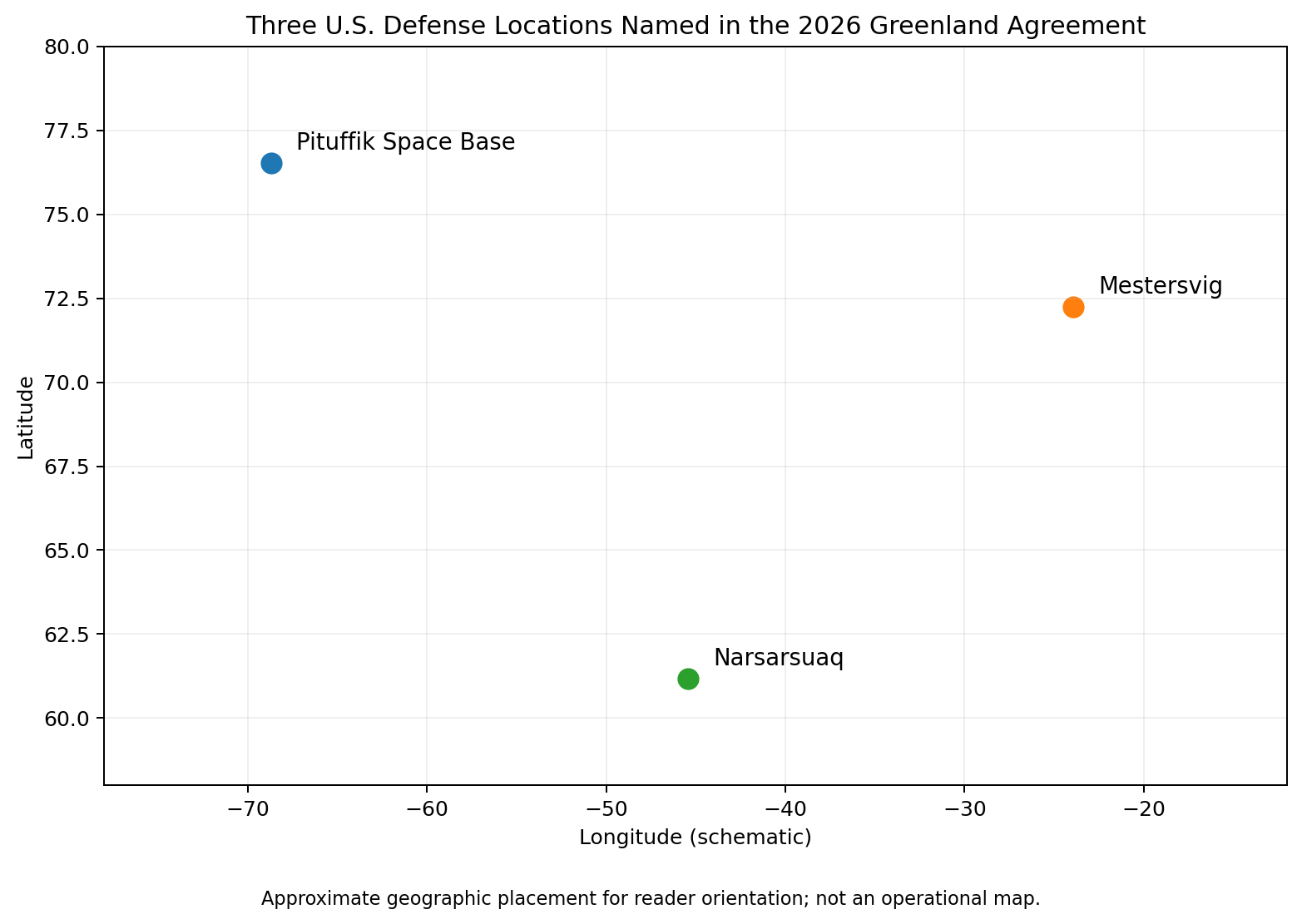
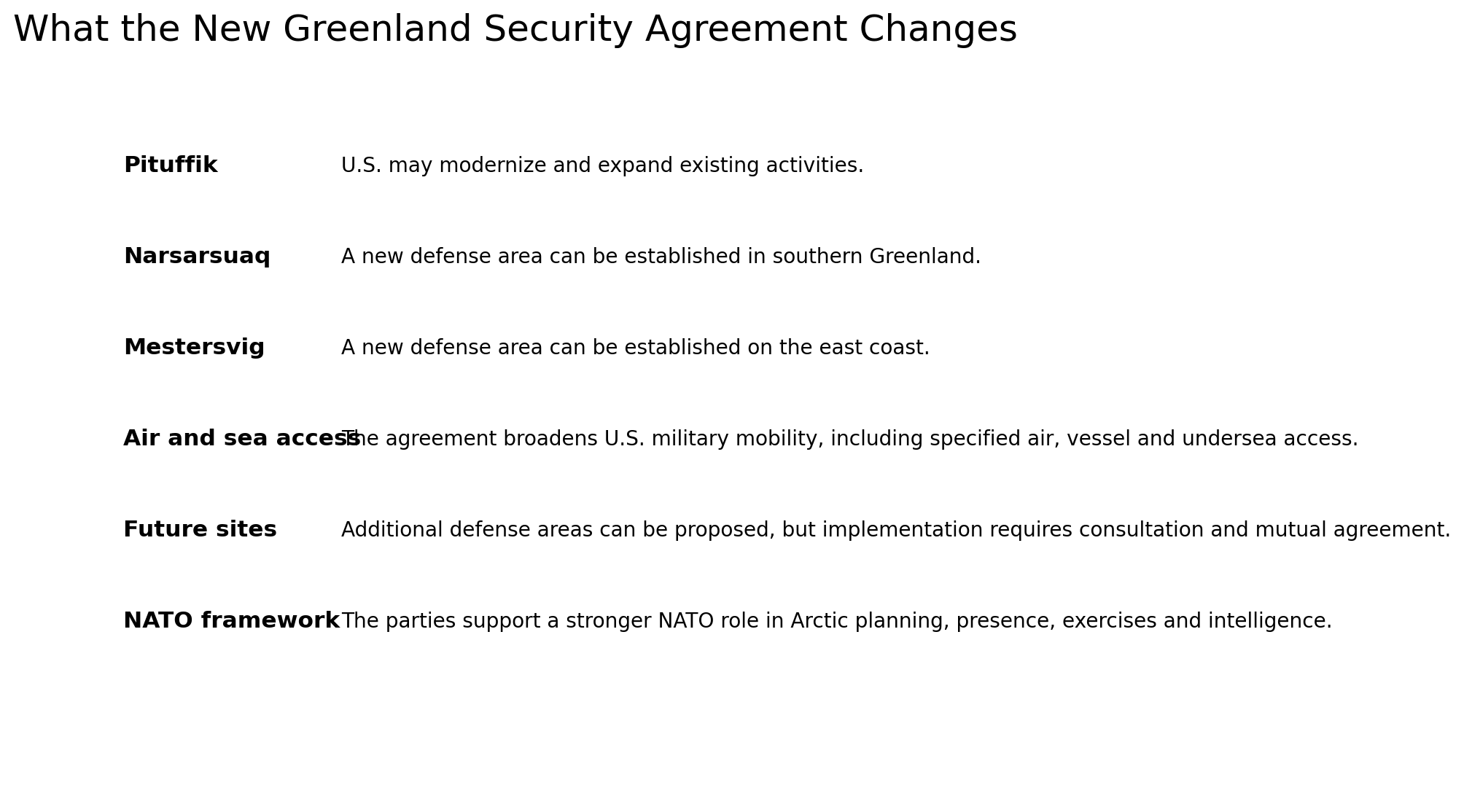
The United States will be allowed to modernize and expand operations at Pituffik Space Base in northwestern Greenland while establishing two additional defense areas: Narsarsuaq in the south and Mestersvig on the east coast.
The deal also gives U.S. forces broader access by air and sea and creates a process for considering additional defense areas in the future.
But one point is equally important: the agreement does not transfer Greenland to the United States.
The Deal Builds on a Defense Relationship Dating Back to 1951
The United States has maintained a military presence in Greenland since the early Cold War.
The legal foundation is the 1951 Defense of Greenland Agreement between Washington and Copenhagen, signed within the framework of the North Atlantic Treaty.
At the height of the Cold War, the United States operated numerous installations across the island. That footprint shrank dramatically over the following decades, eventually leaving Pituffik Space Base as the principal active U.S. military installation.
Pituffik remains strategically important because of its location high in the Arctic.
Its missions include missile warning, missile defense support and space surveillance, giving the United States and NATO a vantage point along polar approaches to North America.
The new 2026 agreement does not replace that earlier framework. It amends and supplements it.
Narsarsuaq and Mestersvig Are the Biggest Physical Expansion
The addition of Narsarsuaq and Mestersvig is the clearest sign that Washington intends to operate across a wider portion of Greenland.
Narsarsuaq is in southern Greenland and has a long connection to the U.S. military. During World War II, the United States established an air base there known as Bluie West One, which became an important transit point for aircraft moving between North America and Europe.
Mestersvig sits on Greenland’s remote east coast and has been used by Denmark’s Sirius Dog Sled Patrol, a military unit that conducts long-range patrols in the Arctic.
Under the new agreement, both locations can become U.S. defense areas.
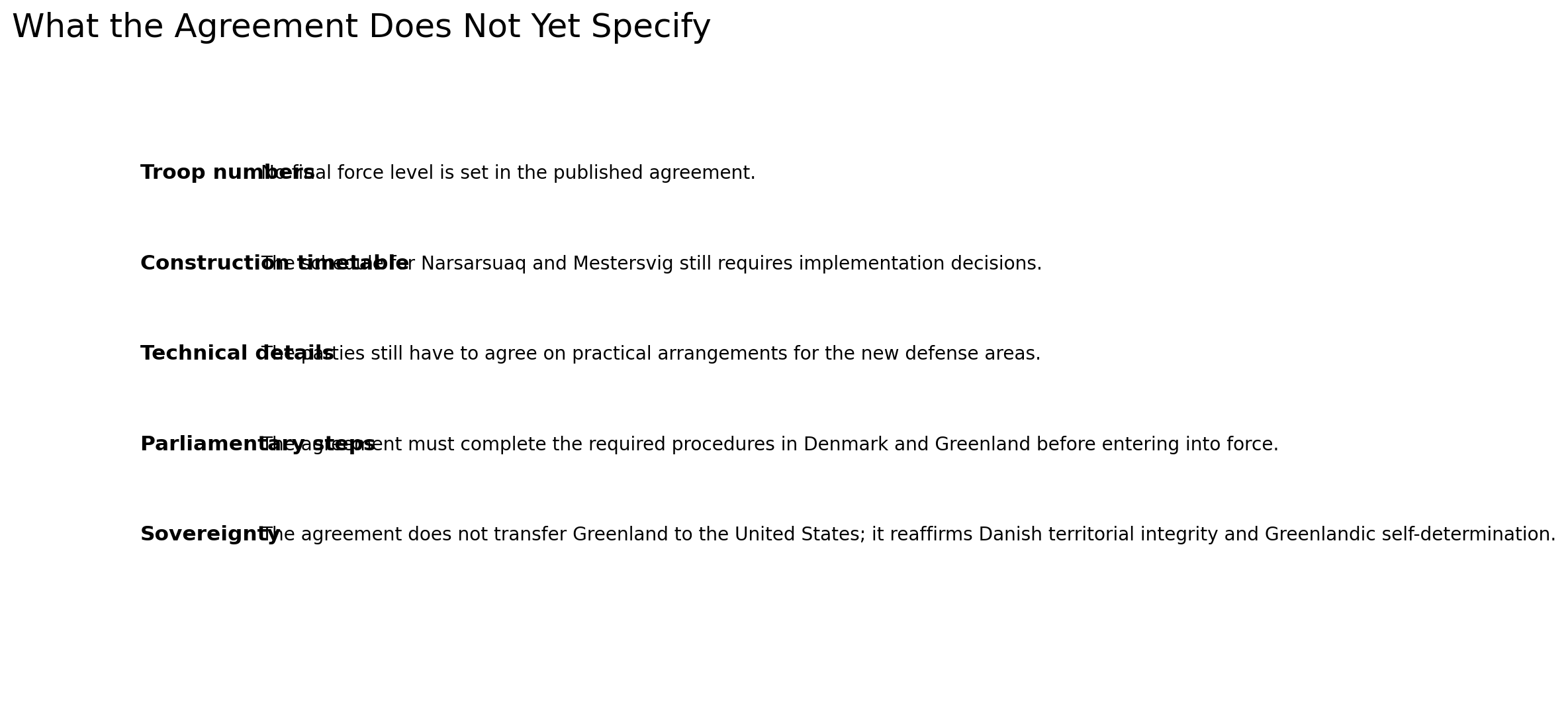
The published text does not set final troop numbers, construction schedules or the full technical design of either site. Those details still have to be worked out among the parties.
U.S. Military Mobility Also Expands
The agreement is not only about three named locations.
It also broadens the ability of U.S. military aircraft and vessels to move through Greenlandic territory, airspace and territorial waters.
That includes provisions covering flights, landings, maritime movement and undersea access.
The purpose is to make it easier for U.S. and allied forces to defend Greenland, the NATO area and North America as Arctic security becomes a larger strategic concern.
The agreement also leaves open the possibility of additional defense areas in the future.
Either side can identify a need for another location, but a new site is not automatic. A proposal must describe the location, size, activities and other details, and implementation requires consultations and mutual agreement.
The Arctic Security Context Has Changed
Greenland’s location has always made it strategically important, but the Arctic has become a much larger part of NATO defense planning.
Russia has a major military presence across its Arctic territory, while Western governments have also paid close attention to China’s commercial, scientific and strategic interest in the region.
At the same time, changing sea-ice conditions have increased attention on shipping routes and access across the High North.
Denmark has acknowledged that it underinvested in Arctic defense for years and has moved to increase its own military capabilities in and around Greenland.
The new agreement places that effort more explicitly inside a broader NATO framework.
The parties say they support stronger NATO planning, exercises, presence and intelligence activity across the Arctic.
The Deal Also Restricts Non-NATO Military Presence
Another important part of the agreement concerns who can establish a lasting military presence in Greenland.
The pact bars non-NATO countries from setting up their own persistent military installations or maintaining an ongoing military presence unless the parties agree otherwise.
The agreement also addresses sensitive investment.
Greenland is expected to screen certain investments in critical sectors, with the framework favoring investors from NATO members, NATO partners and the European Union while restricting actors considered security risks.
Those provisions reflect concerns that strategic infrastructure, ports, communications systems or other sensitive assets could become security vulnerabilities if controlled by governments outside the allied framework.
Greenland’s Sovereignty Is Explicitly Reaffirmed
The agreement was negotiated after months of tension over Greenland’s political status.
Trump has repeatedly expressed interest in greater U.S. control of the island and has previously spoken about acquiring it.
The signed agreement, however, does not change Greenland’s legal ownership.
It reaffirms the sovereignty and territorial integrity of the Kingdom of Denmark and recognizes the Greenlandic people’s right to self-determination.
The agreement also states that U.S. activities should respect Greenlandic society and the Greenlandic way of life.
That language was central to how Danish and Greenlandic leaders presented the deal after it was signed.
Greenland’s Role in the Agreement Is Significant
Greenland is not simply mentioned in the document.
Its government is one of the parties to the agreement, giving Nuuk a formal role in the defense framework.
Greenlandic officials have emphasized that decisions on implementation will continue to require consultation among Greenland, Denmark and the United States.
That is especially relevant for the new defense areas.
Military construction and operations can affect nearby communities, transportation, the environment and local economic activity. The agreement therefore creates a framework, but many site-specific decisions remain ahead.
It also calls for U.S. contracts related to establishing, operating or dismantling defense areas to use Greenlandic sources to the maximum extent possible.
The Agreement Would Continue Even If Greenland Became Independent
The agreement also looks beyond Greenland’s current constitutional status.
Greenland has broad self-government while remaining part of the Kingdom of Denmark, and Greenlanders retain the right to pursue independence in the future.
The new security pact says that if Greenland eventually becomes independent, the agreement would continue.
Under that scenario, Greenland would be expected to remain within NATO and assume the relevant rights and obligations currently held by Denmark under the arrangement.
That provision is intended to prevent a future change in political status from creating a gap in Arctic defense planning.
What Still Has to Happen
Signing the agreement was a major diplomatic step, but it does not mean every part of the military expansion begins immediately.
The required parliamentary procedures in Denmark and Greenland still have to be completed before the agreement enters into force.
The governments also need to work out practical details for Narsarsuaq and Mestersvig.
No final public figure has been given for how many U.S. troops would be based at the new locations, how much construction will be required or how quickly the sites will become operational.
Those questions will determine how large the expansion becomes in practice.
Why the Deal Matters Beyond Greenland
The agreement is important because Greenland sits between North America and Europe at the center of several overlapping security concerns.
It is relevant to missile warning, space surveillance, Arctic shipping, NATO reinforcement and the defense of the North Atlantic.
Expanding access gives the United States more options for operating across the island instead of relying primarily on one remote base in the northwest.
For Denmark and Greenland, the agreement also creates a way to address U.S. security demands without changing the island’s sovereignty.
For NATO, it adds another layer to a broader effort to strengthen defenses in the Arctic.
That combination helps explain why the agreement drew attention well beyond the three governments that signed it.
The Next Phase Will Be About Implementation
The headline change is straightforward: the United States is gaining a larger military footprint in Greenland.
But the final shape of that footprint is still being decided.
Pituffik can expand. Narsarsuaq and Mestersvig can become new defense areas. U.S. forces gain broader mobility. NATO’s Arctic role becomes more explicit.
At the same time, Greenland and Denmark retain sovereignty and a role in approving how the framework is implemented.
The next questions are therefore practical rather than symbolic.
How large will the new sites become? How many personnel will be stationed there? What infrastructure will be built, and how will local communities be affected?
The agreement answers where the security relationship is heading.
The details of how far it goes will come next.
Comments (0)
Loading comments...
May You Like

gfnhgmnghnmfgnbvvvvvvvvv

Obama Steps Back Into the Political Spotlight as Democrats Target Trump’s

Shocking news from Ohio: an unexpected development ahead of Trump's rally












