
Newly released documents related to the September 11 attacks
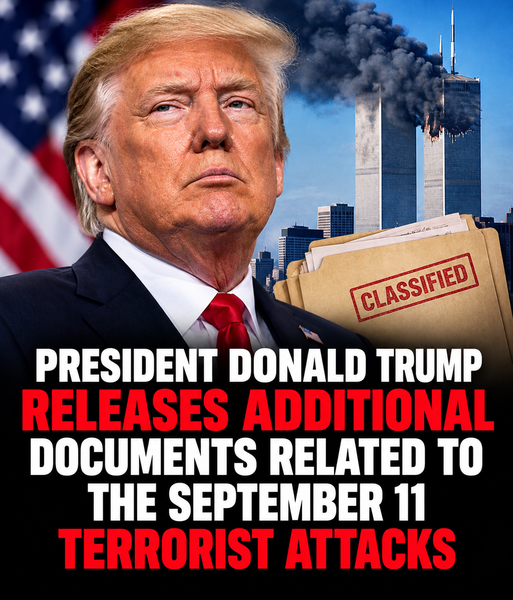
WASHINGTON — Twenty-five years after the September 11 attacks, the Trump administration has released a major collection of previously classified intelligence documents, reopening questions about what American officials knew before al-Qaida struck.
The Central Intelligence Agency released 71 President’s Daily Brief products on September 11, describing warnings and intelligence assessments concerning Osama bin Laden and al-Qaida between 1998 and September 12, 2001.
The release was presented by CIA Director John Ratcliffe as the agency’s largest-ever public release of declassified presidential briefing material connected to the September 11 attacks.


A Major Declassification
The documents cover intelligence gathered during both the Clinton and George W. Bush administrations, offering a chronological record of how analysts assessed bin Laden’s organization and its growing intentions.
Among the earliest materials is a February 1998 briefing titled “Terrorists Seeking WMD Capability,” which discussed bin Laden and other extremist groups seeking unconventional weapons capabilities.
Other briefings documented concerns about bin Laden’s financing, movements, international network and efforts to acquire chemical, biological or radiological capabilities.
The collection also contains warnings about possible attacks against the United States, including intelligence indicating that bin Laden’s network was interested in hijacking aircraft.
One 1998 briefing reportedly warned that extremists connected to the East Africa embassy bombings might use an explosive-filled aircraft against an American city.
Warnings Before September 11
Another document from December 1998 described bin Laden preparing to hijack American aircraft and noted that some members of his network had received hijacking training.
The intelligence did not provide a precise date, location or operational blueprint for the September 11 attacks, illustrating the difficulty officials faced in converting fragmented warnings into specific preventive action.
By 2001, warnings became increasingly direct. An August 6 presidential briefing famously carried the title “Bin Ladin Determined To Strike in US,” highlighting the seriousness of the threat.
The newly released material therefore adds detail to an already documented history of warnings rather than establishing that officials possessed a complete operational plan before September 11.


What Trump Actually Released
The viral graphic describes Trump as personally releasing additional documents, but the formal declassification action was carried out by CIA Director Ratcliffe on September 11 as part of the administration’s transparency initiative.
The White House has also faced separate demands from 9/11 families seeking additional records concerning possible Saudi connections to individuals involved in the attacks.
Trump said September 13 that he would consider those requests after returning from Ireland, meaning additional records concerning alleged Saudi links had not all been released at that point.
Attorney General Todd Blanche subsequently said more 9/11 records could be released, while maintaining that documents still classified were being withheld for legitimate national-security reasons.
That distinction matters because the newly released CIA briefings are not necessarily the same records sought by families investigating possible Saudi assistance to the hijackers.
The Saudi Arabia Question
Questions about Saudi Arabia remain particularly contentious because 15 of the 19 September 11 hijackers were Saudi nationals, although Saudi Arabia has repeatedly denied that its government helped facilitate the attacks.
Families of victims have pursued a long-running lawsuit against Saudi Arabia, arguing that individuals connected to the Saudi government assisted some hijackers after they arrived in California.
The 9/11 Commission previously found no evidence that the Saudi government as an institution or senior Saudi officials individually funded al-Qaida, while leaving questions concerning charities and other connections unresolved.
Recent reporting has renewed attention on records involving Omar al-Bayoumi, a Saudi national whom families allege provided assistance to two hijackers after their arrival in California.


Why the Files Matter
The documents provide a rare window into the intelligence environment surrounding the attacks, showing how analysts tracked bin Laden while struggling with incomplete information, uncertain sources and competing priorities.
They also demonstrate that warnings about terrorism accumulated over several years, raising longstanding questions about whether agencies could have better shared information or recognized the threat’s scale.
However, the documents do not establish that American officials knew precisely when, where or how the September 11 attacks would occur before the hijackings.
The broader historical record instead points to a complex intelligence failure involving fragmented information, coordination problems and difficulties interpreting warnings that lacked precise operational details.
Twenty-five years later, the release gives researchers, historians and victims’ families additional primary-source material for examining those failures and the decisions made before America’s deadliest terrorist attack.
The disclosure also leaves important questions unanswered, particularly regarding records requested by families investigating possible Saudi connections, meaning the debate over transparency is unlikely to end with this release.
For now, the newly public files provide a detailed picture of increasingly urgent warnings before September 11, while showing why recognizing a threat and preventing an attack are profoundly different challenges.
Comments (0)
Loading comments...
May You Like

South Korea–Ukraine Rift Deepens Over North Korean POW Transfer as PURL Draws New Scrutiny

South Korea–Ukraine Rift Deepens Over North Korean POW Transfer as PURL Draws New Scrutiny

FIGHT OVER OBAMA’S IRAN POLICY












