Newly Released White House Photos Reveal Obama’s Final Hours of the 2016 Election — and the Morning After Trump Won
More than 2,400 archival photographs offer a newly accessible look inside Barack Obama’s White House during one of the most consequential political transitions in modern American history.
WASHINGTON — Thousands of official White House photographs from Barack Obama’s presidency have been newly released, providing an extensive visual record of Election Day 2016 and the morning after Donald Trump’s unexpected victory.
The Barack Obama Presidential Library recently added the collection to its Digital Research Room after processing a Freedom of Information Act request seeking White House photographs from November 8 and 9, 2016.
The collection contains 2,443 photographic assets, documenting Obama’s activities as Americans voted to choose his successor and as the White House absorbed the results of the presidential election.
Of those photographs, 849 were taken on Election Day, November 8. Another 1,596 document November 9, when Trump’s victory over Democratic nominee Hillary Clinton became the defining political story.
The National Archives says 448 photographs from November 8 have been released in full, while 401 remain withheld under applicable restrictions and Freedom of Information Act exemptions.
The following day’s archive is considerably more extensive. Of the November 9 material, 1,466 photographs have been released in full, while 128 remain withheld, according to the Presidential Library.
The photographs provide an unusually detailed record of Obama’s official schedule during a political moment that marked the approaching end of his eight years in the White House.
On Election Day itself, photographers documented Obama receiving his Presidential Daily Briefing, meeting former adviser David Axelrod, speaking with White House interns and participating in an interview with CBS News correspondent Bill Plante.
The November 9 photographs are potentially more historically revealing because they follow events inside the White House immediately after voters selected Trump to succeed Obama as the 45th president.
National Archives descriptions say photographers captured Obama speaking with White House staff about the presidential election while his administration began preparing for the transfer of power to an incoming Republican administration.
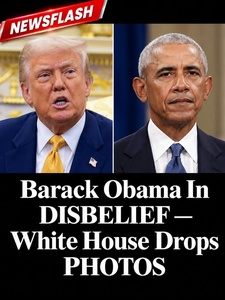
The photographs should not automatically be characterized as showing Obama “in disbelief,” however. That description appears in viral headlines but is not how the National Archives describes the newly released material.
The archive instead provides documentary photographs of meetings, conversations and presidential duties. Facial expressions visible in individual frames cannot reliably establish what Obama was privately thinking or feeling at a particular moment.
Obama was also photographed receiving another Presidential Daily Briefing on November 9, demonstrating that ordinary national-security responsibilities continued despite the extraordinary political developments unfolding around his administration.
Other photographs document Obama separately speaking by telephone with Senate Majority Leader Mitch McConnell and Supreme Court nominee Merrick Garland, according to the official description accompanying the collection.
Garland’s nomination had become one of the defining political disputes of Obama’s final year after Senate Republicans declined to consider his nomination to replace Supreme Court Justice Antonin Scalia.
Trump’s victory meant Garland’s nomination had effectively lost its path forward, allowing the incoming Republican president to nominate a different justice after taking office the following January.
The photographs also document Obama preparing for and delivering his nationally televised statement from the White House Rose Garden following Trump’s victory.
In that appearance, Obama publicly emphasized the importance of a peaceful transfer of power despite the profound political differences separating his administration from the incoming Trump presidency.
The transition quickly moved beyond speeches. On November 10, Obama welcomed President-elect Trump to the White House for their first post-election meeting, beginning the formal transfer between the two administrations.
Their Oval Office conversation lasted significantly longer than originally scheduled. Afterward, both men appeared before reporters and publicly committed themselves to working through an orderly presidential transition.
Michelle Obama separately hosted Melania Trump at the White House, discussing life as a presidential family and showing the incoming first lady portions of the residence and executive mansion.
The newly accessible November 9 collection also contains photographs unrelated to the election, illustrating how normal presidential activities continued amid the historic transition taking shape around Obama.
Those images include Obama meeting artist Shepard Fairey and his family and attending a gathering involving current and former Cabinet members in the White House Grand Foyer.
The archive remains incomplete by design. NARA says many responsive records continue to be withheld because of national-security classification requirements or exemptions permitted under the Freedom of Information Act.
The Obama Presidential Library describes the material as a selective rather than necessarily exhaustive collection, cautioning researchers that related presidential records may exist elsewhere within the larger archive.
Unlike a conventional presidential library centered around a physical research facility, the Obama Presidential Library is the first all-digital presidential library administered by the National Archives.
Presidential records have gradually become accessible as NARA processes Freedom of Information Act requests, with previously restricted material continuing to enter the library’s online Digital Research Room.
The November 8–9 photographs are currently highlighted by the library among its newly released collections, alongside recently processed photographs involving other moments of the Obama presidency.
Official audiovisual materials created by U.S. government employees as part of their duties are generally public domain, and the Obama Library says its displayed photo and video galleries do not require permission or licensing for use.
The archive therefore offers journalists, historians and the public an unusually large visual record of a presidential transition that profoundly altered the direction of American politics.
But the newly released material does not substantiate the sensational claim that the current Trump White House released photographs specifically to embarrass Obama or prove he was “in disbelief.”
The more precise story is historically interesting without that embellishment: thousands of official Obama White House photographs surrounding Trump’s 2016 election victory have now become publicly accessible through the National Archives.
Comments (0)
Loading comments...
May You Like

OBAMA STUNS ON INSTAGRAM: MESSAGE MARKING 34-YEAR MILESTONE SPARKS A BUZZ

Russian Drone Strikes Kyiv Bridge as German Chancellor Arrives in Ukraine