Nick Shirley Sues California Over the ‘Stop Nick Shirley Act’
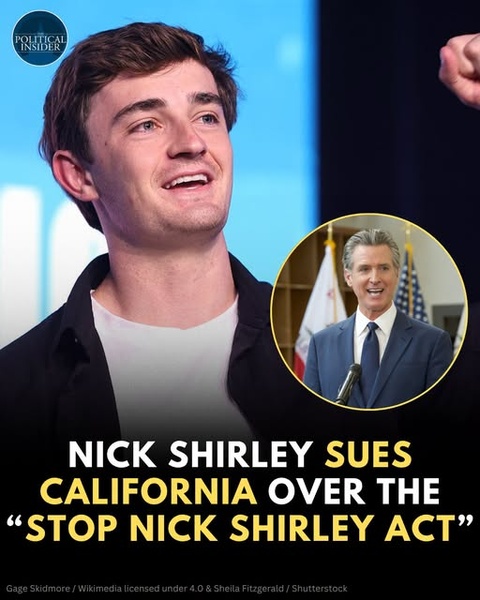
Investigative journalist Nick Shirley has filed a federal lawsuit against the state of California, challenging Assembly Bill 2624 — a law he and critics have dubbed the "Stop Nick Shirley Act." Shirley argues the legislation violates his First Amendment rights by shielding nonprofit immigration service workers from public scrutiny and allowing them to block the publication of their information. He claims the bill was enacted to protect alleged fraud involving taxpayer funds and to restrict transparency.
SACRAMENTO, Calif. — The battle between citizen journalist Nick Shirley and the state of California has escalated dramatically, with Shirley filing a federal lawsuit challenging the constitutionality of Assembly Bill 2624 — legislation he claims was designed specifically to silence him.
The bill, authored by Assemblymember Mia Bonta, was signed into law by Governor Gavin Newsom in August 2026. It extends an address confidentiality program to workers at nonprofit organizations that provide immigration services, effectively shielding their personal information from public records requests. Critics have labeled it the "Stop Investigative Journalism Act," arguing it is a thinly veiled attempt to block scrutiny of organizations that receive taxpayer funding.
Shirley, who rose to prominence with investigations into alleged fraud in Minnesota, has been a vocal opponent of the law. He has argued that it will allow fraud involving public funds to go undetected and that it restricts transparency in a way that violates the First Amendment.
A Contentious Bill and a Confrontation
Shirley has not been shy about his opposition to AB 2624. In the weeks leading up to its passage, he traveled to California's State Capitol to confront lawmakers connected to the bill, accusing them of shielding fraud and refusing to answer questions about the legislation.
The confrontation took an even more dramatic turn when Shirley and his supporters held a rally outside the Capitol to protest the law. The event erupted into clashes between rival groups, with reports of arrests as tensions boiled over. Footage from the rally showed heated exchanges and physical confrontations between Shirley's supporters and counter-protesters.
The Legal Challenge
Shirley's lawsuit, filed in federal court, argues that AB 2624 violates the First Amendment by:
-
Restricting access to information about nonprofit organizations that receive public funds
Allowing organizations to block publication of information about their workers and operations
Creating a shield for potential fraud involving taxpayer money
The suit challenges the law's provision allowing nonprofit immigration service workers to have their personal information withheld from public records, which Shirley argues effectively prevents journalists from scrutinizing the operations of organizations that receive government funding.
The Response from California
Representatives for Governor Newsom and Assemblymember Bonta have not yet issued detailed public responses to the lawsuit. However, supporters of the bill have framed it as a necessary measure to protect the safety and privacy of workers providing sensitive services to immigrant communities.
Critics of Shirley, meanwhile, have raised questions about the journalist's methods and credibility. Some have suggested that Shirley faces a "high likelihood of being sued" for defamation and libel over his investigations, citing concerns about the accuracy of his reporting. Others have accused him of creating content with "actual malice" and questioned his journalistic credentials.
What Comes Next
The lawsuit is expected to proceed through the federal court system, where Shirley's legal team will argue that the law violates the First Amendment. The case could have significant implications for investigative journalism and government transparency in California.
Shirley has also testified before Congress about fraud and transparency issues, bringing national attention to his fight against the law. The outcome of the lawsuit could set a precedent for how states balance privacy protections for nonprofit workers against the public's right to scrutinize government-funded programs.
The story is developing. Shirley's lawsuit is pending in federal court, and the state of California has not yet filed its formal response.
Comments (0)
Loading comments...
May You Like

South Korea–Ukraine Rift Deepens Over North Korean POW Transfer as PURL Draws New Scrutiny

gfnhgmnghnmfgnbvvvvvvvvv

Obama Steps Back Into the Political Spotlight as Democrats Target Trump’s