
Robert De Niro’s Profanity-Laced Attack on Trump
Robert De Niro’s Profanity-Laced Attack on Trump Sparks Debate Over Voting Rights
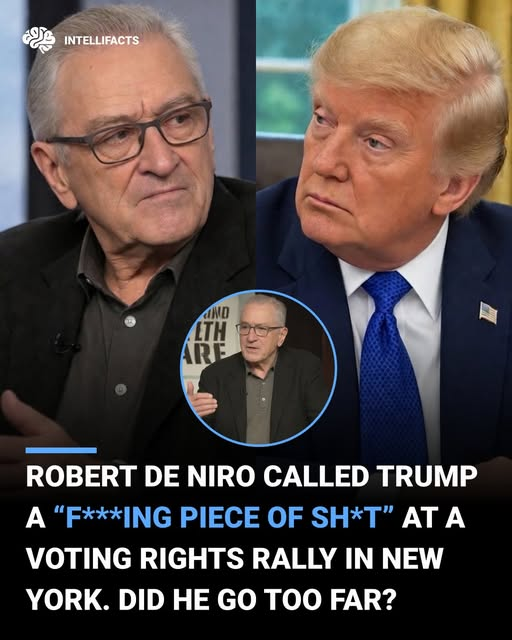


Hollywood actor Robert De Niro delivered a forceful political attack against President Donald Trump during a voting-rights rally in New York City, drawing attention to an increasingly heated national debate over American democracy.
The Oscar-winning actor spoke at the “Hands Off Our Vote” event on October 4, 2026, joining activists and fellow entertainers urging Americans to participate in the upcoming midterm elections.
During his address, De Niro called Trump a “coward” and used an explicit insult to describe the president, prompting strong reactions from the audience and renewed media attention.
His speech focused on what he described as threats to voting rights, accusing Trump and his political allies of attempting to weaken Americans’ ability to influence government through elections.
De Niro argued that voting was a fundamental constitutional principle rather than simply a political activity, telling the crowd that citizens should defend their ability to choose their representatives.
He directed criticism toward congressional Republicans, whom he accused of failing to protect voting rights and adequately challenge policies supported by the Trump administration.
The actor also criticized the Supreme Court, arguing that its decisions could undermine ballot access. His remarks reflected concerns raised by voting-rights organizations about proposed election rules and litigation.
De Niro urged attendees to vote early and encourage their families, friends, neighbors, and wider communities to participate, presenting voter mobilization as the most direct response to the political situation.
The rally took place less than a month before the November 3 midterm elections, when voters were preparing to decide contests that could reshape the balance of power in Congress.
Voting rules had become a major political issue, particularly proposals requiring documentary proof of citizenship for federal voter registration and efforts to review state voter rolls.
Supporters of stricter election requirements argue that stronger verification procedures can help protect election integrity and ensure that only eligible citizens participate in federal elections.
Opponents contend that certain requirements could create unnecessary barriers for eligible voters, particularly people who lack easy access to citizenship documents or face difficulties navigating registration procedures.
De Niro aligned himself with the latter concerns, arguing that political leaders should make voting accessible and should not use government authority to weaken citizens’ influence over elections.
His speech included sharp accusations against federal agencies and immigration enforcement personnel. Those statements reflected his political claims and were not, by themselves, proof that the alleged conduct had occurred.
The White House responded by attacking De Niro’s credibility and criticizing his rhetoric, continuing a longstanding public feud between Trump and the actor.
The exchange illustrated how celebrity involvement has become a recurring feature of American political campaigns, with entertainers using their public profiles to encourage voter participation and criticize elected officials.
De Niro has repeatedly opposed Trump since the president’s first political campaign, delivering speeches and making public comments that have drawn both enthusiastic support and sharp criticism.
For supporters at the rally, his language expressed frustration about what they view as threats to democratic institutions. Others may consider personal insults distracting from the substantive debate over election laws.
The controversy also highlighted the difficulty of separating political rhetoric from verifiable claims. Allegations about voter suppression require examination of specific policies, court decisions, implementation, and their documented effects.
Meanwhile, both major parties have continued mobilizing supporters around competing arguments about election security, ballot access, and the responsibilities of federal and state authorities.
With the midterms approaching, the debate over voting rights is likely to remain a central issue in campaign messaging, legal challenges, and public discussions about the integrity of American elections.
Ultimately, De Niro’s remarks were more than a personal attack on Trump: they were part of a broader campaign urging Americans to participate in elections and scrutinize policies that could affect how voting works.
Comments (0)
Loading comments...
May You Like

WEYMOUTH HORROR — FIRE TRUCK BRAKES TO SAVE DOG, ONE FIREFIGHTER DEAD, TWO CRITICAL!

EAST COAST STORM CRISIS—5 MILLION AT RISK OF BLACKOUTS, WATER, AND HEATING FAILURES!

BOMBSHELL NEW JERSEY FLOOD — 112 KM/H WINDS, SEAWATER FLOODING INLAND, 120,000 HOMES AT RISK!









Popular Posts





