Obama and Biden Reemerge as Democrats Sound the Alarm Over Trump and America’s Political Future
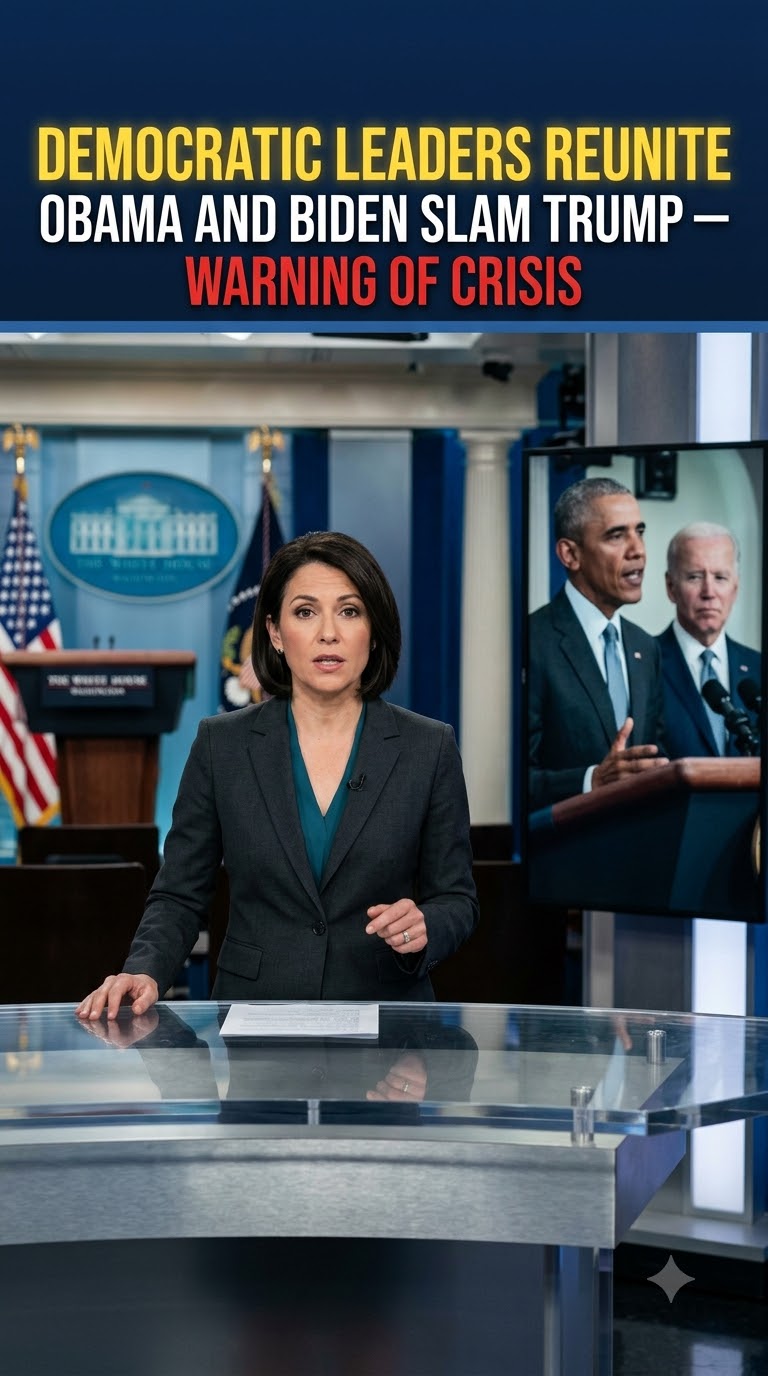
Former Presidents Barack Obama and Joe Biden are returning to the political spotlight as Democrats intensify their warnings about Donald Trump, presidential power and the direction of American democracy ahead of the 2026 midterm elections.
Former Presidents Barack Obama and Joe Biden are once again becoming prominent Democratic voices, delivering increasingly forceful criticism of President Donald Trump as the United States moves toward the consequential 2026 midterm elections.
Their renewed political involvement comes during a particularly tense period in Washington. Republicans are working to maintain control of Congress, while Democrats are attempting to turn concerns about the economy, presidential authority and democratic institutions into electoral momentum.
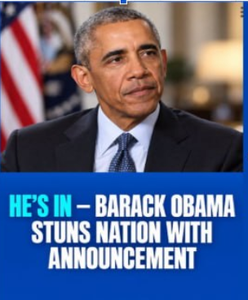
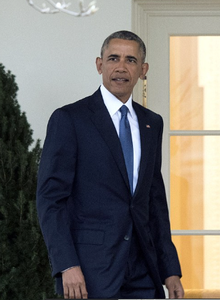
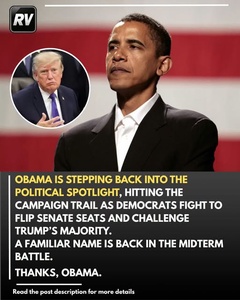
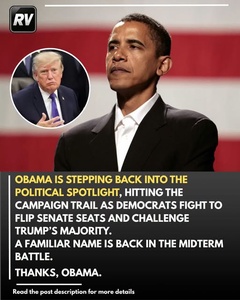
Obama has become increasingly visible on the Democratic campaign circuit. On September 10, he appeared with House Minority Leader Hakeem Jeffries at a New York fundraiser benefiting the Democratic Congressional Campaign Committee, highlighting his continuing importance to the party.
Nearly a decade after leaving the White House, Obama remains one of the Democratic Party’s most recognizable political figures. Candidates continue to seek his endorsements, fundraising support and ability to communicate with voters across different generations and ideological groups.
His recent message, however, has extended well beyond conventional campaign politics. Speaking at the opening of the Obama Presidential Center in Chicago in June, Obama warned about political and social forces that he believes are placing growing pressure on American democracy.
Obama pointed to political polarization, misinformation, technological disruption and widespread distrust as forces making Americans increasingly isolated from one another. He argued that those conditions can weaken confidence in institutions and make democratic government more vulnerable.
Independent assessments have also raised concerns about the condition of American democracy. An April analysis by the Pew Research Center examined several international democracy indexes that recorded significant deterioration in measures of U.S. democratic performance during 2025.
Obama has previously argued that protecting democracy ultimately depends not only on elections but also on judges, government officials and public servants respecting constitutional limits, institutional independence and the responsibilities attached to their positions.
Biden, meanwhile, has taken a more personal and combative approach toward Trump. Since leaving office, the former president has periodically criticized his successor’s leadership, policies and conduct while defending the record of his own administration.
The contrast between the two former presidents is familiar. Obama typically emphasizes democratic institutions, constitutional norms and civic responsibility, while Biden frequently uses more direct political language when challenging Trump and the Republican movement surrounding him.
Despite those differences in style, their arguments increasingly converge around the same Democratic message: the coming elections should be viewed as more than contests between individual candidates competing for seats in the House and Senate.
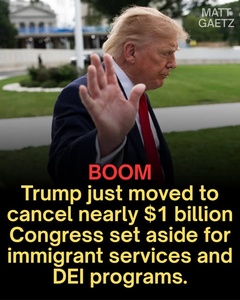
Democrats want voters to consider the midterms a judgment on Trump’s second presidency itself, including his use of executive authority, immigration policies, economic agenda and approach toward institutions traditionally expected to operate independently of the White House.
Trump and Republican leaders are pursuing almost the mirror image of that strategy. The president has encouraged supporters to treat the congressional elections as though his own political future were directly on the ballot.
That approach gives Republicans an opportunity to mobilize Trump’s intensely loyal political base. At the same time, it gives Democrats an opening to motivate voters who remain deeply opposed to the president and his governing style.
Republicans argue that Democratic control of Congress would threaten conservative achievements and obstruct the administration’s agenda. They have emphasized immigration enforcement, taxation, deregulation and other policies they say voters endorsed when returning Trump to the presidency.
Democrats counter by focusing heavily on affordability, health care, government accountability and institutional stability. Their challenge will be converting national dissatisfaction into victories across the relatively limited number of competitive congressional districts capable of determining House control.
The consequences could extend through the remainder of Trump’s presidency. Continued Republican control would provide the White House with greater freedom to advance its legislative priorities, while Democratic control of either chamber could dramatically change Washington’s balance of power.
A Democratic-controlled chamber could increase congressional investigations, challenge administration policies and use oversight powers more aggressively. Divided government could consequently transform the final two years of Trump’s term into a prolonged confrontation between Congress and the White House.
Election administration itself has also become part of the broader dispute. Voting-rights organizations and legal groups have challenged administration actions they believe could expand federal influence over elections, which historically remain largely administered by state and local governments.
Trump’s supporters strongly reject Democratic descriptions of his presidency as a threat to democracy. They argue that Americans elected him precisely to disrupt established Washington institutions, strengthen border enforcement and pursue policies previous administrations were unwilling to implement.
That disagreement represents one of the fundamental divides in contemporary American politics. One side sees aggressive presidential action as necessary disruption; the other sees the same expansion of executive authority as potentially dangerous to constitutional checks and balances.
This is why interventions from Obama and Biden carry significance beyond ordinary partisan criticism. Both men have occupied the presidency and can frame their arguments around personal experience with the institutional limitations, responsibilities and pressures surrounding the office.
Obama may be particularly valuable to Democrats because he can campaign without being a candidate himself. His appearances allow vulnerable congressional candidates to benefit from his political popularity while keeping the immediate focus on local races and national Democratic priorities.
Biden occupies a more complicated position because Trump directly succeeded him after defeating Democrats in 2024. Nevertheless, his involvement allows Democrats to draw sharper comparisons between the governing philosophies and priorities of the two administrations.
For American voters, however, the most important distinction is between political argument and established fact. Claims that Trump threatens democracy remain strongly contested political judgments, not universally accepted conclusions, and Republicans vigorously dispute the Democratic characterization.
Likewise, reports or social-media posts suggesting Obama and Biden have recently “reunited” at a single event to jointly denounce Trump should be treated carefully unless supported by independently verifiable reporting from credible news organizations.
What is clearly happening is broader and potentially more consequential. Democratic leaders, including the two former presidents, are increasingly framing the 2026 elections around questions about presidential power, democratic institutions and the future direction of the country.
Trump is simultaneously making the election about himself, urging Republicans to defend his administration and preserve congressional majorities capable of advancing his agenda. That creates an unusually presidential character for an election in which the presidency itself is not contested.
As November approaches, Americans therefore face two sharply competing narratives. Republicans are asking voters to protect the political transformation Trump promised, while Democrats are asking voters to place stronger institutional and congressional restraints on his presidency.
Obama and Biden may no longer occupy the White House, but their renewed political involvement demonstrates that both remain part of that national argument. The ultimate verdict, however, will not come from former presidents or party leaders.
It will come from American voters—and their decision could determine not only who controls Congress, but how much political freedom Donald Trump has to shape the United States during the remaining years of his presidency.
Comments (0)
Loading comments...
May You Like
OBAMA STUNS ON INSTAGRAM: MESSAGE MARKING 34-YEAR MILESTONE SPARKS A BUZZ
TRUMP HIT WITH 26 ARTICLES OF IMPEACHMENT