
Obama Accuses Trump of Corruption
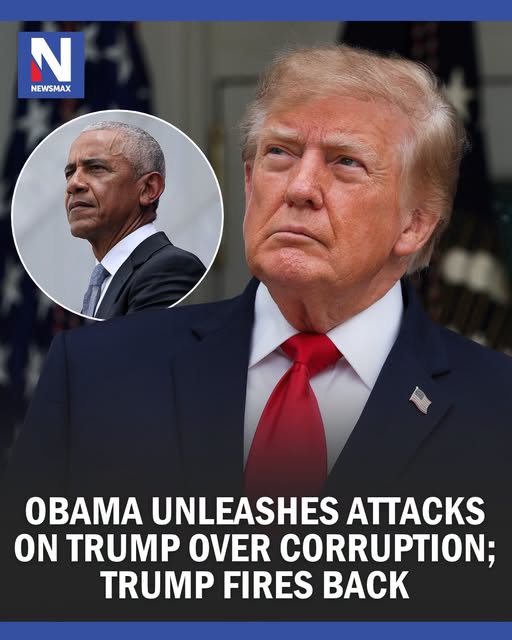
Obama Accuses Trump of Corruption as Political Feud Intensifies Ahead of Midterm Elections
October 30, 2026 | Washington, D.C. | U.S. Politics & Fact Check
Former President Barack Obama and President Donald Trump are once again at the center of a heated political confrontation, following a circulating news report highlighting Obama's criticism of corruption and Trump's response to his predecessor.
The headline reflects the increasingly contentious atmosphere surrounding the November 3 midterm elections, with both presidents representing competing visions of American leadership and government accountability.
Obama has returned to Democratic campaigning, using his appearances to challenge Republican policies and encourage voters to scrutinize the conduct of the current administration.
However, the circulating graphic does not identify the specific speech, date, or complete response from Trump. Its central claim therefore requires additional context before being treated as a confirmed exchange.
Editorial clarification: Criticism of corruption is a political allegation unless supported by specific evidence. The image alone does not establish criminal wrongdoing or identify an authenticated response from Trump.
Obama Returns to the Political Spotlight
Obama's involvement in the midterm campaign reflects the Democratic Party's effort to mobilize voters and challenge Republican control of Congress during Trump's second presidential term.
The former president has emphasized economic affordability, democratic accountability, and the importance of maintaining institutional checks on executive authority throughout his public political commentary.
His criticism also reflects longstanding disagreements with Trump over presidential conduct, immigration, healthcare, foreign policy, and the relationship between political leadership and democratic institutions.
Although former presidents traditionally maintain some distance from everyday partisan disputes, Obama has repeatedly returned to campaigning when he believes significant electoral consequences are at stake.
Obama Directly Accuses Trump of Profiting From the Presidency
The central controversy is confirmed by reporting from Obama's October 24 campaign appearances in Cleveland and Detroit, where he accused Trump of using presidential power for personal financial benefit.
Speaking in Michigan, Obama alleged that Trump's administration had normalized political favoritism, private enrichment, and ineffective governance while Republican lawmakers failed to provide sufficient oversight.
He criticized business arrangements involving Trump's family, including cryptocurrency ventures, arguing that presidential decisions should serve the public rather than create opportunities for private financial gain.
A Reuters/Ipsos survey conducted in August found that 63 percent of Americans believed Trump and his family had improperly benefited from cryptocurrency activities.
The same polling found that 69 percent believed Trump's policies were influenced by private business interests, highlighting public concerns that extend beyond Democratic campaign rhetoric.
Trump Responds With Personal Attacks
Trump responded early Sunday through Truth Social, criticizing Obama's presidential record and attacking Michigan Democratic Senate candidate Abdul El-Sayed, whom Obama had endorsed.
The president described Obama as a “grossly incompetent President” and made inflammatory allegations concerning El-Sayed's religion, political associations, and attitudes toward different communities.
Those accusations were presented without publicly established evidence demonstrating that El-Sayed belonged to an extremist organization or held the discriminatory beliefs Trump attributed to him.
The exchange illustrated how the midterm campaign had expanded beyond disagreements over legislation into an increasingly personal confrontation between two presidents with sharply contrasting political identities.
White House Renovations Become an Unexpected Flashpoint

Obama also mocked Trump's extensive White House renovations, particularly the administration's enthusiasm for gold-colored decorations and plans for an expansive presidential ballroom.
His comparison of the redesigned White House to an extravagant restaurant became one of the most widely discussed moments from his weekend campaign appearances.
The administration's response prompted Obama to revisit the subject during an October 28 rally in Georgia, where he suggested officials were more concerned about the joke than his substantive criticism.
He argued that the administration had failed to meaningfully address his accusations involving tariffs, rising household expenses, and potential conflicts between presidential responsibilities and private financial interests.
Georgia Rally Adds Another Chapter to the Dispute

During Wednesday's Georgia appearance, Obama campaigned for Senator Jon Ossoff and gubernatorial candidate Keisha Lance Bottoms, extending his criticism of Trump's administration into another competitive electoral battleground.
He urged supporters to focus on affordability, government accountability, and congressional oversight rather than allowing personal attacks and political distractions to dominate the closing campaign.
What Happens Next?
With the November 3 elections approaching, the confrontation underscores the stakes for both parties as Democrats seek congressional power and Republicans attempt to preserve Trump's legislative agenda.
A Democratic victory could bring additional investigations into administration decisions and potential conflicts of interest, although political allegations alone do not establish criminal misconduct.
The verified exchange confirms that Obama sharply accused Trump of corruption and that Trump responded publicly. Whether those accusations translate into electoral consequences will ultimately depend on voters.
Comments (0)
Loading comments...
May You Like

IOWA CRISIS — 150+ WITH LEAD AND MERCURY POISONING, 69 CRITICAL!

TOLEDO I-75 TRUCK CRASH — POTENTIAL BRIDGE COLLAPSE AND MILLIONS IN DAMAGEs!














