
Obama and Trump Trade Sharp Attacks as Their Political Rivalry Erupts Again After the Midterms
Obama and Trump Trade Sharp Attacks as Their Political Rivalry Erupts Again After the Midterms
The political rivalry between Barack Obama and Donald Trump has returned to center stage, with sharp public exchanges highlighting the deep divisions that continue to shape American politics after the 2026 midterm elections.
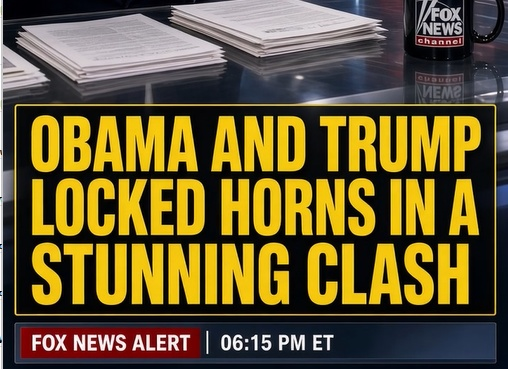
A dramatic television-style headline describing the two presidents as locked in a stunning clash captures the tone of their disagreement. The underlying confrontation, however, has unfolded largely through campaign speeches, public remarks and social media—not a newly verified face-to-face debate.
Obama, who has remained an influential voice within the Democratic Party, stepped onto the campaign trail in the closing days before the November 3 elections to urge voters to scrutinize the Trump administration's record.
At rallies in Ohio, Michigan and Georgia, the former president attacked what he described as the administration's approach to governing, while urging Americans to focus on the practical consequences of political decisions.
His criticisms centered on household costs, the war involving Iran and questions about political accountability. The message was designed to reach not only committed Democrats but also voters frustrated by the direction of the country.
Trump, meanwhile, made his own case to voters as Republicans sought to defend their congressional position. He portrayed Democratic candidates as a threat to his agenda and defended his administration's policies and priorities.

The personal edge of the rivalry became especially visible when Obama mocked the president's extensive White House renovations, including gold-colored decorative changes and plans for new construction.
Trump responded by defending the renovations and criticizing Obama's record. What might otherwise have been a passing campaign joke became another high-profile argument between two men whose political identities have long been intertwined.
The exchange attracted attention because it offered a familiar contrast in style. Obama used humor and pointed criticism to make a broader argument about priorities, while Trump answered with forceful rebuttals and personal attacks.
Beneath the insults lay a more consequential debate about the economy. Rising living costs and the effect of tariffs and international conflict became major themes as both parties sought to persuade voters they had better answers.
Obama argued that voters should judge leaders by their ability to solve problems and uphold public standards. His comments were political arguments, not independent findings about the legality of any administration action.

Trump and his supporters defended the administration's approach and argued that Republican leadership was essential to preserving its broader policy agenda. Their disagreement reflects competing interpretations of the country's challenges.
The war with Iran added urgency to the debate. Obama criticized the decision to pursue the conflict, while Trump defended his strategy and presented his approach as necessary for American security.
Foreign policy disagreements between former and sitting presidents are not unusual, but the prominence of this exchange made the 2026 campaign especially personal.
As voting concluded, Obama publicly interpreted the election results as a call for leaders who bring Americans together and offer concrete solutions. His interpretation was a partisan political assessment of the outcome.
The results also sharpened questions about how Congress would approach the remaining years of Trump's presidency. Legislative priorities, oversight and budget negotiations could all become more contentious depending on the balance of power.

For voters, the most important consequences are likely to emerge not from the sharpest one-liners but from decisions about taxes, spending, foreign policy and government operations.
The public dispute illustrates how former presidents can remain powerful campaign figures. Obama does not hold office, but his appearances can still shape media coverage, mobilize supporters and influence the national debate.
It also shows why dramatic headlines need context. A political clash is real when leaders exchange public criticism, but that does not establish that they met, argued in a studio or took part in a single extraordinary confrontation.
As Washington moves beyond the midterms, the rivalry between Obama and Trump remains a symbol of the country's competing political visions. Whether the latest exchanges produce meaningful policy changes will depend on the choices elected officials make next.
Comments (0)
Loading comments...
May You Like

STORM WARNING: MILLIONS FACE EVACUATION, MACY'S GIANT BALLOONS GROUNDED!


IOWA EMERGENCY: TOXIC AIR, POLLUTED WATER, 3,000 FAMILIES FORCED OUT AFTER 5-TON WASTE BLAST!

Latest Posts










Popular Posts



