
Obama Calls Iran War ‘Unnecessary’
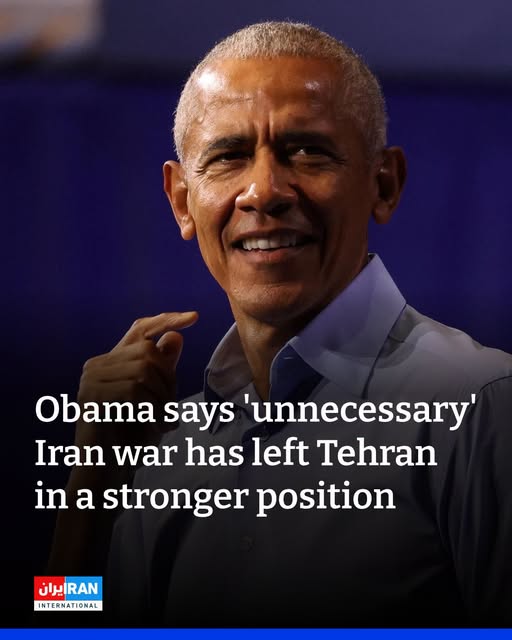
Obama Calls Iran War ‘Unnecessary,’ Warns Conflict Has Left Tehran in a Stronger Position
October 30, 2026 | Washington, D.C. | U.S. Politics & Middle East
Former President Barack Obama has drawn attention to the consequences of the conflict involving Iran, with a circulating news report attributing to him the assessment that an unnecessary war has ultimately strengthened Tehran's strategic position.
The headline raises a significant foreign-policy question: whether military action intended to weaken Iran has instead created conditions that could reinforce its political influence and regional leverage.
Obama's reported criticism also reflects a longstanding disagreement over how Washington should approach Iran, particularly the competing effectiveness of military pressure, economic sanctions, international diplomacy, and negotiated nuclear restrictions.
The former president previously pursued diplomatic engagement with Tehran, making his perspective especially relevant to renewed debate over American military intervention and the future of Middle Eastern security.
Verification note: The uploaded graphic attributes the assessment to Obama but does not provide his complete remarks, their date, or the original interview. The precise quotation should not be treated as authenticated without that context.
Obama's History With Iran Shapes the Debate
During his presidency, Obama made negotiations over Iran's nuclear program a central component of American foreign policy, arguing that diplomatic restrictions could reduce the likelihood of military confrontation.
His administration helped negotiate the 2015 Joint Comprehensive Plan of Action, an agreement involving Iran, the United States, Britain, France, Germany, Russia, China, and the European Union.
The agreement imposed restrictions on Iranian nuclear activities in exchange for sanctions relief, with international inspections designed to monitor compliance and provide greater transparency over Tehran's nuclear program.
Supporters considered the agreement an important diplomatic achievement, while critics argued that it failed to adequately address Iran's ballistic missile development and support for regional armed groups.
President Donald Trump withdrew the United States from the agreement in May 2018, replacing Obama's diplomatic approach with a maximum-pressure campaign involving renewed economic sanctions.
October 24 Remarks Confirm the Viral Headline
Reporting from Obama's October 24 campaign appearances in Cleveland and Detroit confirms that he directly criticized Trump's decision to launch military operations against Iran.
Speaking to Democratic supporters, Obama described the conflict as unnecessary and argued that the administration had failed to demonstrate how its military campaign improved America's long-term security.
He also questioned Trump's earlier declarations of victory, suggesting that the continuing consequences of the war contradicted the administration's optimistic assessment of its military achievements.
Why Obama Believes Tehran Has Gained Strategic Leverage
Obama's central argument concerns the Strait of Hormuz, one of the world's most important maritime routes for international oil and natural gas shipments.
He argued that Iran's ability to disrupt shipping through the narrow waterway had increased Tehran's leverage over global energy markets despite the damage inflicted by American military operations.
In Obama's assessment, that leverage has created a strategic disadvantage for Washington, allowing Iran to influence international energy supplies while increasing economic pressure on American consumers.
His remarks also referenced attacks against American military facilities and regional partners, casualties among United States personnel, and the depletion of military resources during the conflict.
The Economic Consequences Become a Campaign Issue

Obama connected the conflict directly to rising energy costs, arguing that disruptions to oil shipments had contributed to higher gasoline, diesel, and transportation expenses.
Those pressures have become politically significant as American households confront affordability concerns and both parties compete to shape public perceptions of the administration's economic performance.
The former president presented the conflict as an example of how foreign-policy decisions can create consequences far beyond the battlefield, affecting businesses, consumers, and international trade.
His criticism formed part of a broader Democratic campaign message emphasizing government accountability, economic stability, and the importance of congressional oversight ahead of the November elections.
Trump's Administration Disputes Obama's Assessment
The Trump administration has defended its military campaign as necessary to confront Iran's nuclear ambitions, weaken its military capabilities, and protect American interests and regional allies.
Trump has also criticized Obama's 2015 nuclear agreement, arguing that diplomatic concessions failed to adequately address the long-term security threats posed by Tehran.
The competing assessments illustrate a fundamental disagreement: whether military pressure has permanently weakened Iran or created new strategic vulnerabilities for Washington and its partners.
What Happens Next?

With the November 3 midterm elections approaching, Obama's criticism places the Iran conflict alongside economic affordability and presidential accountability as major issues confronting American voters.
The longer-term outcome will depend on Iran's military capabilities, regional security arrangements, diplomatic negotiations, and whether international shipping through the Strait of Hormuz can operate reliably.
For now, Obama's remarks are authentic, but his conclusion that Iran has emerged strategically stronger remains a contested foreign-policy assessment rather than an independently established consensus.
Comments (0)
Loading comments...
May You Like

AMERICAN FLAG BURNING IN CHICAGO — FREE SPEECH OR DISRESPECT TOWARD AMERICA?

U.S. REPORTEDLY STRIKES OIL TANKER NEAR IRAN — COULD GAS PRICES SURGE?

IRAN CLAIMS IT FIRED AT U.S. WARPLANES — WAS AN AMERICAN F-16 FORCED TO RETREAT?












