
Obama Says Iran Nuclear Deal Reached Goals That War Cannot Match
Obama Defends Iran Nuclear Deal, Says Diplomacy Achieved What Trump's War Could Not
October 26–November 6, 2026 | U.S. Politics | International Affairs
Former President Barack Obama has renewed his criticism of President Donald Trump's Iran policy, arguing that diplomacy achieved meaningful nuclear restrictions without requiring American military strikes.
Obama made the remarks while campaigning for Democratic candidates in Detroit, Michigan, during the final stretch of the 2026 midterm election campaign.
“The original rationale was, well, we're going to go in there. We're going to make them bend the knee and give up their nuclear program, their nuclear weapons,” Obama said.
He then challenged the administration's justification for military action, arguing that Iran had not possessed nuclear weapons when his administration negotiated the 2015 nuclear agreement.
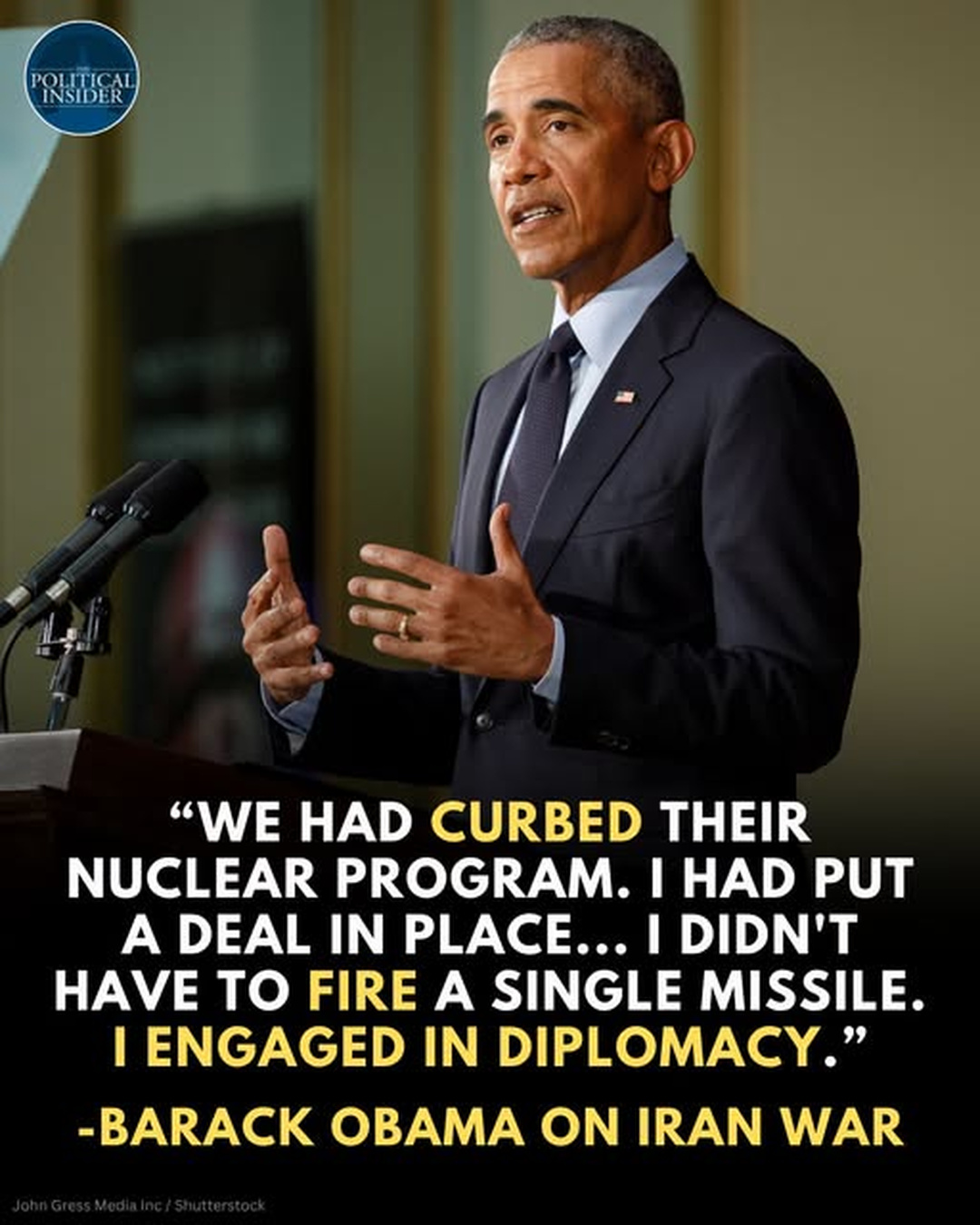
“We had curbed their nuclear program because I put in place a deal that everybody acknowledged had kept them from getting nukes,” Obama continued.
“I didn't have to fire a missile. I engaged in diplomacy,” he added, contrasting his administration's negotiations with the Trump administration's military approach.
The statement refers to the Joint Comprehensive Plan of Action, commonly known as the JCPOA, an international agreement reached in July 2015 between Iran and six world powers.
Under the agreement, Iran accepted restrictions on uranium enrichment, centrifuge operations, and nuclear material stockpiles in exchange for relief from certain international economic sanctions.
The agreement also introduced extensive monitoring and inspection arrangements through the International Atomic Energy Agency, giving inspectors greater access to Iran's declared nuclear facilities.
In January 2016, the IAEA verified that Iran had implemented key nuclear-related measures required for the agreement's implementation, allowing sanctions relief to begin.
However, the agreement never meant that Iran permanently abandoned nuclear technology. Instead, it established limits and verification mechanisms designed to prevent its nuclear program from developing into a weapons capability.
The arrangement became increasingly controversial in Washington, particularly among Republicans who argued that its restrictions were temporary and that it failed to address Iran's ballistic missile program.
In May 2018, Trump announced that the United States would withdraw from the agreement and begin restoring nuclear-related sanctions against Tehran.
The European Union and other participants continued supporting the diplomatic framework, although Iran gradually reduced its compliance with several nuclear commitments after the American withdrawal.
Obama's latest criticism comes amid the ongoing 2026 war involving the United States, Israel, and Iran, which has created serious consequences for regional security.
He argued that the military campaign had failed to deliver the promised strategic results, pointing to attacks against American allies and military bases across the region.
Obama also highlighted American casualties, wounded service members, and concerns about declining missile stockpiles as evidence of the conflict's growing costs.
One of his most significant warnings concerned the Strait of Hormuz, where Iran's ability to disrupt shipping has become a major source of international economic pressure.
The former president argued that Iran had emerged from the conflict with greater strategic leverage over the waterway than it possessed before the fighting began.
His comments reflect a broader Democratic argument that abandoning diplomacy in favor of military force has made the nuclear challenge more difficult rather than resolving it.
The Trump administration and its supporters have historically argued that the 2015 agreement was insufficient because it did not permanently prevent Iran from expanding its nuclear capabilities.
That disagreement remains at the center of American foreign policy debates, with both sides offering sharply different assessments of the risks associated with negotiation and military intervention.
For Obama, the lesson is straightforward: international security can sometimes be strengthened through enforceable agreements, inspections, and diplomatic pressure rather than direct military confrontation.
As the Iran conflict continues, his remarks are likely to reinforce political divisions over Trump's decisions and the future direction of American policy in the Middle East.
Comments (0)
Loading comments...
May You Like

TRUMP CALLS GDP FIGURE “FAKE” AFTER GOVERNMENT’S SCHEDULED REVISION

TOLEDO I-75 TRUCK CRASH — POTENTIAL BRIDGE COLLAPSE AND MILLIONS IN DAMAGE!

Latest Posts









Popular Posts




