
Obama “Goes After Trump Again” After Key Election? The Viral Graphic Is Recycling an April Story
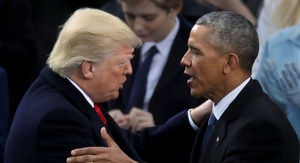
Verdict: MISLEADING — the underlying election and Obama statement are real, but the viral headline makes an April 2026 event look like a new September confrontation.
A viral political graphic claims “Obama Goes After Trump Again After Key Elections Called” and pairs the former president with Sen. Marco Rubio and other political figures, suggesting a new confrontation or revelation.
There is a real event behind the claim: Barack Obama commented on Hungary’s April 12, 2026 parliamentary election after Viktor Orbán lost power to Péter Magyar’s Tisza party. Obama called the opposition victory a victory for democracy and the rule of law.
But the story being circulated in September is not a new election result. Hungary’s election happened in April, and Orbán left office after 16 years. The viral article and headline are recycling that event while presenting it as fresh news.
What actually happened in Hungary?
Hungary held its parliamentary election on April 12, 2026.
The result ended Viktor Orbán's 16-year tenure as prime minister. Péter Magyar's Tisza Party won the election with a large parliamentary majority. The UK House of Commons Library records that Tisza won enough seats for a two-thirds majority.
Reuters reported that turnout reached about 80%, while celebrations broke out in Budapest after Orbán's Fidesz party was defeated.
Orbán had been one of President Donald Trump's most prominent international political allies.
That relationship was especially relevant to the election because the Trump administration openly supported Orbán before the vote.
Trump and Vance really did back Orbán
The graphic's broader Trump connection therefore isn't invented.
In February, Secretary of State Marco Rubio visited Budapest and said Trump was committed to Orbán's success because he regarded Orbán's leadership as important to U.S. national interests.
Trump subsequently supported Orbán's reelection campaign, and Vice President JD Vance traveled to Hungary shortly before the election to campaign on Orbán's behalf. AP reported that the trip took place during the final days of the campaign, even as the United States was dealing with the Iran conflict.
Orbán nevertheless lost.
That made the Hungarian election politically significant in Washington because Orbán had become an important figure for Trump's international coalition and for American conservatives who viewed Hungary as a model of nationalist governance.
What did Obama actually say?
Obama did respond to the result.
On April 13, he wrote that the Hungarian opposition victory was a victory for democracy and described it as evidence of the resilience and determination of the Hungarian people.
He also connected the result to the 2023 Polish election, which had similarly produced a change of government.
The statement did not announce a new political campaign against Trump, nor did it accuse Trump of wrongdoing. It was a public reaction to the Hungarian election. The wording of Obama's April post is independently reproduced by Hungarian news coverage of the election.
So describing the post as Obama “going after Trump” is an interpretation of the political context, rather than a literal description of what Obama said.
The biggest problem: the timing
This is where the viral presentation becomes particularly misleading.
The election being used to support the September headline occurred on April 12.
Obama's statement followed on April 13.
Orbán's defeat was reported internationally at the time, including by Reuters and AP.
Yet versions of the headline began circulating again months later with dates in August and September.
One September version repeats essentially the same Hungary story and Obama's April 13 statement while presenting it under a new “Obama Goes After Trump Again” headline.
That is a classic example of old political news being repackaged as a fresh development.
What about Marco Rubio?
The image is particularly dramatic because it places Rubio alongside Obama and portrays the story as an apparent political betrayal.
There was, however, a genuine Rubio connection to Hungary — but it points in the opposite direction from what the graphic implies.
In February, Rubio publicly endorsed Trump's support for Orbán and said the United States-Hungary relationship was entering a “golden era.” He also described Orbán's continued leadership as important to that relationship.
After Orbán lost, the election therefore represented a setback for a foreign leader whom Rubio and the Trump administration had publicly supported.
That does not establish that Rubio “exposed Obama's big betrayal.”
I found no reliable evidence of a Rubio revelation corresponding to the sensational claim in the graphic.
The election did matter for Trump — but that is different from proving an Obama “attack”
The Hungarian result generated considerable discussion among American politicians.
Some Democrats explicitly drew parallels between Orbán's defeat and American politics. Reuters reported that Democratic lawmakers viewed the result as evidence that voters could remove a long-serving populist leader at the ballot box. Republicans had more varied reactions.
AP likewise reported that Orbán's defeat had repercussions for Trump and U.S. conservatives because of their close political relationship.
Those are legitimate political interpretations.
But they shouldn't be converted into the much stronger claim that Obama had just delivered a new “bombshell” against Trump.
Obama has made more recent political comments — but they concern a different subject
There has been a genuinely recent Obama development that may be helping recycled headlines gain traction.
In September, Obama spoke at a private Democratic fundraising event about artificial intelligence, warning that rapidly advancing AI could become dangerous without appropriate policy and regulation. He urged Democrats to develop an AI policy framework if they regained control of the House in the November midterms.
That is a real September 2026 development.
It is not the same story as the Hungary election, however.
Fox also reported the Trump-Obama disagreement over AI regulation, with Trump emphasizing America's need to win the global AI race while Obama argued for greater attention to regulation and safety.
So there are current policy differences between Trump and Obama, but the viral headline appears to splice that broader ongoing political conflict onto an old April election story.
What the graphic gets right — and what it doesn't
True
- Hungary held a parliamentary election on April 12, 2026.
- Viktor Orbán lost after 16 years in power.
- Péter Magyar's Tisza Party won a two-thirds parliamentary majority.
- Trump supported Orbán.
- JD Vance traveled to Hungary shortly before the election to support Orbán.
- Marco Rubio had publicly expressed strong support for the U.S.-Hungary relationship under Orbán.
- Obama publicly praised the Hungarian opposition victory on April 13.
- Obama and Trump continue to disagree publicly on several political issues, including AI policy.
Misleading or unsupported
- “Key elections called” as though a new September election result just occurred — the Hungarian election was in April.
- “Obama goes after Trump again” — Obama did comment on the result, but his April statement did not constitute a new attack on Trump.
- “Rubio exposes Obama's big betrayal” — no reliable evidence located establishes such a revelation.
- The dramatic imagery suggests a new confrontation that isn't documented.
- The presentation obscures the fact that the central event is more than five months old.
The bigger picture
Hungary's election was genuinely significant.
Orbán had governed since 2010 and became one of the most influential political allies of Trump and other nationalist conservatives in Europe. His defeat therefore had consequences beyond Hungary, particularly for debates about the durability of populist governments and Trump's international political network.
But the distinction between a real political development and a new viral headline about that development matters.
The election happened in April. Obama's reaction happened in April. Rubio's public support for Orbán happened before the election. None of those facts establish that Rubio recently “exposed” Obama or that Obama has just launched a new confrontation with Trump because of an election.
Bottom line
The Hungary election was real. Obama's reaction was real. Trump's support for Orbán was real.
What is misleading is the timing and dramatic framing.
The viral material recycles the April 2026 Hungarian election and Obama's April 13 reaction as though they were a fresh September political bombshell. There is also no verified evidence behind the image's suggestion that Marco Rubio exposed some “big betrayal” by Obama.
Verdict: MISLEADING — REAL APRIL ELECTION, REAL OBAMA COMMENT, BUT RECYCLED AS NEW NEWS AND EXAGGERATED INTO A “BOMBSHELL” CONFRONTATION.
Comments (0)
Loading comments...
May You Like

Jack Smith Defends His Integrity as Trump Investigations Face Renewed Political Firestorm

gfnhgmnghnmfgnbvvvvvvvvv













