
Obama Mocks Trump’s Reaction to White House Joke: “They Mobilized a Whole-of-Government Response”
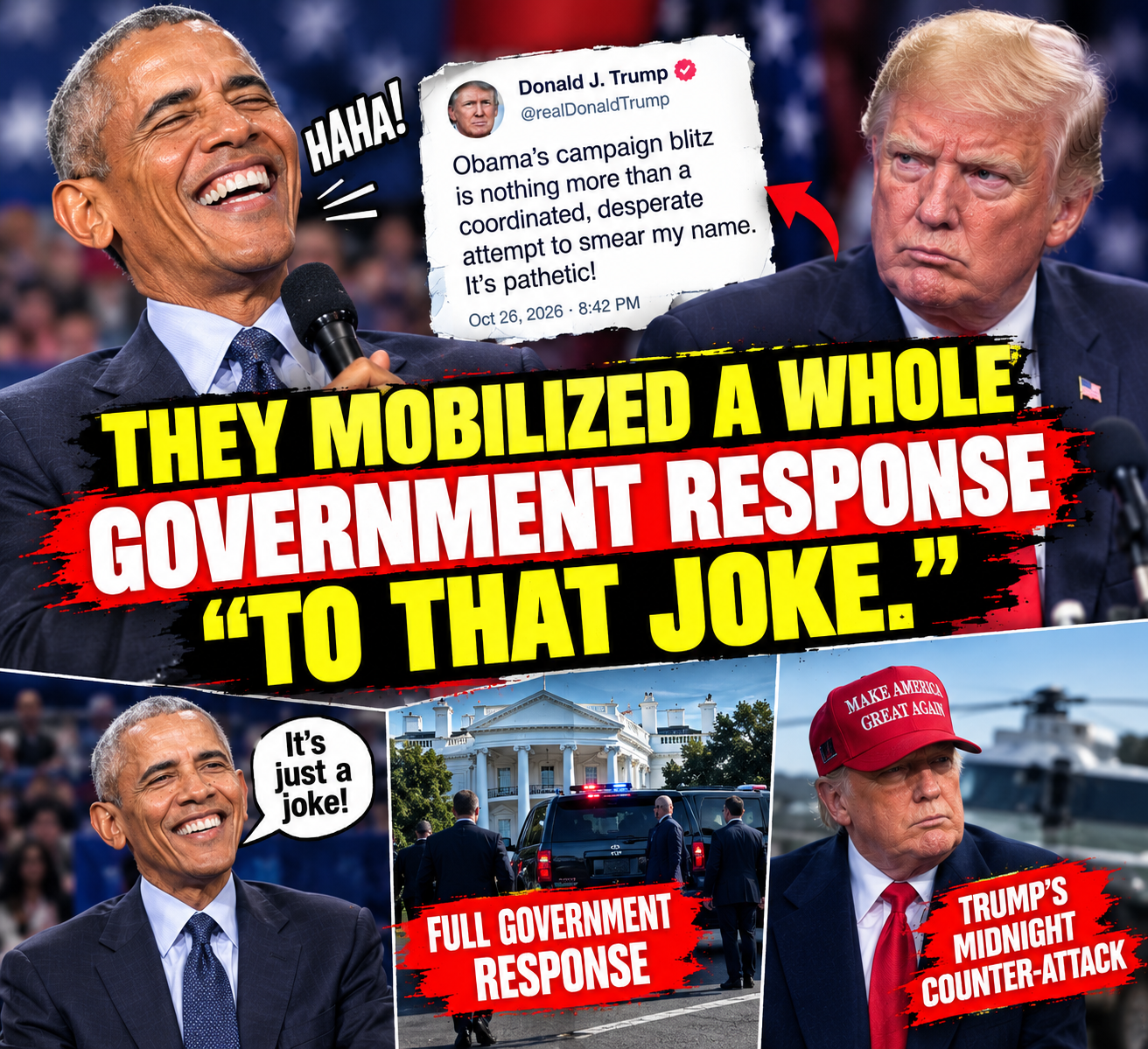
A joke about the White House’s increasingly elaborate renovations has become an unexpected talking point in the final stretch of the 2026 U.S. midterm campaign. Former President Barack Obama has turned President Donald Trump’s response to his remarks into fresh material on the campaign trail, arguing that the administration devoted extraordinary attention to a political joke while Americans remained concerned about inflation and the cost of living.
Speaking at a Democratic campaign rally in Morrow, Georgia, on October 28, Obama drew laughter from the audience as he described what he characterized as a “whole-of-government response” to his criticism of Trump’s White House decorations.
“They mobilized a whole-of-government response to that joke,” Obama said. “Not to inflation, but to that joke.”
The remark was part of a broader argument about the administration’s priorities. Obama suggested that Trump and his allies had become more focused on answering his comments about the White House than addressing the economic pressures facing households. The former president’s delivery was humorous, but the underlying criticism was political: he wanted voters to consider whether the administration was concentrating on the issues that matter most to them.
How the Cheesecake Factory joke became a political dispute
The controversy began with Obama’s remarks at a campaign appearance in Cleveland, Ohio, on October 24. Discussing Trump’s changes to the White House, including gold-colored decorations and plans for a major ballroom, Obama compared the appearance of the residence to a setting in which Saddam Hussein had opened a Cheesecake Factory.
“He’s got the White House looking like Saddam Hussein opened a Cheesecake Factory,” Obama joked, adding that there was “just gold everywhere.”
The comparison was deliberately provocative. It drew on the image of the lavishly decorated palaces associated with Iraq’s former dictator to criticize what Obama sees as excessive ornamentation in a building that represents the American presidency.
The joke quickly became a political story in its own right. Rather than remaining a passing comment at a campaign rally, it prompted responses from Trump and members of his administration, giving Obama another opportunity to criticize the president’s attention to the renovations.
Trump fires back and defends the renovations
Trump responded to Obama’s criticism on October 26 while campaigning. He defended the work being carried out at the White House and argued that Obama did not understand the condition of the historic building or the need for improvements.
Trump also turned the restaurant reference against his predecessor, describing Cheesecake Factory as a successful company and criticizing Obama’s presidency.
“It’s not about money. It’s about seeing,” Trump said, arguing that Obama had failed to appreciate problems such as dirt, damaged ornaments and deteriorating parts of the building. Trump then called Obama “a lousy president” in response to the comparison.
The exchange illustrates how even relatively light-hearted remarks can become part of a larger political confrontation when they involve two presidents with sharply different public styles and competing claims about their records.
For Trump, the renovations are a matter of improving and maintaining the presidential residence. For Obama, the scale and appearance of the changes provide an opportunity to question the administration’s priorities, particularly at a time when voters are discussing prices and household expenses.
Obama takes the argument back to inflation
At the Georgia rally, Obama did more than repeat the joke. He connected the administration’s response to a wider economic argument, suggesting that officials should be devoting their attention to affordability rather than public relations battles over his remarks.
Obama also made a specific reference to Treasury Secretary Scott Bessent, saying the White House had involved the official responsible for economic policy in the response to the Cheesecake Factory controversy.
The point was not simply that Trump had reacted to criticism. Obama was arguing that the reaction illustrated what he considers a misplaced set of priorities. He told supporters that the administration would rather have the public discussing the restaurant joke than the economic problems he had raised.
He also returned to the restaurant reference with a personal anecdote, joking about how frequently his family had visited the Cheesecake Factory while his daughters were growing up. The light-hearted story helped turn the exchange into a moment of audience interaction before he returned to the issue of rising costs.
Obama’s broader claim that the administration is responsible for higher prices remains a political argument that must be assessed against economic data and the range of factors influencing inflation. His remarks at the rally did not, by themselves, establish the causes of current price pressures.
A campaign-season clash with consequences beyond the joke
The timing gives the dispute additional political significance. Obama appeared in Georgia to campaign for Democratic Senator Jon Ossoff and gubernatorial nominee Keisha Lance Bottoms as candidates from both parties intensified their efforts ahead of the November 3 midterm elections.
Trump, meanwhile, was also campaigning, including an appearance in Ohio on October 28. The simultaneous events created a striking contrast: Obama was using humor to criticize the president’s response to his remarks, while Trump was defending his renovation decisions and challenging his predecessor’s record.
The exchange also demonstrates how former presidents can remain influential participants in national political debates even after leaving office. Obama is not a candidate in the Georgia races, but his appearances give Democratic campaigns a prominent national voice. Trump’s responses, in turn, keep the dispute connected to the broader Republican campaign message.
What is confirmed — and what the viral graphic does not establish
The central exchange is documented: Obama made the “whole-of-government response” remark at the October 28 Georgia rally, and Trump had publicly defended the White House renovations and criticized Obama in the days beforehand. CNN’s transcript also records the relevant portion of Obama’s remarks.
However, the supplied graphic contains details that should not be treated as independently verified facts:
-
The purported Trump social-media post: The image displays a statement attributed to Trump accusing Obama’s campaign activity of being a coordinated attempt to smear him. I could not verify that exact post or wording from the available reporting.
The “midnight counter-attack”: The graphic’s wording does not establish that Trump launched a separate midnight response. The documented public exchange includes his October 26 comments and the subsequent campaign-rally remarks.
The “full government response”: Obama used this phrase as a humorous political criticism. It should not be interpreted as proof that every federal agency was formally mobilized in an official operation to answer his joke.
The alleged live-television laughter: The widely reported moment occurred during a campaign rally in Georgia. Describing it as a live television appearance would be misleading without separate confirmation.
These distinctions matter because the verified story is already significant without adding unsupported details: a former president made a joke about the White House, the sitting president responded publicly, and the dispute became part of the midterm campaign conversation.
A small joke becomes a larger argument about presidential priorities
The Obama–Trump exchange is unlikely to settle the debate over the White House renovations or the economy. Instead, it has become another example of how personal political rivalries can shape the public conversation during an election campaign.
For Obama, the joke provided a way to make a broader point about affordability and what he considers misplaced attention from the administration. For Trump, defending the renovations offered an opportunity to challenge Obama’s criticism and present the work as necessary improvements to an important national building.
The political significance lies less in the restaurant comparison itself than in the competing arguments it has exposed: what a president should prioritize, how the White House should be maintained, and whether campaign-season attention is being directed toward voters’ economic concerns.
With Election Day approaching, both sides have an incentive to keep those arguments in front of voters. And as the latest exchange demonstrates, a joke about gold decorations can quickly become part of a much larger national political fight.
Comments (0)
Loading comments...
May You Like

BLACK FRIDAY TENSIONS IN NYC — DID PROTESTERS CROSS THE LINE AT A DISNEY STORE?

TRUMP'S BIGGEST THANKSGIVING “PARDON”? WHY IS HE BACKING NVIDIA'S JENSEN HUANG?














