
OBAMA TOPS NEW POLL
THE POLL THAT PUT OBAMA BACK ON TOP: WHY AMERICANS SAY THEY ADMIRE HIM MOST
A CLEAR LEAD IN A QUESTION ABOUT ADMIRATION
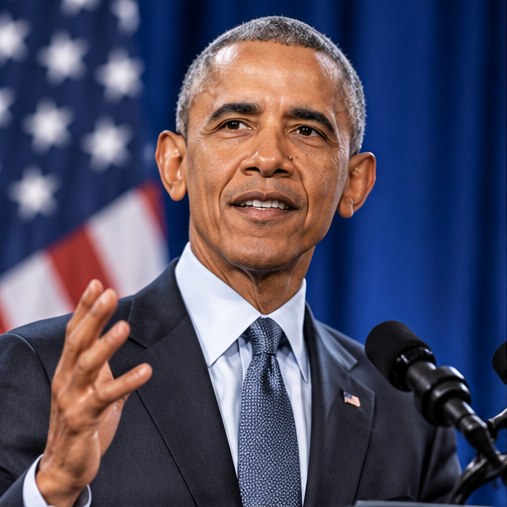
Former President Barack Obama emerged as the most frequently named answer when Americans were asked which U.S. president they admire most, according to a CNN poll conducted by SSRS. Thirty percent named Obama, putting him ahead of President Donald Trump, who was selected by 19%.
WHAT THE NUMBERS ACTUALLY SAY
The result is striking, but its wording matters. Respondents were not asked who had the highest job-approval rating, who they would vote for today, or who they believed was the most effective president. The survey asked an open-ended question: which president, across U.S. history, they most admire.
TRUMP FINISHES SECOND
Trump placed second overall with 19%, an important sign that he retains a substantial base of admiration among Americans. The gap between the two men was 11 percentage points — notable in a political environment where opinions of recent presidents are often filtered through party identity.
LINCOLN AND REAGAN SHARE THE NEXT TIER
Abraham Lincoln and Ronald Reagan each received 9% of responses, followed by John F. Kennedy at 6% and George Washington at 5%. The list mixes modern political figures with presidents whose legacies have been debated and reassessed for generations.
A SMALLER SHARE CHOSE OTHER LIVING PRESIDENTS
Bill Clinton was named by 2% of respondents, while Joe Biden and George W. Bush each received 1%. Another 1% named “Bush” without specifying which president. Nearly one in ten respondents either said they admired none of the presidents or offered no opinion.
OBAMA’S FAVORABILITY IS ALSO HIGHER
The same survey found that 57% of Americans held a favorable view of Obama. Trump’s favorability stood at 34%, while Biden’s was 30%. Those figures measure general opinion of each man, a separate question from the open-ended measure of admiration.
THE GAP CROSSES BEYOND THE DEMOCRATIC BASE
Obama’s strongest support came from Democrats: 64% named him as the president they admired most. The poll also found that about 19% of Republicans viewed him favorably, suggesting that his positive image is not confined entirely to his own party — even though partisan differences remain pronounced.

REPUBLICANS NAME TRUMP
Among Republicans, Trump was the clear favorite, with 53% naming him as the president they admired most. Reagan followed at 18%, while Lincoln received 8%. The partisan breakdown shows why the national result should not be mistaken for a shared consensus about presidential leadership.
INDEPENDENTS OFFER ANOTHER TEST
The survey found Obama’s standing among political independents was more than twice as high as the favorability ratings for Trump or Biden. That finding may help explain his overall advantage: a former president can retain support among voters who do not identify closely with either major party.
PRESIDENTIAL REPUTATIONS CAN CHANGE
Public judgments of presidents are not fixed when they leave office. The poll’s findings point to the way reputations evolve as events recede, new controversies emerge and voters compare a former administration with the political conditions of the present.
GEORGE W. BUSH’S IMAGE HAS SHIFTED
George W. Bush, who left office amid deeply negative public assessments, now registered a narrowly positive favorability balance in the survey: 42% favorable and 33% unfavorable. The remaining responses included people who were uncertain or had no opinion.
BIDEN’S NUMBERS TELL A DIFFERENT STORY
Biden’s 30% favorable rating was lower than the 33% he recorded as he left office, and far below the 59% favorable rating he had when he took office. The poll also found a growing share of respondents expressing no opinion of him, complicating any simple reading of the decline.
YOUNGER AMERICANS HAVE A DIFFERENT MEMORY
Age appears to shape how Americans assess presidents from earlier eras. More than four in ten adults under 30 said they had no opinion of either Bush or Clinton. For many younger respondents, the Obama and Trump years have formed the central frame through which modern presidential politics is remembered.
A POLL CONDUCTED OVER THREE WEEKS
SSRS interviewed 2,480 U.S. adults between May 7 and May 31, 2026. The survey combined online and telephone interviews, drawing respondents from an address-based sample and a random-digit-dial sample of prepaid cellphone numbers. Participants were contacted by mail, phone or text.
HOW MUCH UNCERTAINTY IS IN THE RESULTS?
For the full sample, the poll reported a margin of sampling error of plus or minus 2.7 percentage points. That margin is a guide to sampling uncertainty, not a guarantee that every subgroup estimate is equally precise. Smaller groups, including party subgroups, carry wider uncertainty.
THE LIMITS OF A SINGLE QUESTION
An admiration question captures a personal judgment, not a complete evaluation of a presidency. Respondents may be thinking about a president’s character, historical symbolism, policy achievements, crisis leadership or the way that person compares with current political figures. The poll does not determine which factor mattered most to each respondent.
WHY THE RESULT MATTERS POLITICALLY
Obama’s lead offers a snapshot of how Americans are looking back at a recent Democratic president while a Republican successor occupies the White House. It also underscores the limits of assuming that a former president’s influence ends when the administration leaves Washington.

A LEGACY STILL BEING DEBATED
Obama’s presidency remains contested across issues including health care, immigration, foreign policy, counterterrorism and the response to the financial crisis. A high admiration score does not erase those debates. It indicates that, among the names people volunteered, he was the most frequently chosen.
THE BOTTOM LINE
The CNN/SSRS survey places Obama first in the public’s stated admiration, Trump second, and Lincoln and Reagan next. The result is a meaningful measure of national sentiment — but not a verdict on history, a presidential approval ranking or proof that Americans agree on what makes a leader admirable.
Comments (0)
Loading comments...
May You Like

IOWA ENVIRONMENTAL DISASTER: 5-TON WASTE BLAST DISPLACES 3,000 FAMILIES!

I-75 THANKSGIVING NIGHTMARE — MAIL TRUCK CRASH RAISES OVERPASS COLLAPSE FEARS!

STORM WARNING: MILLIONS FACE EVACUATION, MACY'S GIANT BALLOONS GROUNDED!

Latest Posts








Popular Posts




