
OBAMA VS. TRUMP in Washington
OBAMA VS. TRUMP: Explosive Corruption Accusations Fuel a New Political Showdown as Questions Mount Over Accountability in Washington

WASHINGTON, D.C. — A dramatic political graphic featuring President Donald Trump and former President Barack Obama is drawing attention to one of the most divisive themes in American politics: accusations of corruption, the use of government power, and the deepening rivalry between two presidents who represent sharply different political movements.
The image carries three attention-grabbing messages: "CORRUPTION ATTACKS," "OBAMA VS TRUMP," and "MASSIVE SHOWDOWN."
Together, they suggest an extraordinary confrontation between the current president and his Democratic predecessor.
But the image leaves a crucial question unanswered.
What specific corruption allegation is being made, and what evidence supports it?
There is no identified investigation, court filing, official statement, or documented exchange between Trump and Obama accompanying the graphic.
That absence of detail matters because corruption accusations can have serious consequences for public trust, political reputations, and the credibility of government institutions.
The graphic may refer to a genuine political dispute, but it does not independently establish that either president committed corruption.
The larger story concerns the history of their rivalry, the controversies surrounding federal investigations, and the question of whether political accountability can be pursued without turning the justice system into a partisan weapon.
A Rivalry That Has Shaped American Politics
The relationship between Trump and Obama has been contentious for more than a decade.
Before Trump entered the White House, he became a prominent promoter of false claims questioning whether Obama had been born in the United States.
Obama was born in Honolulu, Hawaii, and his eligibility to serve as president was established.
The controversy nevertheless became a major feature of Trump's early political identity.
After winning the 2016 presidential election, Trump succeeded Obama in the White House.
Their political differences became increasingly visible.
Obama emphasized multilateral diplomacy, expanded healthcare coverage, and a different approach to federal regulation.
Trump pursued a nationalist economic agenda, tougher immigration enforcement, and efforts to reverse major Obama-era policies.
The rivalry was therefore not simply personal.
It reflected competing ideas about the direction of the United States.
Why Corruption Accusations Have Become So Powerful

Corruption is one of the most serious allegations that can be made against a public official.
It can involve bribery, misuse of public resources, conflicts of interest, obstruction of justice, or abuse of official authority.
But not every controversial political decision is corruption.
A policy disagreement does not establish criminal misconduct.
An investigation does not automatically prove wrongdoing.
And a politician's accusation against an opponent is not equivalent to a court finding.
These distinctions are particularly important when allegations involve current or former presidents.
The public has a legitimate interest in knowing whether government officials have complied with the law.
But that interest is best served by documentary evidence, independent investigations, and fair legal procedures.
The graphic's dramatic wording does not supply that evidence.
Trump's Longstanding Criticism of the Obama Administration
Trump has repeatedly criticized decisions made during Obama's presidency.
His objections have included healthcare policy, immigration enforcement, foreign relations, and the conduct of federal agencies.
One particularly contentious area involves the investigation of Russian interference in the 2016 presidential election.
Trump and his allies have accused officials associated with the Obama administration of politically motivated conduct.
Democrats and former intelligence officials have rejected broad allegations that the investigation itself was a fabricated conspiracy.
The underlying record is complex.
U.S. intelligence agencies concluded that Russia conducted an influence campaign targeting the 2016 election.
Investigations also examined contacts between individuals associated with Trump's campaign and Russian figures.
Those findings must be distinguished from separate allegations about whether particular investigators acted improperly.
A credible assessment requires examining the specific conduct at issue rather than treating all related controversies as one event.
The Russia Investigation Remains a Political Flashpoint
The investigation led by Special Counsel Robert Mueller became one of the most consequential political controversies of Trump's first presidency.
Mueller's report documented Russian interference in the 2016 election.
It did not establish that the Trump campaign criminally conspired or coordinated with the Russian government in that interference.
The report also examined possible obstruction of justice.
Mueller did not make a traditional prosecutorial judgment on whether Trump committed an obstruction offense.
Those distinctions are frequently lost in partisan arguments.
Trump's supporters have emphasized the absence of a criminal conspiracy charge against him.
His critics have emphasized the documented Russian interference and the report's findings concerning obstruction-related conduct.
Neither perspective justifies inventing evidence against Obama or Trump.
The report remains an important historical source for understanding the dispute.
Investigations Into Federal Investigators
The conduct of federal investigators has itself been examined.
Justice Department Inspector General Michael Horowitz reviewed aspects of the FBI's handling of the Russia investigation.
His 2019 report identified serious errors and omissions in certain surveillance applications.
The review also found that the FBI had an authorized investigative purpose when it opened the investigation.
Special Counsel John Durham subsequently examined the origins and handling of the investigation.
His 2023 report criticized aspects of the FBI's conduct and investigative judgment.
But criticism of investigative practices does not automatically establish that Obama personally directed a criminal conspiracy.
Any allegation against a former president would require evidence connecting that individual to specific unlawful conduct.
The distinction between institutional failures and personal criminal responsibility is essential.
Why Obama's Name Continues to Appear
Obama remains an influential figure within Democratic politics.
His presidency continues to shape debates over healthcare, immigration, climate policy, and foreign affairs.
Trump frequently uses the Obama years as a point of comparison when defending his own policies.
Obama, meanwhile, has criticized aspects of Trump's political approach and public rhetoric.
Their opposing political identities make them natural subjects for dramatic social media graphics.
But their visibility also creates opportunities for misleading claims.
An image featuring both men may imply a direct confrontation even when no recent exchange has occurred.
The existence of a political rivalry does not establish a new scandal.
To understand a particular accusation, readers need to know who made it, when it was made, and what evidence was presented.
The Difference Between Political Attacks and Criminal Charges
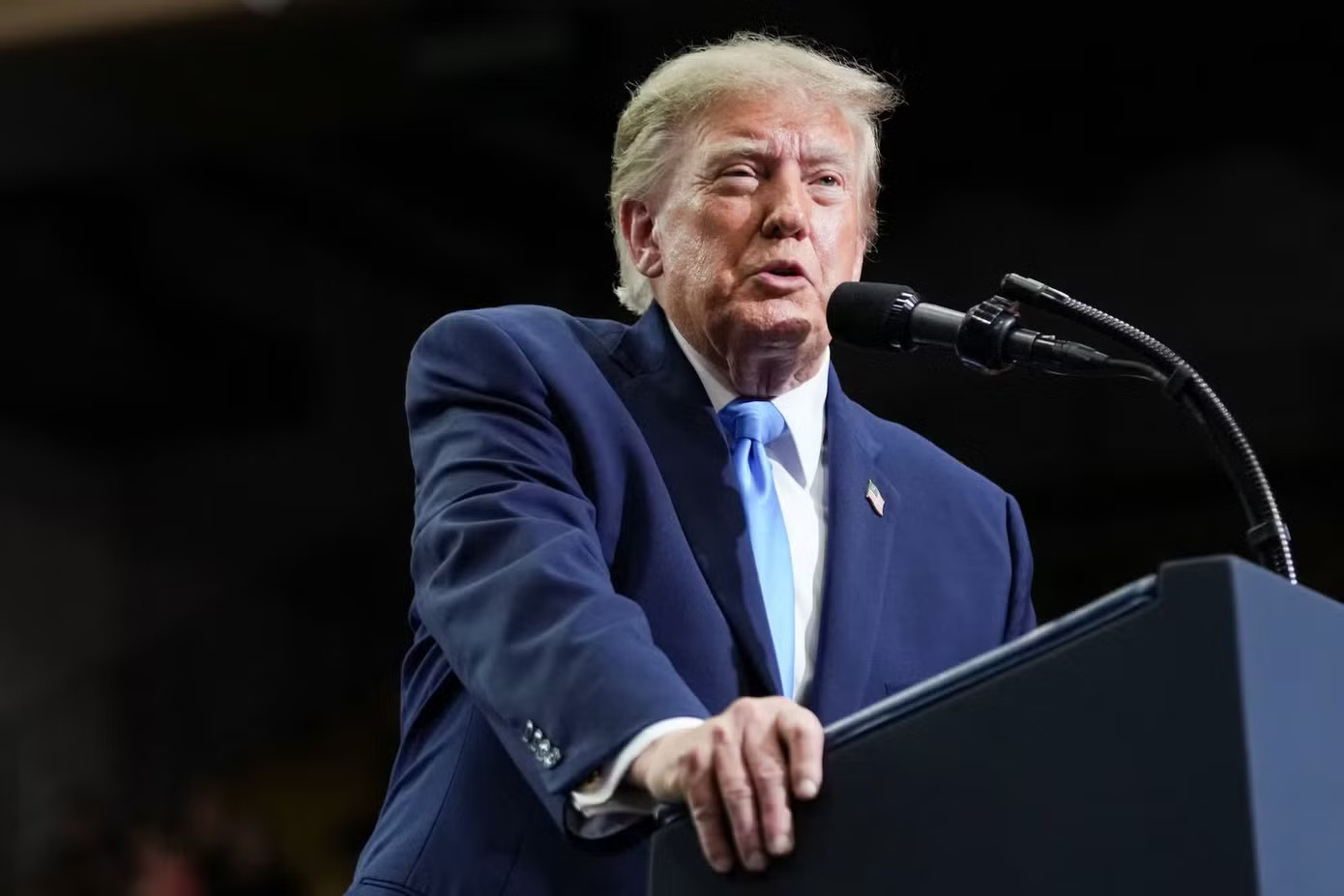
Political leaders frequently accuse opponents of dishonesty, corruption, or abuse of power.
Such accusations may be intended to influence public opinion.
Criminal charges, however, require a legal process.
Federal prosecutors must evaluate evidence and applicable law before bringing charges.
Defendants are entitled to due process and the presumption of innocence.
Courts determine legal questions through established procedures.
A public statement by a president cannot substitute for those safeguards.
Nor can a television headline establish that an alleged crime occurred.
The distinction is particularly important when the target of an accusation is a former president.
Political accountability and criminal responsibility are related but separate concepts.
Could a Former President Face Criminal Investigation?
Former presidents are not categorically exempt from all criminal investigation.
However, constitutional immunity rules can significantly affect potential prosecutions involving presidential conduct.
In its 2024 decision in Trump v. United States, the Supreme Court recognized absolute immunity for certain exercises of core constitutional authority and presumptive immunity for other official acts.
The Court also distinguished unofficial conduct from official presidential actions.
Those principles can complicate attempts to prosecute former presidents for actions taken while in office.
The applicability of immunity depends on the specific allegations and circumstances.
It would therefore be inaccurate to suggest that any political accusation automatically creates criminal liability.
A prosecution would require a legally viable case supported by admissible evidence.
The Danger of Treating Allegations as Verdicts
Political graphics often use language associated with dramatic confrontations.
Words such as "bombshell," "showdown," and "corruption" create urgency.
But they can also encourage readers to assume that an accusation has already been proved.
That is especially risky when the image does not identify the underlying allegation.
A headline might refer to an investigation, a public disagreement, a court ruling, or simply a commentator's opinion.
Those are very different events.
Reliable reporting should identify which one actually occurred.
It should also make clear whether the evidence has been independently verified.
The public deserves more than an emotionally compelling suggestion of wrongdoing.
The Role of Congress in Political Accountability
Congress has broad authority to conduct oversight of the executive branch.
Lawmakers may investigate how federal agencies spend money, implement laws, and exercise their authority.
Congressional committees can request records, hold hearings, and question witnesses.
These powers can be used to investigate conduct associated with administrations of either party.
But congressional oversight is not equivalent to a criminal conviction.
A hearing may reveal misconduct.
It may also reveal disagreements over policy or administrative judgment.
The significance of any finding depends on the evidence.
A partisan accusation does not become true simply because it is repeated during a congressional hearing.
Trump's Own Legal History Complicates the Debate
Trump's political career has also been shaped by legal investigations and proceedings.
He was impeached twice during his first presidency.
The Senate acquitted him in both trials.
He also faced criminal prosecutions involving business records, classified documents, and efforts to overturn the 2020 election.
These cases followed different legal paths and produced different outcomes.
In 2024, a New York jury convicted Trump on 34 felony counts of falsifying business records.
The existence of that conviction does not establish the truth of unrelated corruption allegations.
Similarly, criticism of investigations involving Trump does not establish criminal wrongdoing by Obama.
Each legal matter must be evaluated on its own evidence.
The Question of Equal Justice
One of the most important principles in the American legal system is that public officials should be accountable under the law.
That principle applies regardless of political party.
But equal justice also requires consistent standards of evidence and due process.
Investigations should not be launched solely to punish political opponents.
Nor should legitimate allegations be dismissed simply because they involve powerful individuals.
The challenge is to preserve the independence of legal institutions during periods of intense political conflict.
When presidents accuse their predecessors of wrongdoing, the stakes become especially high.
The credibility of the justice system depends on whether decisions are grounded in law rather than partisan pressure.
How Political Media Amplifies Presidential Rivalries
The modern media environment rewards conflict.
A graphic featuring Trump and Obama can attract attention even without identifying a specific event.
Both men are internationally recognizable.
Their political differences are well established.
And corruption allegations carry an immediate emotional impact.
Social media platforms can amplify such content through shares, comments, and reactions.
But high engagement does not establish accuracy.
A post may spread because it confirms an audience's existing beliefs rather than because it provides new evidence.
This makes verification particularly important.
Readers should seek original statements, official documents, and credible reporting before accepting a sensational claim.
Why the Original Source Matters
The image resembles a television news graphic.
It uses bold yellow lettering, contrasting red and blue banners, and separate photographs of Trump and Obama.
These elements create the appearance of a major breaking-news segment.
However, the image does not provide a clearly identifiable original broadcast, publication date, or supporting report.
A news-style design is not proof that the content came from a reputable newsroom.
The same visual techniques can be used in commentary videos, social media posts, and edited graphics.
To establish authenticity, the original video or article would need to be located.
The precise allegation could then be compared with the underlying evidence.
Without that information, the image remains an unverified summary of an unspecified controversy.
The Political Legacy of Obama's Presidency
Obama served as president from January 2009 to January 2017.
His administration oversaw the implementation of the Affordable Care Act, responses to the financial crisis, and major foreign policy decisions.
Supporters credit him with expanding health insurance coverage and guiding the economy through a difficult recovery.
Critics have challenged his regulatory policies, immigration decisions, and aspects of his foreign policy.
Those debates remain part of his political legacy.
But disagreements about his administration's record should not be confused with evidence of personal corruption.
A claim of criminal wrongdoing requires a specific allegation and a factual basis.
The graphic does not provide either.
Trump's Political Strategy and the Obama Comparison
Trump has frequently framed his political agenda as a rejection of policies associated with previous Democratic administrations.
Obama represents an especially important comparison because his presidency immediately preceded Trump's first term.
The two leaders differ sharply in political style and policy priorities.
Trump emphasizes border enforcement, economic nationalism, and a confrontational approach to political institutions.
Obama has generally emphasized coalition-building, institutional stability, and multilateral cooperation.
Their competing approaches have shaped political debates for years.
But a policy rivalry is not the same as a newly established corruption scandal.
Any report claiming a major new confrontation must identify the actual event.
What Would Constitute a Genuine Corruption Bombshell?
A credible corruption revelation would require concrete evidence.
That might include authenticated financial records, official communications, sworn testimony, or findings from a lawful investigation.
The evidence would need to connect a particular person to identifiable conduct.
Investigators would also need to distinguish unethical behavior from conduct that violates criminal law.
Not every conflict of interest is a prosecutable offense.
Not every controversial government decision is an abuse of power.
And not every accusation from a political opponent is supported by evidence.
The more serious the allegation, the more important these distinctions become.
The image does not contain the information necessary to make such a determination.
Could the Rivalry Affect Future Elections?
Trump and Obama remain influential figures within their respective political movements.
Their public statements can shape political debates and energize supporters.
Republicans may use criticism of Obama-era policies to defend Trump's agenda.
Democrats may invoke Obama's presidency when presenting an alternative vision of government.
The rivalry could therefore remain prominent in future campaigns.
But the electoral impact of any new accusation would depend on its credibility and the public's response.
Unverified allegations may attract attention without persuading undecided voters.
Documented findings, by contrast, can have more lasting political consequences.
The difference depends on evidence rather than the intensity of the headline.
The Broader Cost of Political Distrust
Repeated accusations of corruption can weaken confidence in government institutions.
Some allegations expose genuine wrongdoing and contribute to accountability.
Others spread without sufficient evidence and deepen public cynicism.
When voters come to believe that every political opponent is corrupt, meaningful distinctions between proven misconduct and unsupported accusations can disappear.
That environment makes democratic accountability more difficult.
Citizens need reliable information to evaluate public officials.
They also need institutions capable of investigating misconduct fairly.
Political competition is essential to democracy, but it does not eliminate the need for factual standards.
What the Graphic Actually Establishes
The image establishes that someone has presented Trump and Obama as opponents in a corruption-related political controversy.
It does not establish that a new corruption investigation has been opened.
It does not identify criminal charges.
It does not provide evidence that either man committed a new offense.
And it does not show that the two presidents recently confronted each other directly.
The phrase "MASSIVE SHOWDOWN" is a characterization, not a documented event.
The phrase "CORRUPTION ATTACKS" is similarly ambiguous.
It could refer to accusations, commentary, investigations, or political criticism.
Without the original source, the meaning remains uncertain.
The Real Question Behind the Headlines
The rivalry between Trump and Obama has influenced American politics for years.
It has shaped debates about government power, national security, healthcare, and the credibility of federal institutions.
Corruption accusations add another layer of intensity to that rivalry.
But dramatic language cannot establish the truth of an allegation.
The public needs to know what was alleged, who made the allegation, and whether credible evidence supports it.
Until those questions are answered, the image should be treated as political commentary or an unverified news graphic rather than proof of a new corruption scandal.
The larger issue remains important.
How can the United States hold powerful political figures accountable while protecting the independence of its legal institutions?
That question reaches beyond Trump and Obama.
It concerns the credibility of American democracy itself.
And its answer will depend not on which political figure delivers the most dramatic accusation, but on whether the evidence withstands careful scrutiny.
Comments (0)
Loading comments...
May You Like

IOWA EMERGENCY: TOXIC AIR, POLLUTED WATER, 3,000 FAMILIES FORCED OUT AFTER 5-TON WASTE BLAST!

TOLEDO I-75 TRUCK CRASH — POTENTIAL BRIDGE COLLAPSE AND MILLIONS IN DAMAGE!

WARNING: OVER 1 MILLION COULD LOSE POWER AND NEARLY 2 MILLION FACE WATER ALERTS ON THANKSGIVING!

Latest Posts









Popular Posts




