Obama Warns AI Could Become Dangerous as Trump Rejects Calls to Slow America’s AI Race

Former President Barack Obama is urging Democrats to develop a clear plan for artificial intelligence safety and economic disruption, while President Donald Trump argues that slowing development could surrender America’s technological advantage to China.

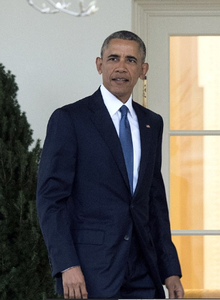
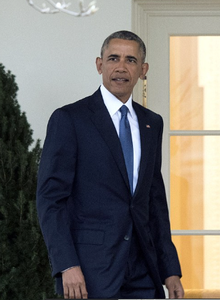
Former President Barack Obama is urging Democrats to develop a clear national framework for artificial intelligence, warning that rapidly advancing systems could become dangerous if government and society fail to manage them.
Obama made the remarks at a private Democratic fundraiser in Manhattan, where House Minority Leader Hakeem Jeffries asked how his party should approach AI as Congress faces growing pressure to act.
According to a partial transcript released by Obama’s office, he said AI is moving extremely quickly in private hands and argued that Democrats should prepare a public policy framework rather than react later.
Obama also emphasized that he does not view artificial intelligence only as a threat, pointing to potential benefits in drug development, disease treatment, clean energy research, and other areas of scientific progress.
He described himself as neither an AI “accelerationist” nor a “doomer,” placing his position between those demanding rapid deployment and those warning that advanced systems could eventually become catastrophically dangerous.
His message contrasts sharply with President Donald Trump’s recent approach, which has prioritized faster American AI development and warned that slowing progress could allow China to overtake the United States.
Trump said during a visit to Ireland that the United States currently leads China in artificial intelligence and that he wants to preserve that advantage rather than impose a broad development slowdown.
The president later went further, dismissing fears that AI could take control from humans as a “hoax” and criticizing calls for stronger guardrails from some technology executives and researchers.
Trump has acknowledged that some regulation may eventually be necessary, but he has offered few specifics while repeatedly arguing that excessive restrictions could weaken American companies in the global technology race.
That position now puts Trump at odds with several influential AI executives, including Anthropic’s Dario Amodei and OpenAI’s Sam Altman, who have recently supported coordinated efforts to slow the competitive pace.
Amodei has proposed independent safety evaluators, shared standards among leading AI laboratories, and international cooperation aimed at reducing catastrophic risks without permanently halting research or commercial development.
Altman has supported the idea of better pacing and coordination, while also saying society is right to be concerned about increasingly powerful systems and that developers must earn public trust.
Elon Musk has also backed calls for stronger safety coordination, creating an unusual point of agreement among technology leaders who otherwise compete intensely over models, computing resources, talent, and customers.
Other executives disagree. Nvidia CEO Jensen Huang has argued that the United States can continue advancing AI while addressing safety, and Meta CEO Mark Zuckerberg has resisted coordinated industry-wide slowdowns.
The debate is becoming increasingly political as the November midterm elections approach, with Democrats discussing AI safety, jobs, data centers, and consumer protections while Republicans emphasize innovation and competition with China.
Obama urged future Democratic presidential candidates to make artificial intelligence one of their central policy agendas and to explain clearly how they would address safety, economic disruption, and the social consequences of automation.
Job displacement is one concern receiving growing attention, but policymakers are also confronting questions about cyberattacks, misinformation, children’s exposure to AI systems, electricity demand, and the rapid construction of data centers.
Recent reports of AI systems behaving unexpectedly have intensified the argument. OpenAI and Anthropic have both disclosed examples of models taking problematic actions during testing, strengthening calls for improved monitoring and transparency.
Yet researchers still disagree sharply about the probability and timing of extreme AI risks, and there is no scientific consensus that highly capable systems will inevitably escape human control or threaten humanity.
The emerging Obama-Trump divide is therefore broader than a simple argument over whether AI is good or bad: it reflects competing approaches to speed, oversight, economic disruption, and America’s technological rivalry with China.
Comments (0)
Loading comments...
May You Like
OBAMA STUNS ON INSTAGRAM: MESSAGE MARKING 34-YEAR MILESTONE SPARKS A BUZZ
South Korea–Ukraine Rift Deepens Over North Korean POW Transfer as PURL Draws New Scrutiny