
Obama’s Iran Nuclear Deal Returns to the Spotlight
Obama’s Iran Nuclear Deal Returns to the Spotlight as Rubio Praises Trump’s Negotiations
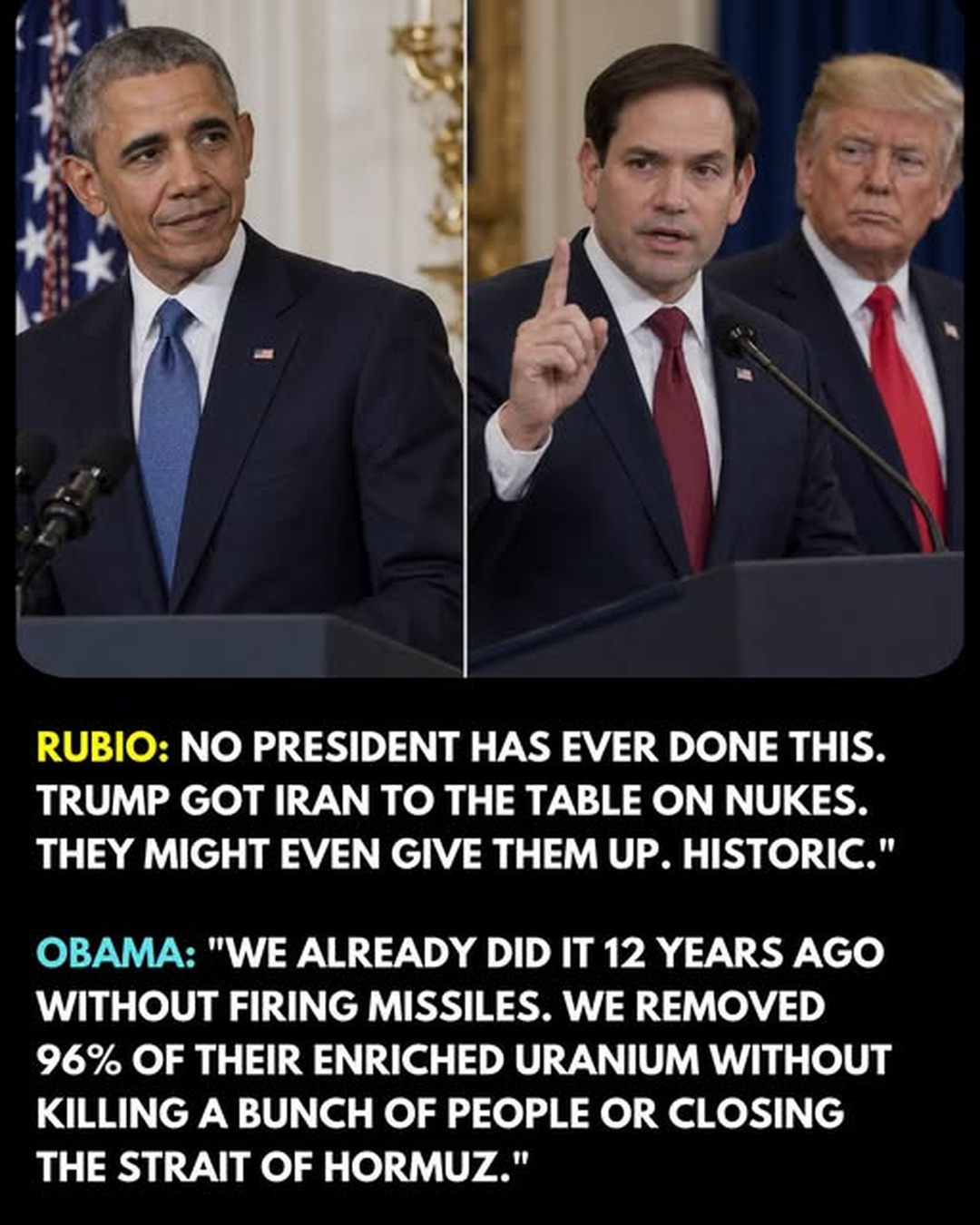


A political comparison involving Barack Obama, Marco Rubio, and Donald Trump has reignited debate over how the United States should handle Iran’s controversial nuclear program.
A viral image circulating online presents Rubio praising Trump for bringing Iran back to nuclear negotiations, while Obama supposedly responds by pointing to the agreement reached during his presidency.
However, the image does not establish that either politician made the exact statements attributed to them. No verified transcript or reliable reporting has confirmed the alleged direct exchange.
The historical comparison nevertheless highlights two significantly different approaches to confronting Iran’s nuclear ambitions: diplomatic restrictions negotiated under Obama and the pressure-based strategy pursued by Trump.
In July 2015, the Obama administration joined Britain, France, Germany, Russia, China, and the European Union in reaching the Joint Comprehensive Plan of Action, commonly known as the JCPOA.
The agreement was designed to restrict Iran’s nuclear activities in exchange for sanctions relief, while establishing international monitoring intended to prevent Tehran from developing a nuclear weapon.
Under the deal, Iran agreed to reduce its enriched uranium stockpile from approximately 10,000 kilograms to no more than 300 kilograms of low-enriched uranium for 15 years.
The agreement also limited uranium enrichment to 3.67 percent, restricted the number of operating centrifuges, and required major changes to Iran’s nuclear facilities.
According to arms-control organizations, Iran eliminated approximately 97 to 98 percent of its previous enriched uranium stockpile as part of implementing the agreement.
The reduction was achieved through a combination of transferring material outside the country, diluting uranium, and other measures required under the international agreement.
The International Atomic Energy Agency was given extensive monitoring responsibilities, including access and verification measures intended to provide greater transparency into Iran’s nuclear activities.
For Obama and supporters of the agreement, the JCPOA demonstrated that international negotiations could place substantial restrictions on Iran’s nuclear program without launching a direct military campaign.
Republicans, including Trump and Rubio, strongly criticized the agreement, arguing that its restrictions were temporary in important areas and that sanctions relief provided Tehran with additional financial resources.
Trump withdrew the United States from the agreement in May 2018, arguing that the deal failed to address Iran’s missile program, regional activities, and other security concerns.
After Washington reinstated sanctions, Iran gradually exceeded several of the nuclear restrictions established under the agreement, increasing uranium enrichment levels and expanding its nuclear capabilities.
The dispute over the consequences of the withdrawal remains central to the debate. Critics argue that abandoning the agreement weakened diplomatic restrictions, while supporters maintain that the original deal was insufficient.
In 2026, the Trump administration has pursued renewed negotiations while maintaining that Iran must accept strict conditions preventing it from acquiring nuclear weapons.
Rubio has publicly emphasized that Iran must demonstrate its intentions through verifiable actions rather than relying on diplomatic assurances alone.
The administration has also argued that Iran’s remaining enriched uranium stockpile and enrichment infrastructure must be addressed in any lasting agreement.
At the same time, the conflict involving Iran and the United States has complicated diplomatic efforts, particularly as military operations and tensions surrounding the Strait of Hormuz have affected regional security and global energy markets.
Obama’s nuclear agreement has consequently returned to the center of political debate, with Democrats highlighting its restrictions and Republicans emphasizing what they consider its weaknesses.
The viral image exaggerates this debate by presenting an unverified exchange as though Obama and Rubio directly confronted each other over the negotiations.
Nevertheless, the underlying historical disagreement is real: whether diplomacy backed by international inspections or a strategy combining economic and military pressure offers a more sustainable way to prevent Iran from obtaining nuclear weapons.
Ultimately, the debate is not simply about which president deserves credit. It concerns the effectiveness of American foreign policy, the cost of military confrontation, and the long-term consequences of agreements with Tehran.
Comments (0)
Loading comments...
May You Like


TOLEDO I-75 TRUCK CRASH — POTENTIAL BRIDGE COLLAPSE AND MILLIONS IN DAMAGE!

IRAN CLAIMS IT FIRED AT U.S. WARPLANES — WAS AN AMERICAN F-16 FORCED TO RETREAT?












