
OBAMA’S ISRAEL REMARKS SPARK FIERCE BACKLASH
OBAMA’S ISRAEL REMARKS SPARK FIERCE BACKLASH AS NETANYAHU RESPONDS
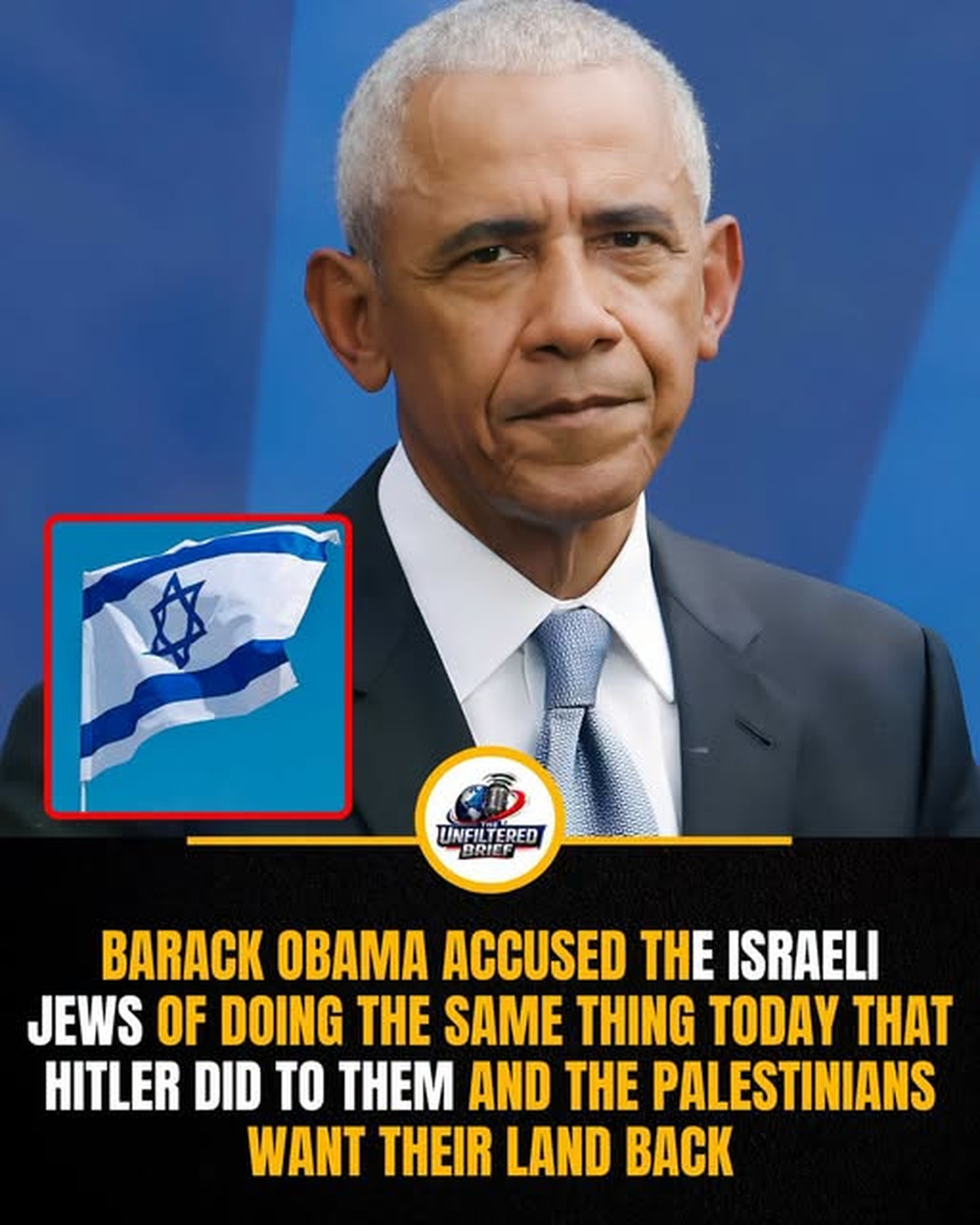


Former U.S. President Barack Obama has reignited debate over Israel and Palestine after delivering pointed remarks about Israel’s founding, Palestinian displacement and the moral consequences of its current security policies.
Obama made the comments on October 13 during a public conversation with journalist Susan McKay at Belfast’s O2 arena, where approximately 7,000 people gathered to hear the former president discuss international affairs and democracy.
The discussion turned to the Israeli-Palestinian conflict, one of the world’s most enduring political disputes, as Obama reflected on historical grievances and the obstacles preventing a lasting peace.
Obama acknowledged that Jewish people had endured centuries of persecution, discrimination and killings, much of it in Europe, explaining why many sought refuge in a place with historical ties to their community.
However, he also argued that Israel’s establishment involved Palestinians losing land and being expelled, leaving many with a profound sense of injustice that continues to shape the conflict today.
According to reporting on the remarks, Obama said Palestinians understandably viewed those events as unjust and wanted their land back. His comments placed historical displacement at the center of his broader argument about peace.
Obama also warned that a country’s military superiority cannot, by itself, guarantee lasting security. He argued that relying on overwhelming strength while refusing meaningful concessions could undermine Israel’s moral standing internationally.
His remarks did not amount to a direct comparison between Jewish people and Adolf Hitler, despite the stronger wording circulating in some online descriptions. The distinction matters when evaluating the accuracy of viral political claims.
The former president emphasized that both Israelis and Palestinians would continue living in the region, making a political solution essential rather than optional. He urged both communities to consider how future generations could live safely.
Obama also challenged Israeli leaders to consider whether security could depend indefinitely on walls, military force and the destruction of adversaries, or whether a more ethical approach could protect citizens while reducing suffering.
At the same time, he told Palestinians that they could not defeat Israel simply by attempting to outnumber or outgun its military. He instead pointed toward moral arguments, nonviolent strategies and sustained political change.
The remarks quickly drew attention because they addressed both Israel’s historical origins and its contemporary policies, touching on issues that remain deeply sensitive for Jewish communities, Palestinians and supporters of both sides.
Israeli Prime Minister Benjamin Netanyahu responded publicly on October 16, rejecting the suggestion that Israel’s land should be characterized as stolen and emphasizing the Jewish people’s historical connection to their ancestral homeland.
Netanyahu argued that Jewish people were not foreign occupiers and maintained that Israel’s history could not simply be described as a colonial enterprise. His response reflected a fundamentally different interpretation of the country’s origins.
The exchange highlights a longstanding disagreement over competing national narratives: Jewish historical connection and refuge, alongside Palestinian displacement, dispossession and demands for self-determination.
For Palestinians, the events surrounding Israel’s establishment in 1948 remain central to collective memory, particularly the mass displacement and flight of Palestinians during the war surrounding the creation of the state.
For Israelis, historical persecution—including the Holocaust—continues to shape concerns about national survival, antisemitism and the need for reliable security guarantees.
Obama’s comments also addressed the conflict’s present-day consequences. He called for an end to violence, relief for civilians and a halt to continued encroachment in the West Bank, alongside efforts to rebuild Gaza.
His position reflects a broader argument that military strength and security measures must be balanced with political negotiations and protections for civilians if peace is to become sustainable.
The controversy illustrates how discussions of Israel and Palestine can quickly become polarized, particularly when historical responsibility, national identity and territorial claims are presented in competing terms.
Ultimately, Obama’s Belfast remarks have reopened difficult questions about historical injustice, present-day security and the conditions necessary for Israelis and Palestinians to coexist. Whether political leaders can turn such arguments into meaningful progress remains uncertain.
Comments (0)
Loading comments...
May You Like

DAVENPORT AIRBNB HORROR — “SHOTS AT THE DOOR” GAME, 1 DEAD, 6 INJURED!

MINNESOTA NIGHTMARE—UNDERGROUND GAS LEAK, HUNDREDS OF HOMES AT RISK, $300M DAMAGE!

WWE BRONSON REED DEAD AT 38, STIMULANTS DETECTED, $11M INSURANCE PAYOUT FROZEN!








Popular Posts




