
Chris Murphy Calls for Internet Regulation, Linking Online Isolation to Political Appeal of Leaders Like Trump
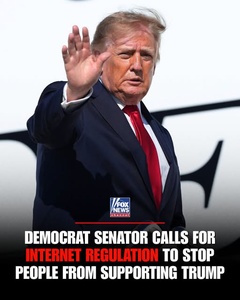
Connecticut Democratic Sen. Chris Murphy has drawn attention after arguing that government should consider regulating parts of the internet to reduce social isolation and strengthen Americans’ sense of connection and personal agency.
Murphy made the comments during a September 20 appearance on IHIP News, where he discussed his new book, “Crisis of the Common Good,” and his broader concerns about technology, community and politics.
During the interview, Murphy said Americans increasingly feel powerless and lonely, conditions he believes can make voters more receptive to political figures who offer simple answers to deeper economic and social frustrations.
He argued that government should help rebuild healthy local institutions, improve workers’ economic power and create rules encouraging people to spend less isolated time on social platforms such as Instagram.
Murphy then connected that argument directly to President Donald Trump, saying people who feel more powerful and less lonely would be less likely to embrace what he described as a demagogue.
The senator’s wording quickly generated headlines suggesting that he wanted internet regulation specifically to stop Americans from supporting Trump, but the full interview presented a broader argument centered on loneliness and civic disconnection.
Murphy did not outline a specific mechanism for limiting political speech, restricting pro-Trump content or directing platforms to suppress particular viewpoints during the interview, according to the publicly available transcript.
Instead, he framed internet regulation as one element of a larger government effort that could also include higher wages, stronger community institutions and policies designed to increase social connection.
The phrase “internet regulation” can describe many different policies, including restrictions affecting minors, platform transparency, privacy protections, content moderation rules and regulation of algorithmic systems used by major technology companies.
Murphy has previously supported federal action aimed at social media. In 2025, he joined Republican and Democratic senators in introducing the Kids Off Social Media Act, focused primarily on protecting minors online.
That proposal would establish a minimum social-media age of 13 and restrict algorithmically targeted content for users under 17, reflecting bipartisan concern about how major platforms affect younger Americans.
Murphy also introduced the National Strategy for Social Connection Act in June 2026, which would establish a White House office focused on social connection and fund additional federal research into isolation.
His office said that legislation was intended to address what Murphy describes as epidemic levels of social isolation, linking loneliness not only to public health concerns but also to political polarization.
The latest comments, however, went further politically by explicitly connecting social isolation with Trump’s appeal, ensuring that the remarks became part of the larger partisan debate over technology and political influence.
Fox News reported that White House spokesperson Davis Ingle responded with a sharply critical statement about Murphy, rejecting the senator’s characterization and attacking his credibility rather than engaging his policy argument.
The dispute arrives as lawmakers from both parties continue debating how much authority government should have over social-media companies, especially regarding algorithms, children’s safety, artificial intelligence and platform accountability.
Those debates also raise constitutional questions whenever government action affects online expression. The Supreme Court has recognized that some government regulation of platforms’ editorial decisions can implicate protections under the First Amendment.
Murphy’s book, released in May 2026, argues that weakened community ties, consumerism, concentrated economic power and new technologies have contributed to a broader erosion of social connection in American life.
He has repeatedly described Trump as a symptom of those deeper conditions rather than their sole cause, arguing that political change alone cannot repair what he sees as long-term cultural and economic problems.
Taken in full context, Murphy did call for government involvement in regulating the internet and linked stronger social connection to reduced support for leaders like Trump, but he did not propose banning pro-Trump speech.
Comments (0)
Loading comments...
May You Like

Shocking news from Ohio: an unexpected development ahead of Trump's rally














