
Patagonia Sues Trump Administration Over 91% Reduction of Bears Ears National Monument
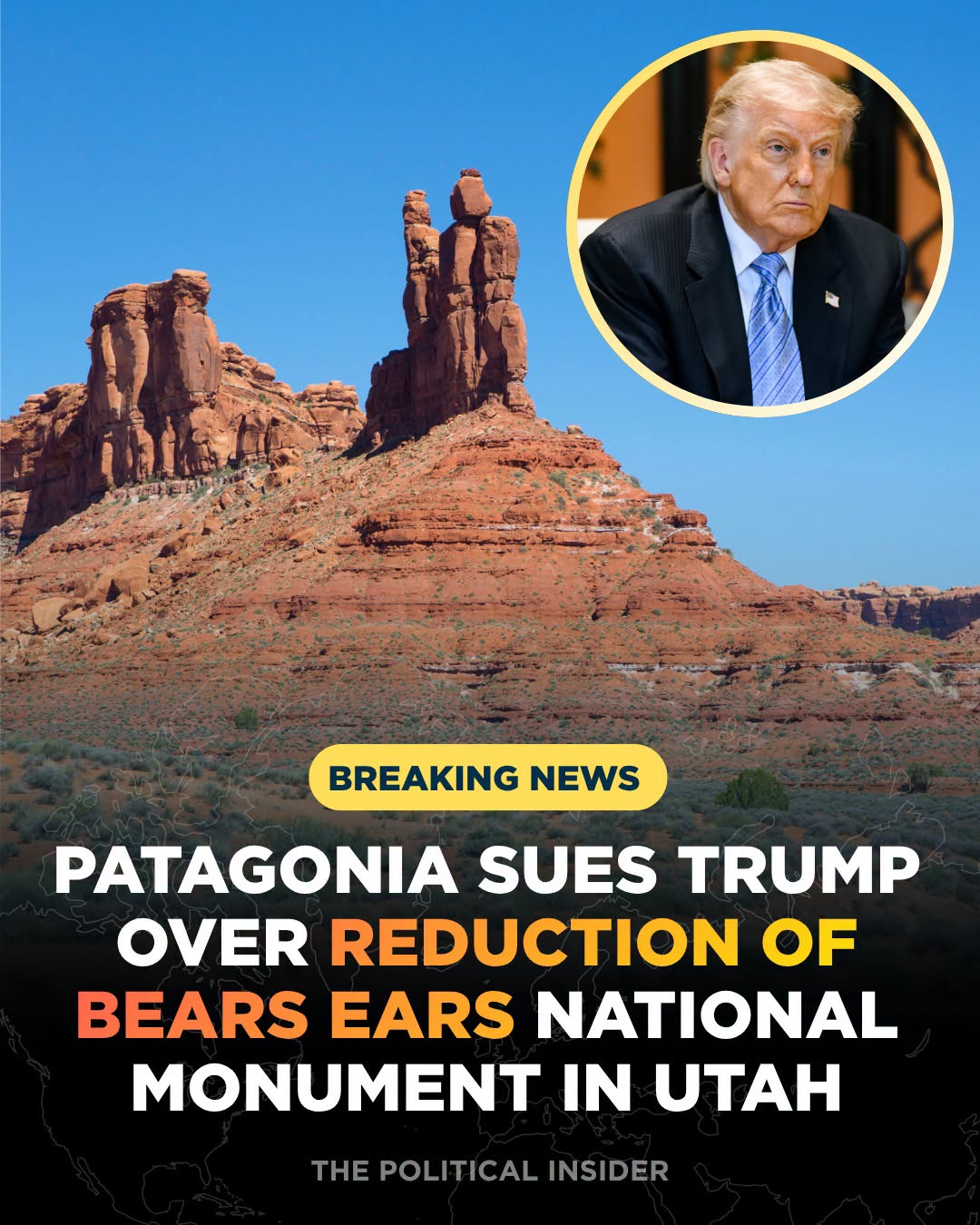
WASHINGTON — Outdoor apparel company Patagonia has returned to federal court to challenge President Donald Trump’s decision to dramatically shrink Utah’s Bears Ears National Monument, reopening a public-lands battle that has now stretched across two Trump administrations.
The lawsuit, filed Sept. 2, 2026, argues that Trump exceeded his presidential authority when he reduced Bears Ears by approximately 91%, stripping federal monument protections from hundreds of thousands of acres in southeastern Utah. Patagonia is joined by conservation, archaeological, outdoor-recreation and Indigenous organizations in seeking to overturn the reduction.
The legal fight is significant not only because of the land at stake, but because it could force the courts to confront a longstanding question under the Antiquities Act of 1906: Can a president who has the authority to create a national monument also substantially dismantle one created by a predecessor?
Trump Shrinks Bears Ears by About 91%
On July 13, Trump signed a proclamation dramatically reducing the boundaries of Bears Ears National Monument.
The monument, which had covered roughly 1.36 million acres, was reduced to approximately 121,100 acres — leaving only a small fraction of the previously protected landscape within the monument's boundaries.
At the same time, Trump ordered a roughly 90% reduction of the nearby Grand Staircase-Escalante National Monument.
Together, the two actions removed federal monument protections from nearly 3 million acres of Utah public land, according to Patagonia and other conservation groups.
The Trump administration has described the move differently.
White House officials have argued that previous Democratic administrations used the Antiquities Act to place excessive amounts of land under federal restrictions. The administration says Trump's action will allow greater access for recreation and other uses, including grazing, timber and resource development.
Trump has called the new boundaries a more reasonable approach to managing Utah's public lands.
Patagonia Says Trump Went Beyond His Legal Authority
Patagonia and its allies argue that the president's proclamation is unlawful.
Their central argument rests on the wording and history of the Antiquities Act.
The law gives presidents authority to establish national monuments to protect objects of historic or scientific interest on federal lands. But it does not expressly give presidents the authority to revoke or substantially shrink monuments created by previous presidents.
That legal ambiguity is now at the center of the renewed lawsuit.
The plaintiffs argue that Congress, rather than the president acting alone, has the authority to eliminate protections from lands that have already been designated as part of a national monument.
Patagonia CEO Ryan Gellert called the reduction a betrayal of tribal sovereignty and criticized the dismantling of the Bears Ears Commission, which had created a landmark tribal co-management arrangement for the monument.
“Slashing Bears Ears and dismantling the Bears Ears Commission is a betrayal of Tribal sovereignty,” Gellert said in a statement announcing the lawsuit.
This Is Not Patagonia's First Fight With Trump
The confrontation has a long history.
Patagonia joined litigation against Trump's administration in 2017, after Trump made his first attempt to reduce Bears Ears and Grand Staircase-Escalante.
The company famously replaced its website's usual homepage with the message:
“The President Stole Your Land.”
That earlier legal battle was effectively put on hold after President Joe Biden restored the monuments to their larger boundaries in 2021.
Now, nearly a decade after the original dispute began, Patagonia has returned to court.
This time, Trump's reduction is even more sweeping.
Bears Ears Is Sacred to Multiple Tribal Nations
The dispute is not simply about environmental conservation.
Bears Ears occupies a deeply significant place in the history and culture of several Indigenous nations.
The area is associated with the Hopi Tribe, Navajo Nation, Pueblo of Zuni, Ute Indian Tribe and Ute Mountain Ute Tribe. The landscape contains archaeological sites, ancestral dwellings, rock art, ceremonial locations and other places of cultural and spiritual importance.
Bears Ears was established by President Barack Obama in 2016 after years of advocacy by tribal nations.
It was particularly notable because it was the first national monument created following a sustained effort led by Indigenous tribes seeking protection for their ancestral lands.
The monument's management structure also gave the five tribes an unusually significant role in advising federal land-management agencies.
Trump's July proclamation terminates that federal agreement with the Bears Ears Commission, according to the renewed legal challenge.
Mining and Energy Development Are Now at the Center of the Dispute
The lawsuit also comes as environmental groups warn that areas removed from monument protection could become more vulnerable to mining and other resource development.
According to Patagonia, at least nine mining claims had been filed in areas removed from the monument boundaries in the weeks following Trump's July proclamation.
Supporters of Trump's decision see the possibility of resource development very differently.
For years, Utah Republican officials have argued that excessive federal restrictions prevent the state from making full use of its public lands.
The Trump administration has emphasized economic development, access and what it describes as responsible land management.
The conflict therefore reflects a much broader American debate:
Should federal public lands primarily be preserved for conservation and cultural protection, or should more of them be opened to mining, energy production, grazing and other economic uses?
Trump Says the Lands Were Effectively Being Kept From the Public
Trump's argument is that monument status has gone too far.
At the July signing ceremony, he argued that previous protections prevented ordinary Utah residents from fully using the land.
The administration has portrayed the reduction as a restoration of public access rather than the destruction of protected land.
But conservation groups strongly dispute that characterization.
Patagonia argues that national monument status does not mean the public is barred from entering the area. The company points to hiking, climbing, hunting, fishing, backpacking and other recreational activities already taking place inside the monuments.
According to figures cited by Patagonia from federal land-management estimates, Bears Ears attracted roughly 416,000 visitors in 2024, while Grand Staircase-Escalante recorded approximately 936,000.
That tourism, the company argues, demonstrates that protected status does not make the land inaccessible.
The Grand Staircase-Escalante Fight Is Moving in Parallel
Bears Ears is not the only Utah monument caught in the legal battle.
Trump also reduced Grand Staircase-Escalante by approximately 90%, cutting the monument from roughly 1.87 million acres to around 181,500 acres.
Environmental and tribal organizations have separately moved to revive litigation challenging that reduction.
The two monuments therefore represent two connected legal battles over the future of federal land in the American West.
The Biden Restoration Is Now Part of the Legal History
The current case cannot be separated from the unusual sequence of presidential actions over the past decade.
In 2017, Trump dramatically reduced both monuments.
In 2021, Biden restored their larger boundaries.
In 2026, Trump has once again reduced them — this time to even smaller areas.
That back-and-forth has created a major legal question over whether national monument boundaries can effectively change with every change of administration.
If Trump's latest action survives in court, conservationists fear that future presidents could similarly dismantle protections established by their predecessors.
If the courts reject Trump's authority, the decision could establish a significant limitation on presidential power over federal public lands.
The Justice Department Has a Different Interpretation
The Trump administration is not conceding the central legal argument.
A Justice Department legal opinion issued last year concluded that a president can reduce or eliminate protections for land inside a national monument when the president determines that the land no longer warrants protection under the Antiquities Act.
That position directly conflicts with the interpretation advanced by Patagonia and its allies.
The courts will ultimately have to decide which interpretation is correct.
The dispute could therefore become much larger than Bears Ears itself.
A Battle Over Presidential Power
At its core, the lawsuit asks a deceptively simple question:
If one president can create a national monument, can the next president simply erase it?
The Antiquities Act clearly gives presidents the authority to establish national monuments.
What it does not clearly say is whether a later president can substantially undo the action.
Previous presidents have reduced monument boundaries in various circumstances, but Trump's latest actions have prompted conservation groups to argue that the scale of the reductions crosses a legal line.
The plaintiffs are asking the courts to restore the original protections and invalidate consequences flowing from Trump's proclamations, including certain new mining claims and mineral leases associated with the affected lands.
Patagonia Has Made Environmental Activism Part of Its Corporate Identity
For Patagonia, the lawsuit is also a continuation of the company's unusually aggressive environmental activism.
The company has long supported conservation organizations and Indigenous-led efforts to protect public lands.
Patagonia says it has supported organizations working on Bears Ears since at least 2013 and has provided more than $1.64 million in grants connected to efforts to protect the region.
The company argues that defending public lands is directly connected to its business because outdoor recreation depends on access to healthy, protected landscapes.
Its decision to sue the federal government therefore represents both an environmental campaign and an extension of its corporate identity.
The Image Is Dramatic — But the Real Story Is Even Bigger
The viral graphic describing the dispute as “Patagonia sues Trump over reduction of Bears Ears National Monument” is essentially accurate, although the underlying story is more complicated than the headline suggests.
Patagonia is not acting alone.
The company is part of a broader coalition that includes Indigenous organizations, conservation groups, archaeologists, outdoor-recreation advocates and historical-preservation groups. Several separate legal actions are now challenging Trump's Utah monument reductions.
And the dispute is not merely about one desert landscape.
It could determine how much power future presidents have to reshape federal land protections without congressional approval.
A New Legal Battle With National Consequences
The courtroom fight over Bears Ears is now underway just as the Trump administration pursues a broader agenda of expanding access to federal lands for development.
For tribal nations, the stakes involve sacred landscapes and ancestral connections that existed long before the federal government drew monument boundaries.
For conservationists, the issue is whether fragile archaeological, paleontological and ecological resources can retain long-term federal protection.
For the Trump administration and its allies, the dispute is about whether previous presidents used the Antiquities Act too broadly and whether states and the public should have greater access to federal land.
And for Patagonia, the message is unmistakable: the company is prepared to fight Trump in court again.
The first battle began in 2017.
Biden's restoration temporarily ended it.
Now Trump's second reduction has brought the same fight back — with nearly 3 million acres of Utah public land caught in the middle and a potentially historic question about the limits of presidential power waiting for the courts to answer.
Comments (0)
Loading comments...
May You Like

Russian Drone Strikes Kyiv Bridge as German Chancellor Arrives in Ukraine

FIGHT OVER OBAMA’S IRAN POLICY













