
Peanut the Squirrel Was Seized and Euthanized in New York — Then the Rabies Tests Came Back Negative
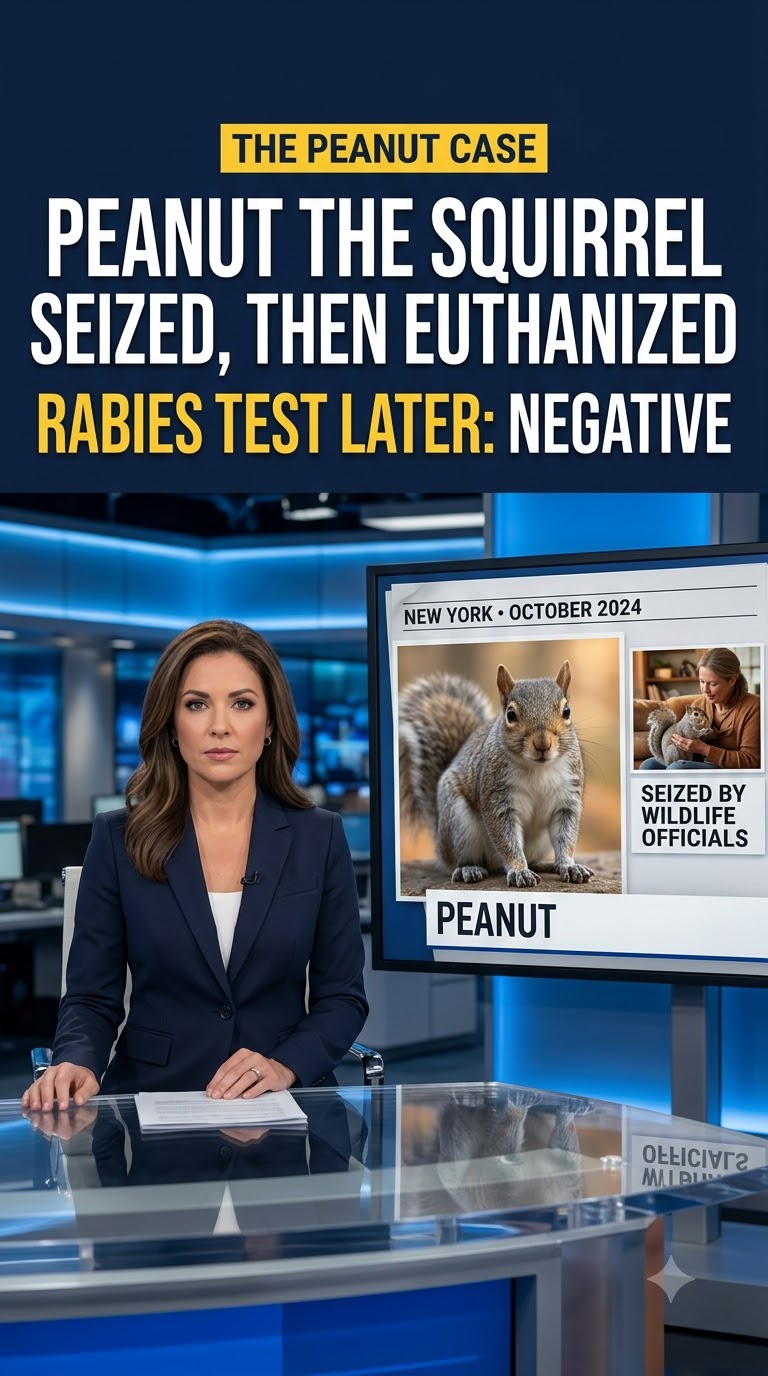
Peanut the squirrel had spent more than seven years living with Mark Longo, appearing in social media videos, eating waffles, wearing tiny hats and becoming the unlikely face of an animal sanctuary in upstate New York.
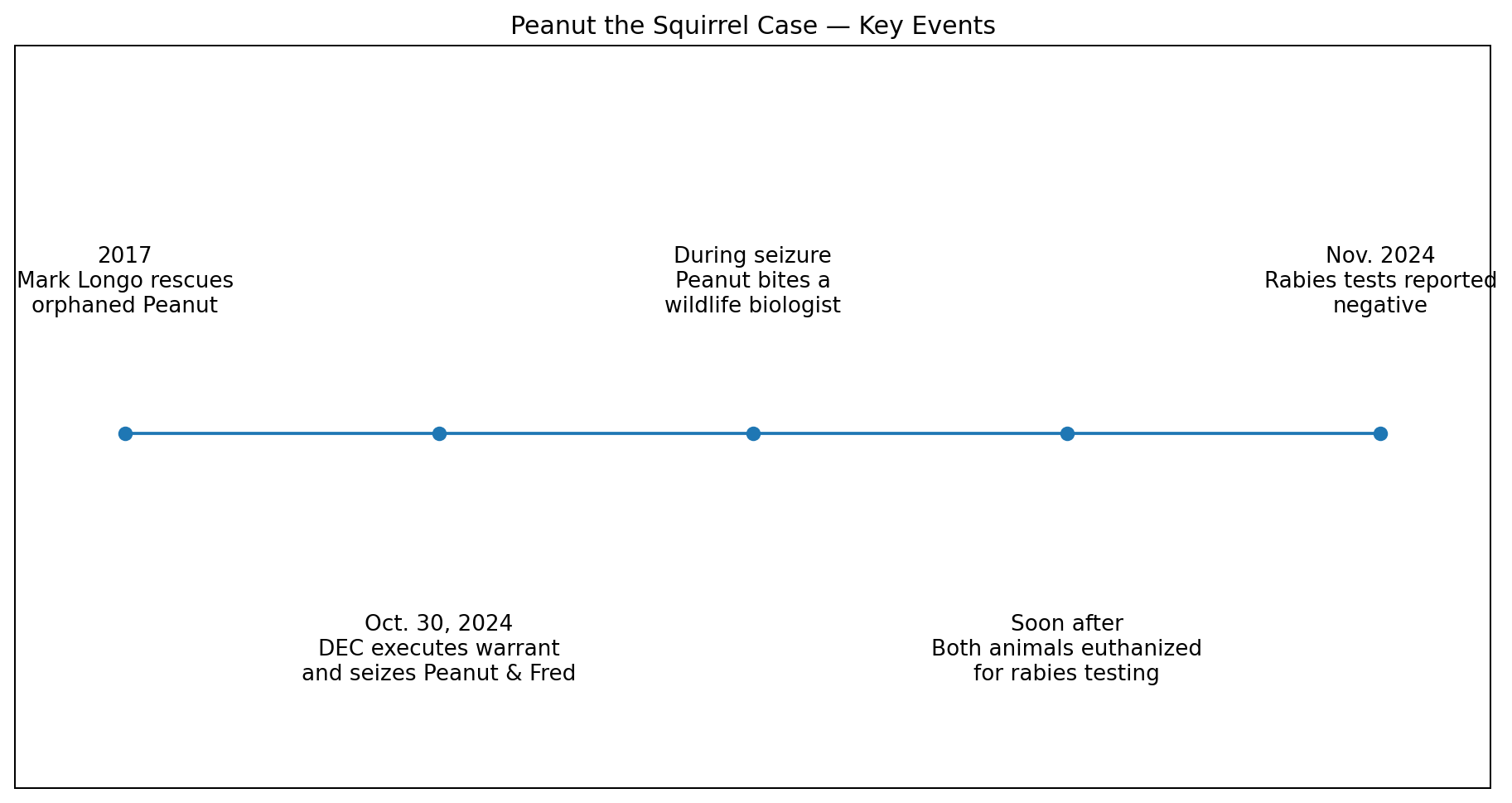
Then, on October 30, 2024, state wildlife officers arrived with a search warrant.
By the end of the operation, Peanut and a raccoon named Fred had been removed from the property. Soon afterward, both animals were euthanized so they could be tested for rabies.
The case became a national controversy almost immediately.
Then came the detail that intensified the backlash: the rabies tests on both animals were negative.
Peanut’s Story Started Years Before the Raid
Longo said he found Peanut after the squirrel’s mother was struck by a car in New York City.
He took the orphaned animal in, cared for him and eventually began posting videos of their life together.
Peanut developed a large online following and became closely associated with P’Nuts Freedom Farm Animal Sanctuary, the animal rescue operation Longo ran with Daniela Bittner near Pine City, New York.
The videos were lighthearted. Peanut sat on shoulders, ate snacks and appeared in costumes.
But keeping wild animals in New York can require permits or licenses, and state officials had already become aware of the sanctuary months before the seizure.
The Investigation Grew More Serious in 2024
Later records showed that the New York State Department of Environmental Conservation had received complaints about wild animals being kept at the property.
The situation became more serious after officials learned that a raccoon named Fred was also living there.
Raccoons are a particular public-health concern because they can carry rabies, and state and county health officials began discussing what should happen if the animals had experienced close human contact.
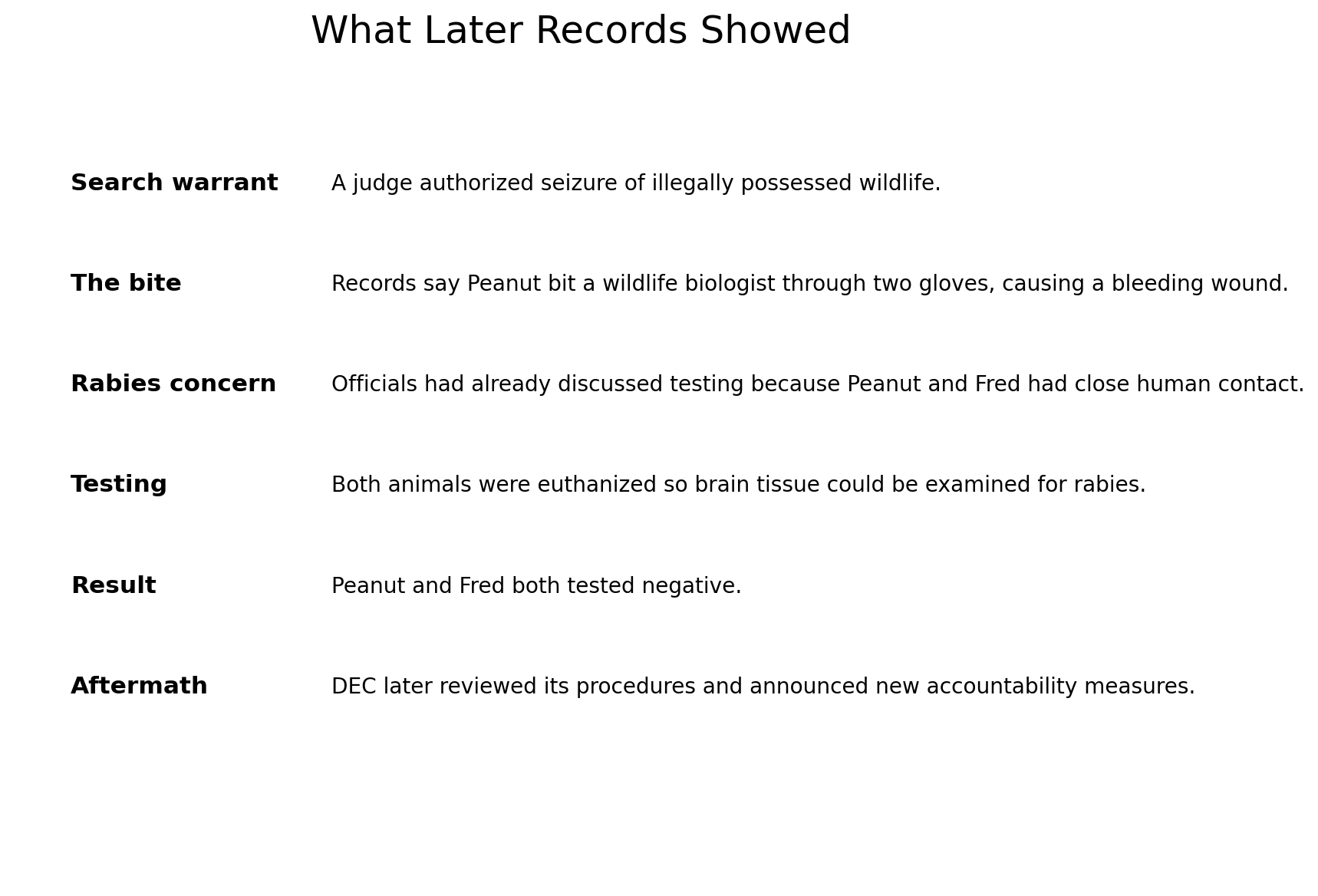
A judge eventually signed a search warrant authorizing officers to seize wildlife that officials believed was being possessed illegally.
On the morning of October 30, a team of wildlife and law-enforcement personnel arrived at the property.
The Bite Became the Turning Point
Peanut’s removal became more consequential when the squirrel bit a wildlife biologist during the seizure.
Records later released by the state said the bite went through a thick leather glove and a nitrile glove underneath and left a bleeding wound.
That reported bite transformed the situation from an enforcement action into an immediate public-health question.
Officials contacted health authorities about whether Peanut should be tested for rabies.
Fred was also considered a potential rabies concern because of his species and close human contact.
Why Rabies Testing Required Such a Severe Step
One of the most misunderstood parts of the Peanut case is how animal rabies testing works.
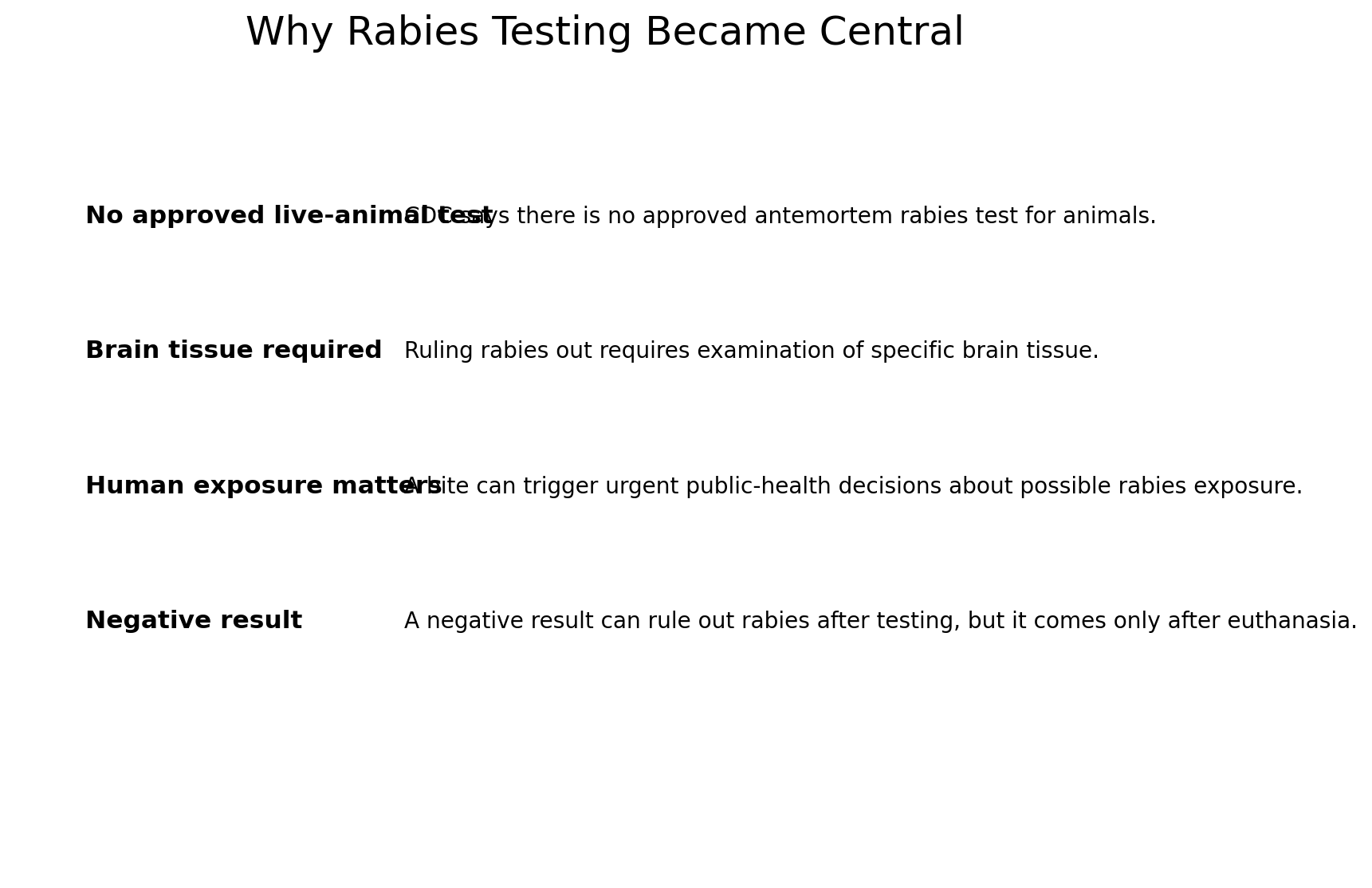
There is no approved test that can definitively rule out rabies in a living animal.
To test an animal, laboratories examine brain tissue, including specific areas such as the brain stem and cerebellum.
That means the animal has to be euthanized before a conclusive rabies test can be performed.
The procedure explains why officials said euthanasia was necessary once the case was treated as a possible human rabies exposure.
It does not settle the separate argument over whether Peanut and Fred should have been placed in that situation in the first place.
Both Animals Tested Negative
The laboratory results eventually showed that neither Peanut nor Fred had rabies.
Chemung County Executive Chris Moss publicly confirmed the negative results in November 2024.
By then, the animals were already dead and the story had become national news.
Longo said the result did not surprise him and sharply criticized the decision to euthanize the animals.
For supporters of Peanut, the negative tests became the most emotionally powerful part of the story: the disease officials were testing for was not present.
For public-health officials, however, a negative result could only be known after the required tissue testing had been completed.
The Negative Test Did Not Automatically Mean the Protocol Was Pointless
A negative rabies result can feel, in retrospect, like proof that the concern was unnecessary.
Public-health decisions do not work that way.
Rabies is nearly always fatal after symptoms begin in humans, so officials generally treat a credible exposure as urgent.
The question is not whether an animal eventually tests positive. It is whether there was enough risk at the time to justify testing.
That is where the dispute over Peanut remains.
Officials said the bite and the animals’ human contact required them to follow rabies protocols. Longo and his supporters argued that officials created the dangerous situation by seizing animals that had lived with people for years.
Later Records Added New Detail to the Story
The controversy did not end with the test results.
Records released later showed that officials had discussed possible rabies testing before the search took place because of the animals’ close contact with humans.
The documents also showed that the state had explored whether Peanut might be placed with a licensed wildlife rehabilitator if necessary.
According to those records, the final decision to test both animals was reinforced after Peanut bit the wildlife worker.
That sequence complicated the simplest versions of the story.
The euthanasia was not invented after the fact, but neither was Peanut’s death necessarily predetermined in exactly the way some early social media posts suggested.
The Case Triggered Anger Far Beyond New York
Within days, Peanut had become a symbol of what critics described as government overreach.
The story spread across social platforms and national television.
Public officials and political figures weighed in, and New York agencies received waves of angry messages.
Some threats became serious enough that government offices reported bomb threats and other violent communications.
The intensity of the reaction showed how quickly an animal story could turn into a wider argument about regulation, state power and whether enforcement had become disproportionate to the underlying violation.
The Owners Took Legal Action
Longo and Bittner did not treat the episode as finished after the public attention faded.
They pursued legal action against state and local authorities, alleging that their rights had been violated during the seizure and that the animals should not have been killed.
Officials have defended the operation as a lawful wildlife and public-health action carried out under a warrant and in coordination with health authorities.
Those are competing legal claims, not settled facts about misconduct.
What is not disputed is the outcome: Peanut and Fred were seized, euthanized and tested, and neither animal had rabies.
New York Later Changed Some of Its Procedures
The backlash also produced changes inside the Department of Environmental Conservation.
After an internal review, the agency announced additional accountability measures, including plans for a new deputy commissioner for public protection and a body-camera policy for environmental conservation officers.
The agency said it had reviewed public feedback and acknowledged that the case had caused significant distress.
Those changes did not reverse what happened to Peanut and Fred.
But they showed that the controversy reached beyond one wildlife seizure and prompted the state to reconsider how similar enforcement actions should be handled in the future.
Why Peanut’s Story Still Resonates
The case became famous because it combines several things that rarely appear in the same story.
There was a beloved animal with a large online audience. There was a wildlife enforcement action. There was a reported bite and a disease that is almost always fatal once symptoms begin.
There was also a test result that came back negative only after the animals were dead.
Those facts naturally produce competing reactions.
People who focus on public health see the danger of ignoring a possible rabies exposure. People who focus on the seizure see an enforcement decision that ended with the death of animals they believe posed little realistic threat.
The Detail That Changed the Story Came Too Late for Peanut
Peanut’s rabies result answered the medical question but could not undo the decision that made the test possible.
That is why the case remains so emotionally difficult.
The state had a public-health rationale. The owners had years of experience living with the animal. The bite created a new risk. The test required brain tissue. And the final result was negative.
All of those things can be true at the same time.
For Peanut’s followers, however, the story is remembered in much simpler terms: a squirrel they had watched for years was taken away, euthanized and later found not to have the disease officials were testing for.
That sequence is what turned one wildlife case in rural New York into a national story.
Comments (0)
Loading comments...
May You Like

TRUMP’S OHIO WARNING UNDER THE SPOTLIGHT

South Korea–Ukraine Rift Deepens Over North Korean POW Transfer as PURL Draws New Scrutiny













