
Pentagon Under Scrutiny: Pete Hegseth’s Signal Controversy, Military Casualty Reporting and Questions About Transparency
U.S. Politics & National Security | October 28, 2026
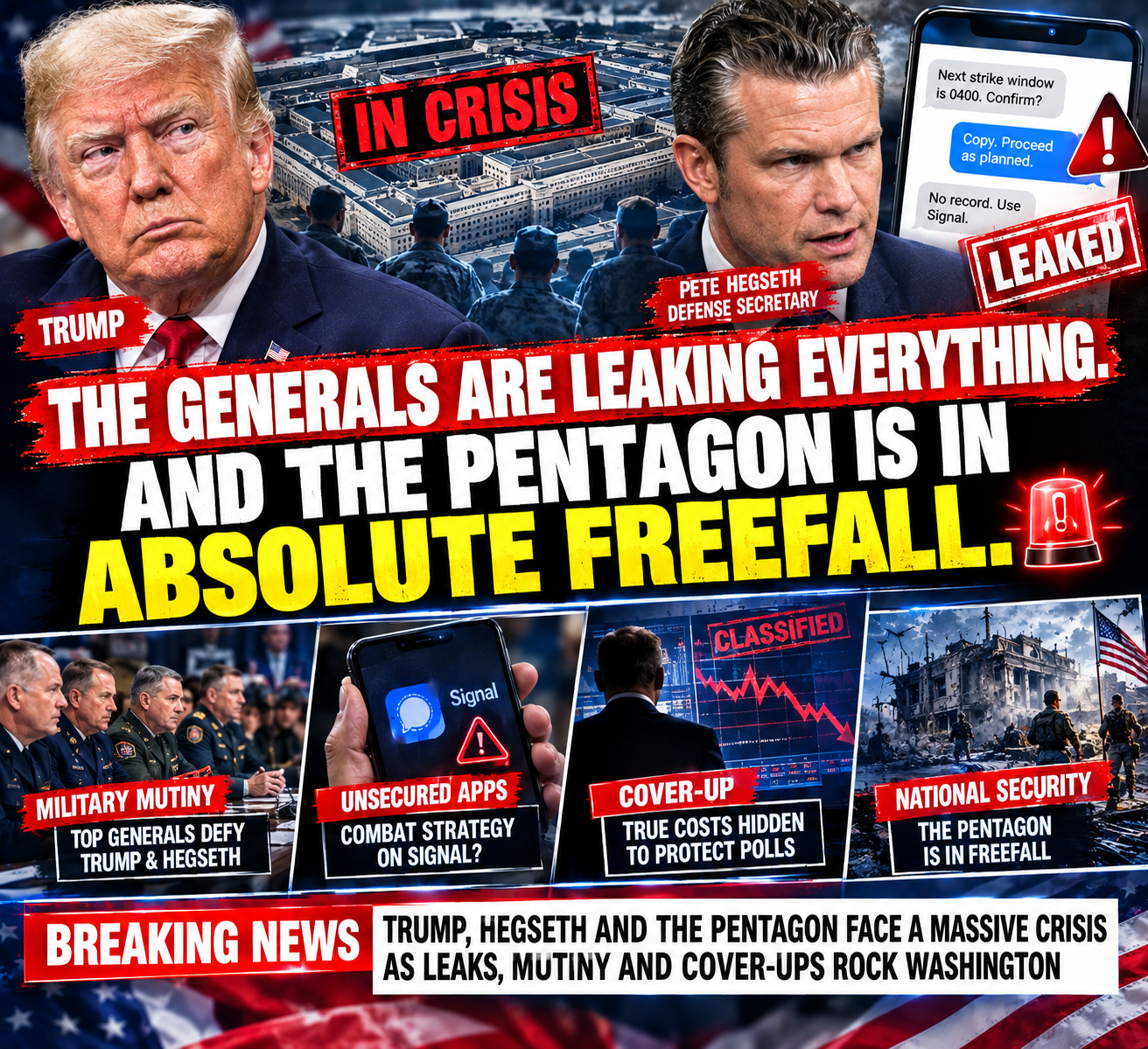
The image’s headline claims that “the generals are leaking everything” and that the Pentagon is in “absolute freefall.” Those are dramatic characterizations, not established findings. However, two documented controversies provide important context: a Pentagon watchdog’s findings about Defense Secretary Pete Hegseth’s use of Signal to discuss a planned military operation in Yemen, and questions raised in 2026 about how the Defense Department reported U.S. casualties in the Iran conflict.
1. The Signal Controversy That Put Military Communications Under a Microscope
In March 2025, senior Trump administration officials discussed a planned U.S. strike against Houthi targets in Yemen in a group chat on Signal, a commercial messaging application. The episode became public after The Atlantic’s editor-in-chief was inadvertently included in the conversation. The messages included operational details about the timing of the planned strikes, prompting questions about how sensitive military information was being handled.
The incident raised concerns because details about military operations can put personnel and mission objectives at risk if they reach unauthorized recipients. It also prompted scrutiny of whether officials were following Defense Department rules for classification, communications and records retention.
2. What the Pentagon Watchdog Found About Hegseth
In December 2025, reporting on the Defense Department inspector general’s review said the watchdog found that Hegseth’s use of Signal to transmit sensitive operational information created risks to U.S. personnel and military objectives. The review also faulted the use of a personal device and the handling of messages as official records.
The findings are more specific than the image’s sweeping claim of a military revolt. They document concerns about communication practices and operational security; they do not, by themselves, establish that senior generals are collectively leaking information or refusing orders.
3. Why Using a Commercial Messaging App Became a National Security Issue
The central concern was not simply that officials used a messaging app. It was that a chat on an unclassified commercial platform reportedly included details about an impending military operation. The inspector general’s findings, as described by major news organizations, indicated that the information could have exposed personnel and mission plans to risk.
Secure communication procedures, classification rules and official recordkeeping exist to help protect military operations and preserve an accurate government record. The Signal episode intensified debate over whether senior officials were applying those safeguards consistently.
4. A Separate Controversy: Changes to the Reported Iran War Casualty Count
A second issue emerged in July 2026, when news organizations reported that four U.S. service members killed during renewed fighting with Iran had disappeared from the Pentagon’s online Iran-war casualty tally. The Defense Casualty Analysis System subsequently listed those deaths in a separate “Overseas Operations” category.
The change raised questions about how the public-facing figures were organized and updated. The Associated Press reported that the casualty database had also shown changing numbers of wounded personnel, complicating efforts to establish a consistent total from the website alone.
5. Did Officials Try to Hide the True Cost of the War?
The casualty reporting dispute has fueled questions about transparency, particularly because accurate accounting matters to service members’ families, Congress and the public. The Associated Press reported that four deaths were moved into a separate category, while the Pentagon attributed earlier discrepancies to temporary data disruptions and anomalies in its online system.
Those explanations and the reporting discrepancies should both be part of the record. The available evidence does not independently establish that officials changed the categories specifically to protect polling numbers, as the supplied post alleges.
6. Is There Evidence of a Military “Mutiny”?
The image describes senior generals as defying Trump and Hegseth and leaking everything. But the reporting cited here does not substantiate a coordinated military mutiny.
There has been documented scrutiny of the administration’s handling of sensitive information, alongside public criticism from lawmakers and former national security officials. The Signal investigation and the casualty-count controversy raise distinct questions about operational security, internal oversight and public accountability. They should not be conflated into proof that military leadership as a whole is rebelling against civilian authority.
7. Trump’s Support for Hegseth and the Administration’s Response
The White House stood by Hegseth during the Signal controversy. After the inspector general’s findings became public in December 2025, Pentagon spokesman Sean Parnell characterized the review as a “total exoneration.” NPR’s reporting, however, described findings that the use of Signal had risked the safety of U.S. personnel and violated department policies concerning personal devices.
That difference illustrates the dispute: administration officials emphasized Hegseth’s authority over classification and rejected the conclusion that classified information had been improperly disclosed, while the watchdog’s findings focused on the risks created by the communications practices and the applicable rules.
8. What the Controversies Mean for Public Accountability
The two episodes raise different but related questions about how the Pentagon communicates with the public and maintains trust.
-
Operational security: Were sensitive details about military actions handled through appropriate channels?
Records and oversight: Were official communications preserved and handled in accordance with department policy?
Casualty reporting: Are deaths and injuries presented in a way that allows the public to understand the full toll of a conflict?
Evidence versus allegations: Can claims about motives, cover-ups or internal dissent be supported by documents and independent reporting?
These questions are important regardless of political affiliation. But claims of deliberate concealment or a widespread military revolt require evidence beyond an attention-grabbing thumbnail.
9. The Bottom Line: Serious Questions, but Not Every Viral Claim Is Proven
The documented record supports scrutiny of Hegseth’s use of Signal and the Pentagon’s handling of casualty data. The inspector general’s findings described operational-security risks, while reporting in July 2026 documented discrepancies in how casualties from the Iran conflict appeared in the Pentagon’s database.
What the evidence does not establish is that “the generals are leaking everything,” that the entire Pentagon is in freefall, or that officials deliberately manipulated casualty figures to protect polling numbers. Those remain claims or interpretations, not conclusions proven by the cited reporting.
For readers seeking the full picture, the most useful next step is to examine the original inspector general findings, the Pentagon’s public explanations and independent reporting on the casualty database—not rely on a viral graphic alone.
Comments (0)
Loading comments...
May You Like

STAR DIED AT 38, $10M LIFE INSURANCE INCREASED JUST 30 DAYS BEFORE WWE BRONSON REED'S DEATH!

EAST COAST CATASTROPHE — $20 BILLION AT STAKE, 5 MILLION AT RISK OF LOSING POWER, WATER AND HEAT!

WWE BRONSON REED—STAR COLLAPSES AT COMPANY EVENT, FATAL DRUG REACTION SUSPECTED!









Popular Posts




