
PODIUM ATTACK — TRUMP CALLED OUT!
Obama Launches Fiery Attack on Trump Over Iran War and Rising Prices: Could Ohio Become a Turning Point?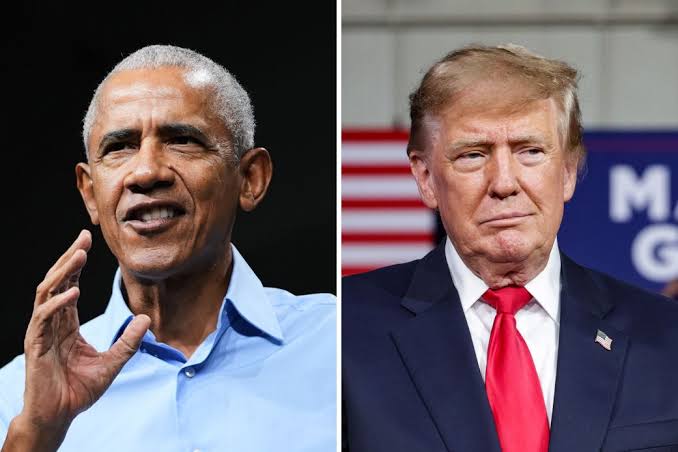
Former President Barack Obama has delivered a forceful political message to American voters, accusing President Donald Trump of making decisions that have driven up living costs and dragged the United States into an unnecessary war with Iran. Speaking at a major Democratic campaign rally in Cleveland, Ohio, Obama urged voters to reconsider the direction of the country as the November midterm elections approach.
The October 24 rally marked Obama's first major campaign appearance of the 2026 midterm election season. His visit was designed to energize Democratic supporters and strengthen the campaigns of two candidates facing important contests in Ohio: gubernatorial nominee Amy Acton and former Senator Sherrod Brown, who is seeking to return to the U.S. Senate.
Obama's remarks went beyond a conventional campaign speech. He presented the upcoming elections as an opportunity for Americans to hold the Trump administration accountable for its decisions, particularly those he believes have made everyday life more expensive. His criticism combined economic concerns, foreign policy disagreements, and questions about the president's priorities.
At the center of his argument was the war with Iran. Obama described the conflict as unnecessary and argued that the administration had chosen a course of military action that ordinary Americans neither requested nor approved. He suggested that the consequences of that decision were now being felt far beyond the battlefield.
The former president also connected the conflict to rising energy costs. Oil and diesel prices have become particularly sensitive political issues because increases can affect transportation, agriculture, manufacturing, and the cost of delivering goods. When fuel becomes more expensive, businesses may pass some of those additional costs on to consumers.
Obama argued that the administration's policies had contributed directly to the financial pressures facing American households. His criticism reflected a broader Democratic strategy of linking foreign policy decisions to the economic realities voters experience at gas stations, grocery stores, and monthly bill payments.
However, the relationship between war and consumer prices is complex. Energy markets respond to numerous factors, including global supply, shipping disruptions, production decisions, sanctions, and expectations about future conflict. Although military tensions in the Middle East can push prices higher, determining how much of an increase results from any single administration's decisions requires careful economic analysis.
For families already struggling with housing expenses, insurance premiums, utilities, and food costs, that distinction may offer little immediate relief. What matters most to many voters is whether their income can keep pace with the cost of living. Obama sought to turn that frustration into a political argument against Trump's leadership.
The former president also challenged the economic promises that helped Trump win the 2024 presidential election. Obama suggested that voters who supported Trump because they wanted lower prices should now examine whether the administration has delivered the improvements they expected. His message was aimed particularly at Americans who may be dissatisfied with the economy but have not yet decided whether to change their political allegiance.
Tariffs were another major target of Obama's criticism. The administration has defended tariffs as a means of protecting American industries, pressuring foreign trading partners, and strengthening domestic production. Critics, however, warn that tariffs can increase costs for companies that rely on imported materials and consumer goods, with some of those expenses eventually reaching American households.
Obama argued that the combination of economic policy and military intervention had placed additional pressure on ordinary people. By connecting these issues, he sought to challenge the idea that Trump's administration had prioritized working Americans above political and strategic interests.
His speech also turned toward the president's attention to White House renovations. Obama mocked Trump's construction projects and extensive use of gold-colored decorations, suggesting that the president appeared more interested in changing the appearance of the White House than addressing the country's most urgent problems.
The remarks drew laughter from the Cleveland audience and quickly became one of the most widely discussed moments of the rally. Yet the humor served a broader political purpose: Obama was attempting to portray the president as distracted from the economic concerns that dominate many households' daily lives.
Beyond the economy and renovations, Obama criticized what he described as a broader decline in political accountability. He argued that Americans should expect elected officials to focus on practical solutions rather than personal interests, public spectacle, or constant political confrontation. His message was that leadership should be judged by results rather than rhetoric alone.
Ohio was an especially important setting for that argument. Once a prominent presidential battleground, the state has become more reliably Republican in recent national elections. Democrats now face the challenge of persuading voters who may be open to economic criticism of Trump but remain skeptical of the Democratic Party's broader agenda.
The two candidates Obama supported have distinct political challenges. Amy Acton, a former state health director, is seeking to win the governorship against Republican Vivek Ramaswamy. Sherrod Brown, a former senator known for emphasizing labor rights and economic security, is attempting to reclaim his seat after losing the 2024 election.
Their campaigns are hoping that concerns about affordability, economic fairness, and the administration's direction will persuade voters to reconsider the balance of power in Ohio. Obama's appearance offered both candidates a prominent national ally and an opportunity to attract attention beyond their existing political bases.
The former president also criticized a controversial advertisement from Ramaswamy's campaign featuring the estranged mother of Acton. The advertisement drew objections because it brought painful family history into a political contest, including Acton's account of childhood abuse and neglect. Obama questioned the standards behind the campaign tactic, while Acton accused her opponent of exploiting her personal history for political advantage.
Ramaswamy's campaign defended its approach, and the dispute added another layer of tension to an already competitive election. For Obama, the controversy reinforced his broader argument that political competition should have limits and that candidates should be judged on their proposals for governing rather than the most provocative attacks they can produce.
Republicans have pushed back against Obama's intervention, arguing that Democrats have failed to provide convincing solutions to the problems facing Ohio residents. They have defended Trump's economic and national security policies while questioning whether Democratic candidates can deliver lower costs, stronger communities, and greater economic opportunity.
That disagreement reflects the central challenge facing both parties ahead of November 3. Republicans must persuade voters that the administration's policies will produce lasting benefits despite current economic pressures and controversy surrounding the war. Democrats must demonstrate that their criticism is backed by credible alternatives rather than simply opposition to Trump.
Ultimately, Obama's appearance in Cleveland was about more than one rally or two statewide campaigns. It was an effort to transform dissatisfaction with prices, foreign policy, and political conduct into electoral action. Whether that strategy succeeds will depend on how voters evaluate the administration's record, how they understand the causes of rising costs, and which party they believe can offer a more convincing path forward.
As the midterm elections draw closer, one question will remain central to the national debate: Will Americans continue to support Trump's approach, or will concerns about the Iran war and household expenses push enough voters toward a different direction? Obama's message was unmistakable. He believes the election offers an opportunity to challenge the administration's course. The final judgment, however, belongs to the voters.
Comments (0)
Loading comments...
May You Like

DAVENPORT AIRBNB HORROR — 40 OF 50 TEENS TEST POSITIVE FOR DRUGS SUPPLIED BY THE HOST'S MOM!

EAST COAST CATASTROPHE — $20 BILLION AT STAKE, 5 MILLION AT RISK OF LOSING POWER, WATER AND HEAT!

BOMBSHELL NEW JERSEY FLOOD — 112 KM/H WINDS, SEAWATER FLOODING INLAND, 120,000 HOMES AT RISK!








Popular Posts





