
POLAND PULLED INTO RUSSIA-UKRAINE WAR? DRONE BLAST LEAVES 13 DEAD, 100+ INJURED!
Russian Missiles and Drone Enter Poland During Ukraine Assault, Raising Questions About NATO's Next Response
WARSAW — November 21, 2026 — Three Russian aerial weapons entered Polish airspace during a large-scale attack on Ukraine, prompting an emergency security response and renewed concern about the war reaching NATO territory. Polish authorities confirmed that two suspected missiles and a jet-powered drone came down in the country's southeast on November 20.
One object was identified as a Russian Kh-101 cruise missile. The others were assessed as another missile and a probable jet-powered drone.
Prime Minister Donald Tusk said the timing raised suspicions of a deliberate provocation, particularly because European troops were conducting military exercises nearby.
NATO Secretary General Mark Rutte described the incident as dangerous and expressed solidarity with Poland.
Residents near Nowy Lipowiec, a village in southeastern Poland, reported hearing an explosion early Friday.
The area lies approximately 60 kilometers from the Ukrainian border.
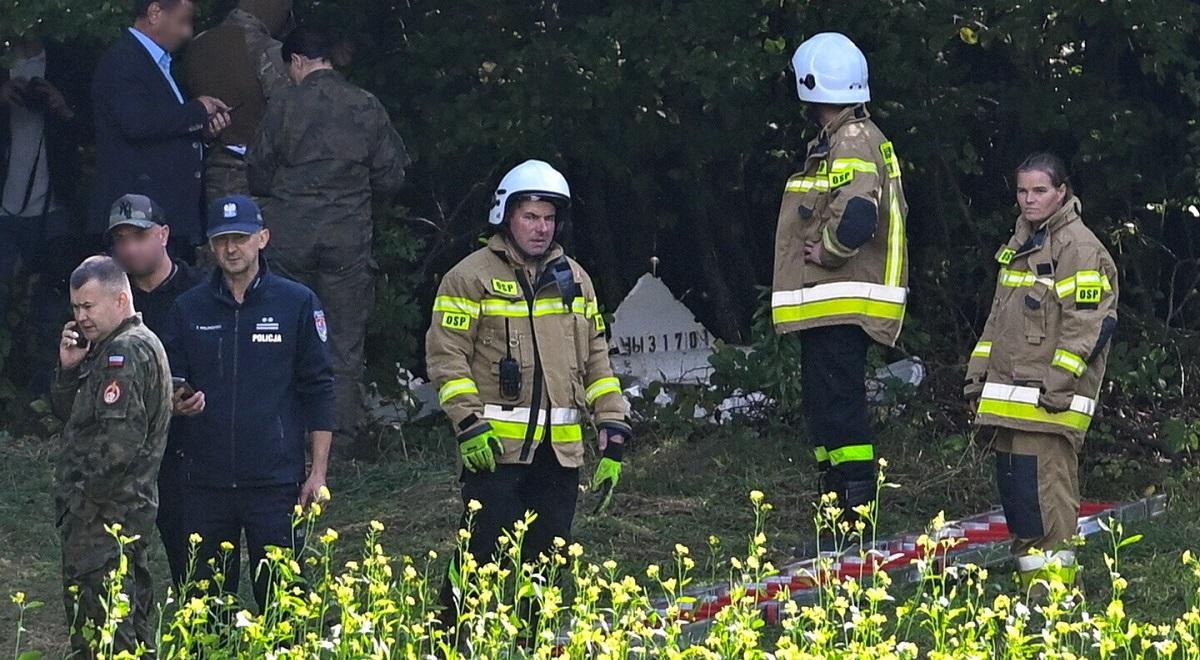
Emergency services arrived as authorities began investigating reports of an object falling in a rural area.
Video obtained by the Polish news agency PAP showed a bright flash and an explosion near a wooded location.
Police established roadblocks while military personnel and investigators examined the scene.
Nearby schools suspended classes as a precaution.
The incident unfolded during an extensive Russian aerial assault on Ukraine.
For residents, the immediate concern was whether additional weapons might cross the border.
For Polish authorities, the discovery raised a wider question about national airspace security.
The Polish government identified three locations where Russian objects had come down.
One was near Nowy Lipowiec in the Lublin region.
Another was near Rudnik nad Sanem in the Podkarpackie region.
The third was near Mołodycz, also in Podkarpackie.
Defense Minister Władysław Kosiniak-Kamysz said one object was a Kh-101 cruise missile.
A second was believed to be another missile.
The third was probably a jet-powered drone.
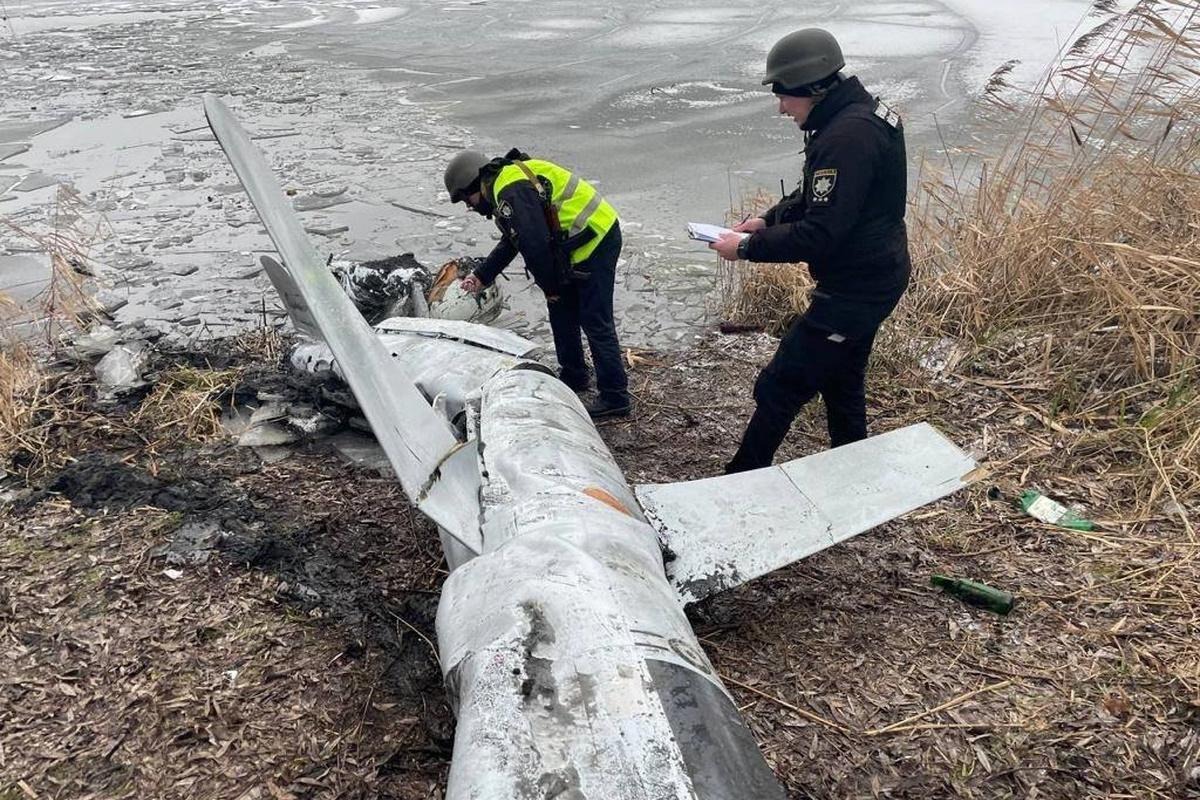
Investigators began examining the wreckage to determine the objects' precise characteristics and flight paths.
The three locations were separated geographically, suggesting the incident involved multiple trajectories rather than a single object breaking apart.
The confirmed Kh-101 was the most significant identification announced by Polish officials.
The Kh-101 is a Russian air-launched cruise missile designed for long-range attacks.
Russia has used the weapon extensively during its campaign against Ukrainian infrastructure.
Unlike an unguided projectile, a cruise missile can follow a programmed route and change direction during flight.
Its presence inside Poland therefore raised questions about where it was originally intended to go.
However, identifying the missile does not automatically establish its intended target.
Investigators would need information about its trajectory, guidance system and condition at impact.
Those details could help distinguish a navigation problem from a deliberate incursion.
A third object was believed to be a jet-powered unmanned aerial vehicle.
That distinction matters because jet-powered drones can present different detection and interception challenges from slower propeller-driven systems.
The Institute for the Study of War reported that Polish officials considered the object possibly a Geran-5 drone.
The precise identification was still being assessed.
Drones have become a major component of Russia's attacks on Ukraine.
They can be launched in large numbers, forcing defenders to monitor many potential threats simultaneously.
Some systems are designed to strike targets directly.
Others can be used to complicate air-defense operations.
The presence of a suspected jet-powered drone inside Poland demonstrated the variety of weapons involved in the overnight attack.
Polish military officials described the Russian operation against Ukraine as one of the largest since the full-scale invasion began in 2022.
Operational commander General Ireneusz Nowak said Russia had launched 26 Kalibr missiles, 72 Kh-101 missiles and 503 drones.
Of the drones, 202 were described as jet-powered.
Polish forces tracked 11 aerial objects considered capable of threatening national airspace.
Three crossed the border.
Those figures are important because the broader attack and the Polish incursions were different parts of the same event.
Hundreds of weapons were directed toward Ukraine.
Only three were confirmed to have entered Poland.
The large number of simultaneous threats placed considerable demands on military surveillance systems.
Polish F-16 fighter jets and Swedish Gripen aircraft were airborne during the incident.
A Dutch aerial refueling aircraft and a Saab early-warning plane also supported operations.
The deployment reflected cooperation among NATO members responsible for monitoring the alliance's eastern frontier.
Aircraft were prepared to respond to potential threats.
Ground-based radar systems also tracked approaching objects.
Military commanders must distinguish between weapons flying toward Polish territory and those remaining within Ukraine.
That process can be difficult when missiles and drones travel near a border.
The Polish military reported that 11 objects had posed a potential threat.
Only three ultimately crossed into the country.
The response demonstrated the alliance's surveillance capabilities while raising questions about interception decisions.
One of the most important questions concerns why the Russian weapons were not destroyed before they reached the ground.
According to the Institute for the Study of War, Polish operational commander General Nowak said the circumstances did not meet Poland's rules of engagement.
Those rules govern when military forces may use weapons against an aerial threat.
Destroying a missile or drone can produce falling debris, including hazardous components.
That debris may threaten homes, roads or populated areas.
Commanders must assess the projected impact location and the consequences of defensive action.
The public record does not contain a complete account of every engagement decision.
The incident nevertheless has renewed discussion of Poland's air-defense procedures.
Prime Minister Donald Tusk suggested that the Russian airspace violations were intentional.
His concern centered partly on the timing.
European military forces were conducting a major exercise in southeastern Poland, with senior defense officials visiting the region.
The incidents occurred during the same period.
Polish Defense Minister Kosiniak-Kamysz also described the incursions as a provocation.
Their assessments reflected the security implications of Russian weapons arriving near allied military activities.
However, determining intent requires more than identifying the weapons' country of origin.
Investigators must consider radar tracks, possible targets and the circumstances of each flight.
Russia's embassy in Warsaw did not immediately respond to Reuters' request for comment.
 The investigation therefore remained important to determining what happened.
The exercise, known as Koalicja, involved troops from 11 European countries.
According to the Associated Press, approximately 2,800 personnel participated in the two-week training program.
France and Britain led the effort.
The exercise was designed to prepare European forces for a possible mission in Ukraine following a future ceasefire or peace agreement.
Training included command coordination, deployment procedures, anti-drone defense and other operational tasks.
The proposed multinational force was separate from NATO's formal command structure.
Its purpose was to help strengthen Ukraine's security in a potential postwar environment.
Russia has opposed the deployment of foreign troops in Ukraine.
That broader dispute contributed to concerns about the timing of the Polish airspace violations.
The Kh-101 missile came down near Nowy Lipowiec, roughly 60 kilometers from Ukraine.
The Associated Press placed the location approximately 75 kilometers from the military exercise.
Another object fell near Rudnik nad Sanem, while the suspected drone came down near Mołodycz.
These locations are in a region that has become strategically important because of Poland's role in supporting Ukraine.
The proximity of Russian weapons to allied military activity was central to the Polish government's response.
However, geographical proximity does not independently establish that the exercise was the intended target.
The weapons may have followed routes affected by their guidance systems, defensive activity or other circumstances.
Those possibilities require technical examination.
The airspace threat also affected operations at Rzeszow airport.
The facility has played an important logistical role in international support for Ukraine.
Polish officials said air traffic controllers were evacuated during the incident.
Such precautions can be necessary when military objects are approaching sensitive airspace.
Authorities did not report damage to the airport from the three Russian objects.
Nevertheless, the disruption showed how a military incident can affect civilian infrastructure without a direct impact.
Airports must maintain strict safety conditions.
Even a temporary uncertainty about an approaching missile or drone may require emergency procedures.
The incident highlighted the vulnerability of transportation operations near an active conflict.
At Rudnik nad Sanem, investigators examined reports of a loud explosion near railway infrastructure.
A railway traffic controller reportedly heard the sound.
Authorities inspected the area for damage.
The initial examination found no visible damage to the railway.
That distinction was important because railway systems are essential to civilian transportation and regional logistics.
A direct strike against a railway could disrupt movement and create additional hazards.
Investigators were still determining the precise nature of the object that came down nearby.
The reported absence of infrastructure damage helped authorities assess the immediate consequences.
The most important casualty finding was that nobody was reported killed or injured by the three objects in Poland.
Polish Defense Minister Kosiniak-Kamysz confirmed that no injuries had been reported.
Authorities also said there was no significant damage to infrastructure.
That means the reported claim of 13 deaths and more than 100 injuries does not describe the documented Polish incident.
Residents nevertheless experienced a genuine emergency.
Explosions were heard, schools suspended classes and emergency personnel responded to impact locations.
For people living near the border, the experience demonstrated how the neighboring war can create immediate security concerns.
The absence of casualties does not make an unauthorized military incursion insignificant.
It does, however, change the factual assessment of the event.The Russian assault that preceded the Polish incursions caused deaths and injuries inside Ukraine.
The Associated Press initially reported three deaths and nine injuries.
Later reporting from Ukrainian authorities cited higher casualty totals as assessments continued.
The Guardian reported at least eight deaths and nearly 30 injuries from the broader overnight attacks.
Those figures concern Ukraine, not Poland.
The distinction is essential because the weapons that entered Polish airspace were associated with a much larger military operation.
The human consequences were concentrated in Ukraine, where Russian strikes damaged civilian and transportation infrastructure.
Poland's emergency involved an airspace violation without reported casualties.
Combining casualty figures from the two countries would misrepresent the location and consequences of the attacks.
NATO Secretary General Mark Rutte condemned the incident as dangerous.
He expressed solidarity with Poland and indicated that he would visit Warsaw.
Polish officials said they would seek additional support for protecting the alliance's eastern flank.
The response reflected concern about Russian military objects entering the territory of a NATO member.
The alliance has a collective-defense commitment, but its response to an airspace violation depends on the circumstances.
Military surveillance, diplomatic consultations and defensive preparations can occur without an immediate decision to use force.
The November 20 incident did not produce a reported invocation of NATO's Article 5.
The immediate emphasis was on investigating the objects and strengthening security.
Article 5 of the North Atlantic Treaty establishes collective defense.
It provides that an armed attack against one member is considered an attack against all.
NATO members must assess the nature of an incident and determine the appropriate action.
Relevant considerations include whether an attack occurred, the consequences and the available evidence about intent.
The three Russian objects entered Poland during a wider assault on Ukraine.
Those facts form part of the alliance's assessment.
Polish leaders have called for stronger defensive support, rather than announcing that a collective-defense operation has begun.
Military incidents near national borders can become dangerous even when no one is injured.
An approaching missile may appear to be heading toward a populated area before changing direction.
A radar operator may have only a short period to assess its trajectory.
Fighter pilots and air-defense commanders must make decisions under time pressure.
An interception could protect a target but also scatter debris.
Failure to intercept could allow a weapon to reach allied territory.
The consequences of either decision depend on the circumstances.
The November 20 incident illustrates those competing risks.
Polish and allied forces were active, yet three objects crossed the border.
Investigators may examine whether the response followed existing procedures and whether those procedures require adjustment.
Poland has previously reported Russian drones entering its airspace during attacks on Ukraine.
In September 2025, a larger incursion involving multiple drones prompted Polish and allied military responses.
Such incidents have increased concern among NATO members on the alliance's eastern frontier.
They also complicate efforts to determine whether a particular incursion was accidental or deliberate.
A repeated pattern may influence a government's assessment of risk.
However, each incident still requires examination of its own evidence.
The November 2026 event involved two suspected missiles and a jet-powered drone.
The reported combination of weapons distinguished it from incidents involving drones alone.
It also increased concern about the potential consequences of future violations.
Polish authorities began examining the three impact locations after the incidents.
Investigators can use recovered components to identify the type and origin of an aerial weapon.
They may examine propulsion systems, structural fragments and electronic equipment.
Radar records can help reconstruct flight paths.
Together, those findings may clarify how the objects entered Polish territory.
Investigators may also assess whether the weapons carried explosive warheads and whether those components functioned.
The identification of a Kh-101 cruise missile is a significant starting point.
However, the full technical findings had not been publicly released by November 21.
The precise reason for the border crossings therefore remained a central question.
Defending NATO's eastern frontier requires coordination among several countries.
Air-defense systems must monitor aircraft, missiles and drones approaching from different directions.
Some objects fly at low altitude.
Others can change direction during flight.
Large attacks create additional pressure because defenders must track many objects simultaneously.
During the November 20 assault, Polish forces identified 11 objects considered capable of entering their airspace.
Three ultimately crossed the border.
That required military commanders to assess threats while the wider Russian attack was still unfolding.
The incident may inform future discussions about radar coverage, interception rules and the deployment of additional defensive systems.
The airspace violations occurred at a time when European countries were discussing their future security role in Ukraine.
The Koalicja exercise demonstrated preparations for a possible multinational mission following a peace settlement.
Russian weapons entered Poland during that same period.
Polish officials interpreted the timing as potentially deliberate.
Other NATO members condemned the incursions and reaffirmed support for Poland.
The incident therefore became a diplomatic and military issue extending beyond the three impact locations.
It also highlighted the difficulty of maintaining a clear boundary between a war involving Ukraine and the security of neighboring NATO countries.
The physical border remains defined, but missiles and drones can cross it within minutes.
Polish authorities are expected to continue examining the wreckage and flight paths.
NATO consultations may address the effectiveness of existing air-defense arrangements.
Poland has indicated that it wants greater support for securing the eastern flank.
Any additional deployments would require decisions by the relevant governments and military authorities.
The investigation may also clarify whether the objects were deliberately directed into Polish territory.
For now, the Polish government's suspicion of provocation remains an assessment of the incident's circumstances.
The confirmed facts are that three Russian aerial objects crossed the border and came down inside Poland.
Russia's war in Ukraine produced a direct airspace security incident inside Poland on November 20.
A Russian Kh-101 cruise missile, another suspected missile and a probable jet-powered drone entered Polish territory during a large aerial assault.
The objects came down near Nowy Lipowiec, Rudnik nad Sanem and Mołodycz.
Polish and allied aircraft were activated.
Prime Minister Donald Tusk suggested that the timing, during European military exercises, indicated a possible deliberate provocation.
NATO condemned the incursions.
The most consequential question remains unanswered: whether the weapons crossed the border unintentionally or as part of an effort to pressure Poland and its NATO allies.
The outcome of Poland's investigation could shape the alliance's response to future incursions.
Comments (0)
Loading comments...
May You Like

THANKSGIVING CRISIS: NYC PARADE POSTPONED AFTER FBI WARNING—$900 MILLION LOST!

PENTAGON'S DECLASSIFIED UFO FILES — THE MYSTERY OF AN UNDERGROUND STORAGE PROJECT!

TRUMP'S NVIDIA STOCK DEALINGS — IS THERE ANY TRUTH TO THE $14 MILLION PROFIT CLAIM?













