Polls Show Sharp Partisan Splits in Views of Trump and His Administration
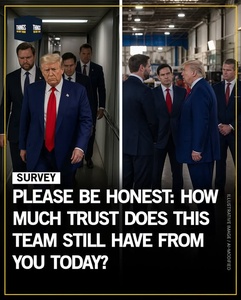
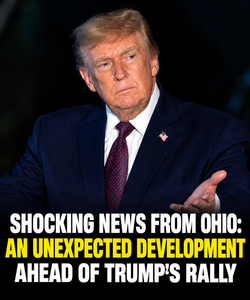
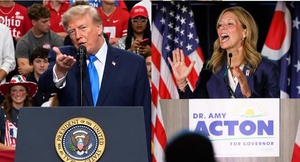
The viral “How much trust does this team still have?” graphic poses a political question rather than reporting a survey result. Recent polling offers a more detailed picture of how Americans currently view Trump, his administration and federal institutions.
The viral graphic asks viewers how much trust they still place in Trump’s governing team, but it does not cite a specific poll or provide any measurable result.
Recent national polling instead shows a sharply divided public, with confidence varying by issue, party identification, and which administration official or government institution respondents are being asked to evaluate.
AP-NORC’s current trend data show 33% of U.S. adults approving of Trump’s overall job performance and 66% disapproving, reflecting lower approval than earlier in his second term.
Immigration remains one of Trump’s comparatively stronger policy areas in AP-NORC polling, with 39% approving of his handling of immigration and 58% saying they disapprove.
Economic assessments are less favorable in the same polling series. About one-third of adults approve of Trump’s handling of the economy, while roughly two-thirds say they disapprove.
Foreign policy produces similar overall numbers, with about one-third approving, while roughly six in ten adults have consistently disapproved of Trump’s handling of international trade negotiations.
Trust in the federal government’s information has also weakened. An AP-NORC and USAFacts survey found less than half of American adults expressing strong trust in government information across major subjects.
About six in ten adults reported little or no trust in federal information concerning elections and politics, foreign affairs, the environment, abortion or immigration, according to the September survey.
Confidence in election certification was also limited: only 34% said they trusted government certification of election results “a great deal” or “quite a bit,” down from 40% in 2024.
Skepticism extends beyond government agencies. AP-NORC found 53% saying Republican campaign messages are rarely or never based on factual information, while 47% said the same about Democratic messaging.
A September 11–14 Economist/YouGov poll offered another measure of credibility: only 21% of registered voters thought Trump would probably deliver his proposed $5,000 payments, while 57% thought he would not.
Broader confidence in government is weak as well. Gallup reported September 2 that 89% of Americans believe corruption is widespread in government, the highest reading in its two-decade series.
That perception crossed party lines: Gallup reported 91% of Democrats, 90% of independents and 83% of Republicans describing government corruption as widespread, although the trend changed differently across partisan groups.
Public opinion about Vice President JD Vance is also polarized. YouGov’s current public-figure tracker lists 32% with a positive opinion of Vance, 52% disliking him and 10% neutral.
Secretary of State Marco Rubio’s current YouGov profile shows 29% holding a positive opinion, 39% expressing a negative opinion and 18% describing their view as neutral.
Defense Secretary Pete Hegseth’s YouGov profile similarly records 23% with a positive view and 44% with a negative view, while another 10% are classified as neutral.
Those numbers should not be treated as interchangeable. Favorability, job approval and trust measure different attitudes, and results also depend on survey dates, sampling methods, question wording and populations surveyed.
Trump also continues to receive substantially stronger support within parts of the Republican coalition. An August Economist/YouGov survey found 92% approval among Republicans who identified as MAGA supporters.
The same August survey found a much narrower division among Republicans who did not identify as MAGA supporters, with 51% approving of Trump’s performance and 47% disapproving.
These polling measures are especially relevant as the November 2026 midterm elections approach, with early in-person voting beginning in several states on September 18 and expanding over coming weeks.
The most accurate reading of the viral image is therefore that it asks an engagement question, not that it reports a survey finding; actual polling shows substantial partisan differences across multiple measures of confidence and approval.
Comments (0)
Loading comments...
May You Like

Russian Drone Strikes Kyiv Bridge as German Chancellor Arrives in Ukraine
Barack Obama Draws Attention With New Literary Podcast
OBAMA STUNS ON INSTAGRAM: MESSAGE MARKING 34-YEAR MILESTONE SPARKS A BUZZ