
POPE FRANCIS' DARKEST REVELATION ABOUT HIS SUCCESSOR—7 SECRET PAGES DISAPPEAR!
POPE FRANCIS' DARKEST REVELATION ABOUT HIS SUCCESSOR—7 SECRET PAGES DISAPPEAR!
VATICAN CITY — November 25, 2026 — The publication of Pope Francis' private diary has opened an extraordinary chapter in the history of his pontificate, revealing decades of personal reflections while drawing attention to portions of the original manuscript that remain unpublished.
Released internationally on November 24, The Private Diary of Pope Francis contains selected writings recorded between December 20, 1992, and August 18, 2024, offering an intimate account of the late pontiff's spiritual life, personal struggles and relationships within the Catholic Church.
Cardinal Víctor Manuel Fernández, who prepared the material for publication, confirmed in an interview with Vatican News that certain passages had been excluded, including private remarks about living individuals and sections written in unusual symbols.
Among the individuals mentioned in the published material is Robert Francis Prevost, the American-born cardinal who would eventually succeed Francis as Pope Leo XIV.
According to America Magazine, the manuscript contains 86 pages of entries written before his election as pope and another 55 pages from his pontificate.
Together, those entries represent 141 pages of original writings documenting different periods in the life of one of the Catholic Church's most influential contemporary leaders.
America Magazine
The distinction between the original manuscript and the published book is important. The book contains selected material accompanied by editorial commentary, rather than a complete photographic reproduction of the handwritten diary.
Its arrangement allows readers to examine Francis' reflections by subject. However, it also limits their ability to reconstruct the exact sequence in which every original entry appeared.
For historians, that difference can influence how particular statements are interpreted, especially when they concern important individuals or events within the Church.
The story behind the diary's publication began with a conversation inside Casa Santa Marta, the Vatican residence where Francis lived during his pontificate.
Cardinal Fernández recalled that Francis drew his attention to several documents and a personal appointment book during a private meeting.
Francis indicated that some of the material could eventually be used to provide spiritual guidance to others.
The conversation would become particularly significant following the pope's death on April 21, 2025.
For Fernández, the documents represented a responsibility entrusted to him by a religious leader with whom he had worked closely. For the Vatican, they represented personal possessions belonging to a deceased pontiff whose historical legacy was only beginning to be assessed.
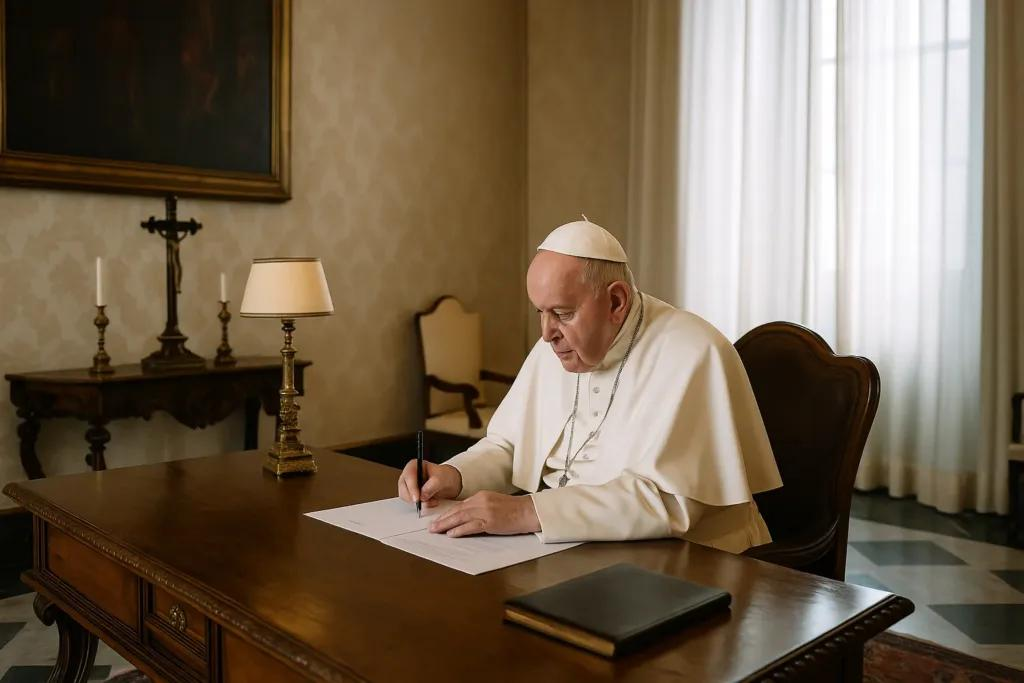
Following Francis' death and the election of his successor, Fernández became concerned about the future location of the documents.
He subsequently informed Leo XIV about his earlier conversation with Francis and requested assistance in recovering the material.
According to Fernández's November 24 interview with Vatican News, Leo located the box containing the documents within two days and forwarded it to the cardinal.
The account establishes an important part of the manuscript's known history. It identifies the person who requested access to the material, the authority who facilitated that access and the individual responsible for preparing the published volume.
For historical manuscripts, such records can become important when questions arise about completeness, preservation or editorial intervention.
The cardinal identified three general categories of excluded material: repetitive statements, private matters involving people who are still alive and passages written in unfamiliar symbols.
The explanation establishes that readers are receiving a selection of Francis' writings rather than unrestricted access to the original manuscript.
Fernández also maintained that the published material includes challenging and intimate reflections intended to provide a meaningful understanding of Francis' spirituality.
Leo XIV supported the editorial approach, including the addition of contextual explanations.
The distinction between editing and physically removing material is central to understanding the controversy.
A passage may remain preserved in its original form even when it is unavailable to the general public.
The claim that seven pages concerning Francis' successor disappeared would require considerably more evidence than the acknowledgment that portions of the diary were excluded from publication.
Establishing the disappearance of specific pages would ordinarily require documentation showing that those pages existed, identifying their location within the manuscript and demonstrating that they were subsequently removed.
An earlier photograph, archival inventory or independently authenticated transcription could provide such evidence.
None of the Vatican announcements or contemporary reports reviewed establishes that seven pages about Leo XIV are missing.
A complete scholarly edition would provide a different level of access, potentially allowing historians to assess the original sequence, handwriting and surrounding context of individual passages.
Among the most unusual aspects of the manuscript is the presence of coded writing.
The existence of these symbols has introduced another question concerning the diary's historical completeness.
Even if the original coded passages remain physically intact, their meaning may remain inaccessible without an authenticated method of interpretation.
Researchers examining such material would need to distinguish between an established writing system, personal abbreviations and symbols whose meaning may have been known only to their author.
A reliable translation would require sufficient examples and contextual information to test whether proposed interpretations were consistent.
Despite questions concerning the unpublished passages, the book contains a documented reference to the man who would succeed Francis.
According to reporting by Associated Press and other publications, Francis expressed admiration for Robert Francis Prevost, describing him as:
“A great pastor, a generous missionary and an irreproachable man.”
The assessment provides a direct insight into how Francis regarded Prevost before his election as Leo XIV.
National Catholic Reporter
Its historical importance comes partly from the fact that the relationship between the two men can now be examined through Francis' personal reflections rather than solely through their public appearances or official appointments.
The election of a pope is conducted through a conclave, in which eligible cardinals select the next pontiff according to established Church procedures.
The published reference establishes Francis' favorable opinion of Prevost. Other assertions concerning his intentions would require additional documentary evidence.
The involvement of Francis' successor in preparing the diary for publication is among the most important aspects of the book's history.
America Magazine reported that Fernández showed Leo an early draft. The pope requested that certain potentially confusing references involving living individuals be removed.
Fernández also indicated that he had briefed Leo about the completed work, although the pope had not yet read the entire finished text at the time of the interview.
America Magazine
This involvement raises legitimate questions about how the personal writings of a deceased religious leader should be prepared for public release.
Protecting the privacy of living individuals may be an understandable editorial objective. At the same time, researchers may want sufficient information to distinguish the author's original observations from decisions made during publication.
An institution can preserve a complete original document while releasing a restricted edition for general readers. Additional access may become possible later under established archival conditions.
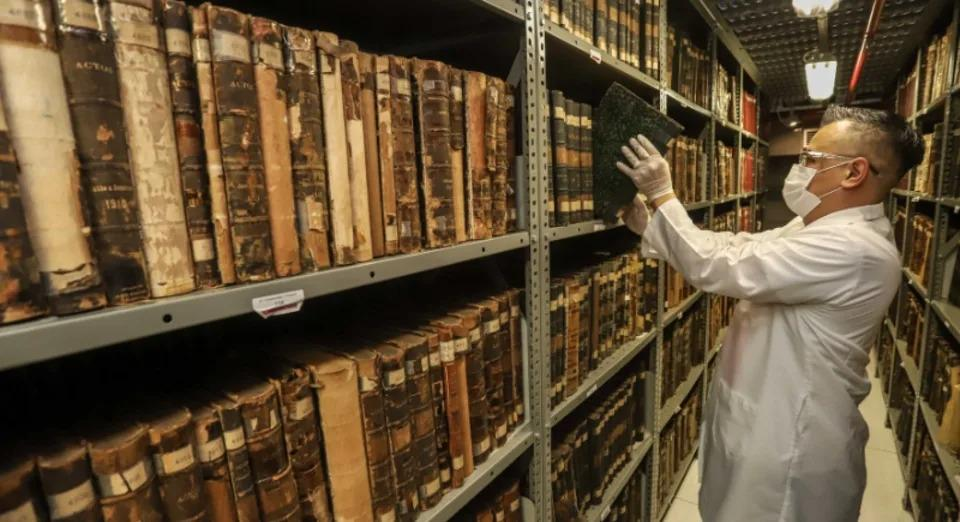
Determining whether a historical manuscript has been physically altered involves a different process from examining its published contents.
Document specialists may study page numbering, binding materials, paper characteristics, handwriting and indications of physical damage.
Earlier photographs or digital scans can provide useful reference points when assessing whether a manuscript has changed since it was first documented.
Those conclusions would require corroborating evidence.
In the case of Francis' diary, a complete archival inventory could help establish which entries remain preserved, which were selected for publication and whether any physical materials are absent.
The original manuscript and its editorial history would need to be examined separately.
Without that examination, an allegation of tampering remains fundamentally different from a documented decision to omit material from a commercial publication.
The Vatican Publishing House identifies the Italian edition of the book as a 160-page volume.
That number can appear confusing when compared with the reported 141 pages of Francis' original handwritten entries.
A single handwritten page may occupy several printed pages depending on handwriting size, translation, formatting and the amount of accompanying commentary.
Subtracting one page count from another would therefore provide no reliable measurement of missing material.
Establishing exactly how much of the original manuscript was excluded would require a detailed comparison between the source document and the published edition.
That comparison could identify differences in content without confusing ordinary publication procedures with physical alterations to original records.
The newly published material includes accounts of profound spiritual struggles during Francis' pontificate.
Some entries describe experiences that he interpreted through the Catholic understanding of temptation and evil. Others reflect his concerns about authority and the responsibility associated with leading the Church.
Associated Press reported that the diary documents a particularly difficult spiritual period beginning in 2021. Fernández connects Francis' recovery from that period with his later emphasis on divine mercy.
These writings are important because they show how personal religious reflections can illuminate public leadership without necessarily providing a comprehensive record of institutional decisions.
They also help explain why the publication attracted attention beyond theological circles.
A private diary can preserve uncertainty, regret and observations that a religious leader might never include in an official statement.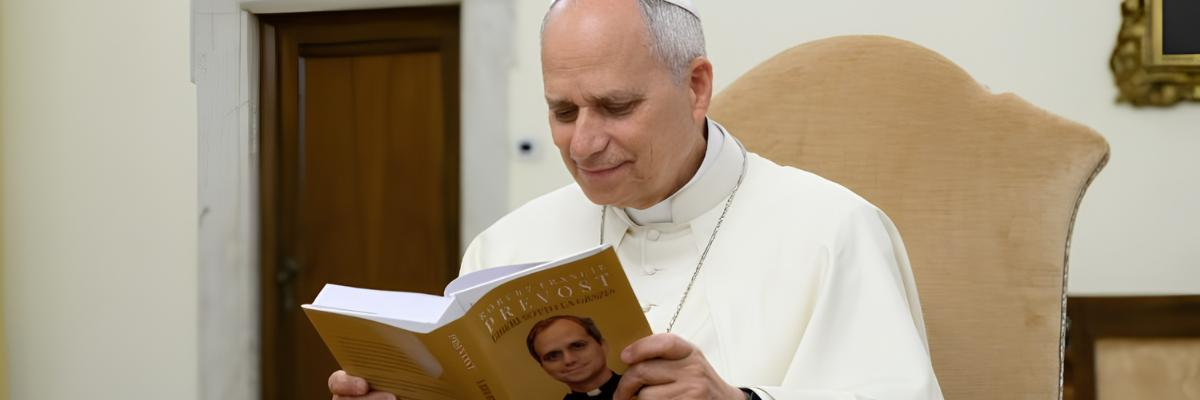
For historians, the challenge is to understand those reflections within the circumstances in which they were written.
Removing a passage from that surrounding context can sometimes change how its meaning is perceived.
Earlier pontiffs left spiritual journals, correspondence and handwritten reflections that subsequently became subjects of historical interest.
Such documents can create difficult decisions for the individuals entrusted with their preservation.
The original author may have expressed preferences concerning privacy, publication or destruction. Later custodians may consider the historical or religious significance of the material when deciding how those preferences should be handled.
One particularly important distinction concerns whether a publication is intended as a devotional work or a comprehensive historical record.
A devotional edition may focus on material selected for its spiritual significance. A historical edition may place greater emphasis on completeness, chronology and explanations of textual differences.
Both approaches can serve legitimate purposes, but they provide readers with different kinds of information.
Francis' published diary belongs primarily to the first category. Its editorial purpose should therefore be considered when evaluating what the book can and cannot reveal.
The Vatican announced that the book would be distributed in 94 countries through several international publishing organizations.
Editions were prepared in Italian, English, Spanish, Portuguese and French.
Vatican News
The scale of the release demonstrates the continuing international interest in Francis' life and religious legacy.
Religious expressions can carry different associations across languages. A phrase describing a spiritual experience or personal relationship may require contextual explanation to communicate its original significance accurately.
For scholars studying particular references to Church officials, access to the original wording could be especially valuable.
Only the original documentation could resolve that question.
The release of Pope Francis' diary has answered important questions about his private spiritual life while leaving other aspects of the original manuscript outside public examination.
The available evidence establishes that the diary contained coded material, that certain private passages were excluded, and that Leo XIV participated in the process leading to publication.
It also establishes that Francis expressed admiration for the man who would eventually succeed him.
The exact contents of the unpublished material remain a separate historical question. Further access to the original documents could allow scholars to examine their chronology, preservation and editorial treatment in greater detail.
For the Vatican, the continuing challenge involves balancing the historical value of a former pope's writings with the confidentiality of personal reflections.
Comments (0)
Loading comments...
May You Like

TRUMP CALLED FOR KIMMEL’S FIRING—THE FCC ACTED THE VERY NEXT DAY

IOWA MILITARY EMERGENCY: 51 TONS OF UNSTABLE SUSPECTED BIOWEAPON WASTE FOUND AFTER 5-TON BLAST!

IOWA MILITARY EMERGENCY: 50 TONS OF UNSTABLE SUSPECTED BIOWEAPON WASTE FOUND AFTER 5-TON BLAST!










Popular Posts



