ORMER PRESIDENT BARACK OBAMA FACES MASSIVE BACKLASH AFTER BEING BRUTALLY SLAMMED BY MAJOR INFLUENCER
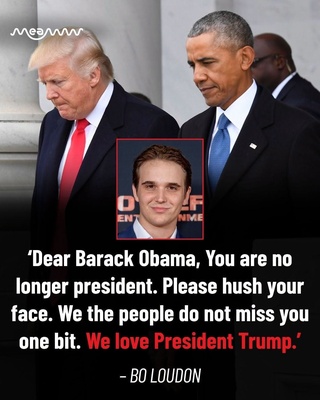
Bo Loudon Fires Back at Barack Obama After Trump Campaign Criticism, Reaffirming His Loyalty to President Trump Ahead of Midterm Elections
The political confrontation between former President Barack Obama and President Donald Trump is attracting renewed attention as the United States approaches the November 3, 2026, midterm elections. While Obama has returned to the campaign trail to criticize Trump's administration and encourage support for Democratic candidates, conservative influencer Bo Loudon has publicly pushed back, directing criticism at the former president and reaffirming his support for Trump.
The exchange reflects a broader political dispute that extends beyond two prominent personalities. It involves competing messages about presidential leadership, the direction of the country, and the role of influential political figures in shaping public opinion before an important congressional election.
Loudon, known for his outspoken conservative commentary and his association with Trump's political circle, has used social media to express his disagreement with Obama. His message comes at a time when both Republican and Democratic figures are increasingly using public appearances and online platforms to energize their respective supporters.
Obama's return to the campaign trail has also given Republican commentators an opportunity to challenge his criticism of the current administration. Loudon's response is part of that wider debate, although his personal opinions should be distinguished from the official positions of the Trump administration.

Obama's Return to the Campaign Trail Reignites Political Tensions
Barack Obama's recent campaign appearances have placed him back at the center of the national political conversation.
On October 24, 2026, the former president appeared at Democratic campaign events in Ohio and Michigan, where he criticized Trump's administration and encouraged voters to support Democratic candidates. His remarks addressed economic pressures, foreign policy, presidential conduct, and decisions made by the current administration.
Obama argued that the midterm elections represented an important opportunity for Americans to hold the administration accountable.
He also criticized Trump's handling of the conflict involving Iran, connecting the administration's foreign-policy decisions to higher energy costs. In addition, Obama mocked the president's extensive White House renovation projects, using humor to question the administration's priorities.
These comments generated considerable political attention, particularly because Obama remains one of the Democratic Party's most recognizable former leaders.
His participation in the campaign is not simply ceremonial. His appearances provide Democratic candidates with an opportunity to attract media coverage and reach voters who may be less engaged with local campaigns.
For Republicans, however, Obama's remarks represent another example of a former Democratic president actively challenging Trump's leadership.
Bo Loudon's Message to Obama Sparks Fresh Debate
The most direct expression of Loudon's position appeared in a social media post addressed personally to Obama.
In the message, Loudon wrote:
"Dear Barack Obama, You are no longer president. Please hush your face. We the people do not miss you one bit. We love President Trump. Sincerely, Every American who shares this post."
The wording was confrontational and left little doubt about where Loudon stood in the political dispute.
His message centered on two arguments: Obama no longer holds presidential office, and Loudon believes Trump's supporters want the current president rather than his predecessor to dominate the national political conversation.
The post also reflected Loudon's preference for a more direct style of political communication. Rather than responding point by point to Obama's criticism of tariffs, Iran policy, or White House renovations, he focused on Obama's continued involvement in political campaigning.
The phrase "We the people" was particularly notable because it invoked the language of popular sovereignty and suggested that Loudon viewed his criticism as representative of a wider political constituency.
However, that statement represents Loudon's political rhetoric, not independently established evidence of what all Americans believe.
His post attracted attention because it condensed a complicated disagreement into a short, easily circulated message.

Who Is Bo Loudon and Why Is He Attracting Attention?
Bo Loudon is a conservative social media personality who has become increasingly visible in discussions surrounding Donald Trump and younger Republican supporters.
He gained additional attention during the 2024 presidential election because of his reported friendship with Barron Trump, the president's youngest son.
Loudon presented himself as a supporter of Trump's political movement and became involved in online efforts aimed at encouraging younger Americans to support the Republican candidate.
His public profile has been shaped by a combination of political commentary, social media activity, television appearances, and connections to prominent conservative figures.
In 2024, Loudon attracted coverage after publicly criticizing Kamala Harris and discussing why he believed younger voters were becoming more interested in Trump.
He also appeared on conservative television programming, including Fox Business, where he discussed the appeal of Trump's political message among members of Generation Z.
His involvement illustrates how political communication has changed over the past decade.
Traditional political organizations once relied heavily on established party officials, campaign advertisements, newspaper endorsements, and television interviews.
Today, social media personalities can reach large audiences directly, often without having to operate within traditional political institutions.
For young commentators such as Loudon, platforms such as X and other social networks provide opportunities to influence conversations about elections, candidates, and public policy.
That influence does not necessarily translate into representing the views of an entire generation. Nevertheless, it gives online personalities a visible role in the modern political environment.

Why Obama Became a Target of Conservative Criticism
Obama's political involvement has long attracted criticism from Republican commentators who believe former presidents should avoid becoming central figures in partisan disputes.
That argument has become more visible as Obama has returned to public campaigning during Trump's second presidency.
For conservatives who support Trump, Obama's speeches can be interpreted as an attempt by a former Democratic president to undermine the current Republican administration.
Loudon's criticism fits into that broader argument.
But there is another side to the issue.
Former presidents traditionally retain the freedom to express political opinions, endorse candidates, campaign for their parties, and criticize the decisions of their successors.
Obama's return to the campaign trail is therefore not unusual in itself.
Former presidents from both major political parties have remained involved in public life after leaving office. Their experience, national recognition, and political networks often make them valuable figures during important elections.
The disagreement is not fundamentally about whether Obama has the legal right to speak.
Instead, it concerns whether his continued involvement is appropriate, helpful, or politically productive.
Loudon's position is that Obama should stop using his public platform to attack Trump. Those who support Obama's participation argue that former presidents should not be expected to remain silent while major national decisions are being made.
The dispute reveals a familiar divide in American politics: one side emphasizes the legitimacy of the current administration's mandate, while the other emphasizes the continuing responsibility of former leaders and citizens to scrutinize government decisions.
Trump's Campaign Strategy and the Importance of Republican Support
While Obama has been campaigning for Democrats, Trump has also been making appearances across the country to encourage Republican participation in the midterm elections.
The November 3 elections will determine the composition of Congress for the remaining two years of Trump's presidential term.
All 435 seats in the House of Representatives and 35 Senate seats are being contested.
That makes the election particularly consequential for the administration's legislative agenda.
A change in congressional control could affect negotiations over spending, immigration, taxation, foreign policy oversight, and other major issues.
Reuters reported on October 28 that Trump and Obama had both become prominent figures in the closing stages of the campaign, despite neither appearing on the ballot.
Trump was campaigning in Ohio, while Obama was appearing in Georgia to support Democratic candidates.
The competing appearances illustrated how both parties were relying on nationally recognized figures to attract attention and encourage supporters to vote.
For Loudon, Trump's continued presence on the campaign trail reinforces the message that Republican supporters should remain active rather than allowing Democratic criticism to dominate the political conversation.
His public support for Trump is therefore connected to a wider effort among conservative commentators to keep attention focused on the Republican Party's campaign message.

The Generational Dimension of the Trump–Obama Dispute
One interesting aspect of Loudon's public profile is his connection to younger conservative audiences.
American political parties have increasingly recognized that younger voters can influence the direction of future elections. Social media has become an important battleground for reaching those voters, particularly those who consume political information through short videos, livestreams, and online commentary.
Loudon's support for Trump reflects an effort to present the Republican president as a political figure who appeals to younger conservatives.
He has previously argued that members of Generation Z should not automatically be associated with the Democratic Party.
That message challenges an assumption frequently found in traditional political discussions: that younger Americans will consistently support Democratic candidates as they become eligible to vote.
However, political preferences among younger Americans are not uniform. Economic concerns, education, immigration, foreign policy, cultural issues, and attitudes toward political institutions can all influence individual decisions.
Loudon's visibility demonstrates how conservative influencers are attempting to participate in that conversation.
His criticism of Obama also gives him an opportunity to contrast the political priorities associated with the previous Democratic administration against those promoted by Trump.
Whether that message resonates beyond his existing audience is a separate question, but it highlights the growing importance of digital personalities in American political communication.
Obama and Trump Continue Their Public Exchange
The disagreement between Loudon and Obama is taking place against a much larger backdrop of criticism exchanged directly between Trump and his predecessor.
On October 25, Reuters reported that Trump responded to Obama's campaign remarks with a post attacking the former president's record and criticizing the Democratic candidate Abdul El-Sayed.
The exchange continued as both political figures appeared at events supporting candidates from their respective parties.
Obama criticized Trump's handling of the economy, Iran, and presidential responsibilities. Trump defended his administration and challenged Obama's record.
The two figures have different political constituencies, but their continued prominence means that their disagreements often receive attention beyond the immediate campaign events.
Loudon's comments add another voice to the Republican side of this dispute.
Rather than allowing the discussion to remain limited to the two former and current presidents, his intervention demonstrates how political influencers can become part of larger arguments involving national leadership and party identity.

What Happens Next in the Political Debate?
As November 3 approaches, the political attention surrounding Obama, Trump, and their supporters is likely to remain closely connected to the midterm campaign.
For Republicans, the central challenge is communicating the administration's agenda while encouraging voters to participate in congressional races.
For Democrats, Obama's involvement provides an opportunity to challenge the administration and present the election as an important moment for political accountability.
For conservative influencers such as Loudon, the immediate objective appears to be maintaining public support for Trump while challenging Democratic figures who criticize his leadership.
The broader question is how much influence these competing messages will have on voters.
A viral social media post can generate substantial engagement, but online reactions alone cannot establish the views of the wider electorate. Similarly, a large campaign rally does not necessarily demonstrate how people across the country intend to vote.
The November elections will provide a clearer picture of how voters respond to the competing political arguments.
Until then, the dispute between Loudon and Obama will remain part of a broader national conversation about presidential influence, political loyalty, and the power of social media.
A Political Clash That Goes Beyond One Social Media Post
Bo Loudon's criticism of Barack Obama is more than an isolated disagreement between a conservative influencer and a former Democratic president.
It reflects a continuing struggle over who should shape America's political conversation and how much influence former presidents should retain after leaving office.
Obama has chosen to remain politically active, campaigning for Democrats and criticizing Trump's administration. Loudon has responded by defending Trump and challenging Obama's continued involvement.
Their disagreement illustrates two competing views of political participation.
One emphasizes the right and responsibility of former leaders to speak publicly about the country's direction. The other questions why former presidents should continue dominating political debates after voters have elected a successor.
Neither position eliminates the fundamental rights of Americans to criticize government officials or participate in political discussions.
Ultimately, the midterm elections will provide an opportunity for voters to express their views through the democratic process.
For now, Loudon's message has added another chapter to the increasingly public dispute between the political circles surrounding Trump and Obama.
And as the final days of campaigning unfold, the attention surrounding these figures demonstrates just how much American politics continues to revolve around personalities, competing narratives, and the battle to shape public opinion.
Comments (0)
Loading comments...
May You Like
A MAJOR BREAKTHROUGH MAY BE WITHIN REACH — BUT IRAN'S NEXT MOVE COULD CHANGE EVERYTHING
Ilhan Omar’s Ex-Husband Makes Stunning Confession Amid Allegations He’s Her Brother
TRUMP'S TEAM IS PREPARING FOR A POLITICAL SCENARIO NOBODY WANTS TO TALK ABOUT
Latest Posts

Popular Posts
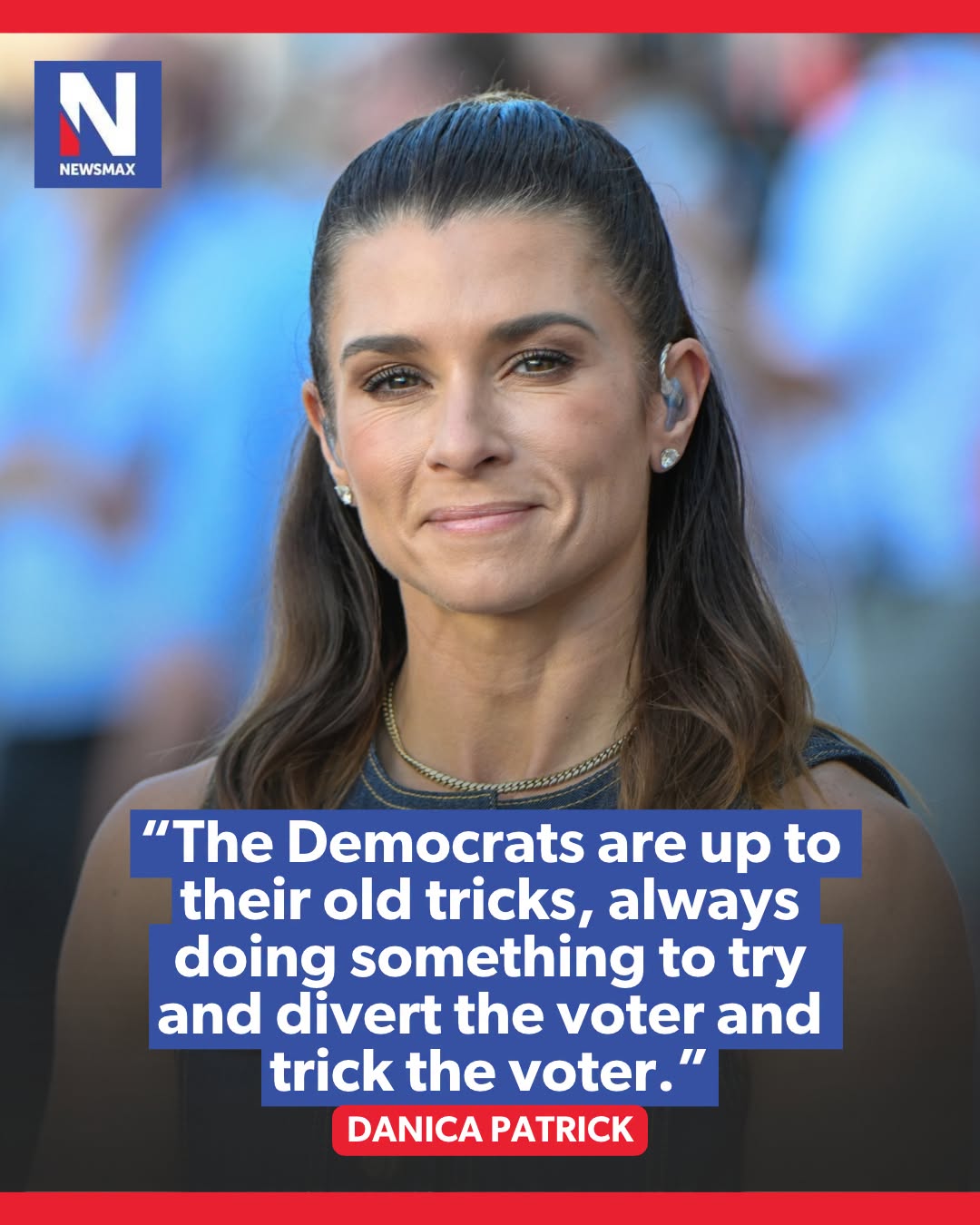
Danica Patrick Accuses Democrats
Nov 2, 2026