
PRINCESS CRUISES NIGHTMARE: 44 DEAD, 200 SICK—A COVER-UP AT SEA?
PRINCESS CRUISES NIGHTMARE: 44 DEAD, 200 SICK—A COVER-UP AT SEA?
FORT LAUDERDALE, Florida — November 21, 2026 — Nearly 150 passengers and crew members aboard Princess Cruises' Caribbean Princess have reported gastrointestinal illness during a 12-night Caribbean and Panama Canal voyage, prompting enhanced sanitation measures and federal health monitoring as the ship continues toward its scheduled return to South Florida.
The U.S. Centers for Disease Control and Prevention reported 134 sick passengers and 14 sick crew members, bringing the total to 148 as of its published outbreak update.
The ship departed Port Everglades in Fort Lauderdale on November 11 and is scheduled to return November 23.
Passengers reported symptoms primarily involving vomiting and diarrhea.
The CDC's Vessel Sanitation Program received the outbreak report on November 15 and published its public notice on November 17.
The Caribbean Princess departed Fort Lauderdale for a 12-night itinerary through the Caribbean and toward the Panama Canal.
The voyage included scheduled visits to Aruba, Colombia, Panama, Costa Rica and Grand Cayman.
For most travelers, such a trip combines several ports with days spent aboard a large passenger vessel.
The ship carries thousands of people who share dining facilities, corridors, entertainment venues and other common spaces.
During this sailing, a growing number of passengers and crew began reporting gastrointestinal symptoms.
The outbreak reached the threshold for notification to federal health authorities.
Princess Cruises reported the situation to the CDC's Vessel Sanitation Program on November 15, four days after departure.
By the time the agency published its outbreak notice, 148 people had been recorded as ill.
The cruise was still underway.
That represents approximately 4.6% of the passenger population.
Among the crew, 14 of 1,132 people reported illness, equivalent to approximately 1.2%.
Combined, the ship was carrying 4,068 passengers and crew.
The 148 reported illnesses represented approximately 3.6% of everyone aboard.
Those figures provide a more precise picture than descriptions of hundreds of people becoming ill.
They also distinguish passengers from crew members, whose living and working arrangements can differ.
The CDC counts are cumulative for the voyage.
They do not mean that all 148 people were sick at the same time.
Some may have recovered while others developed symptoms later.
The headline figure of nearly 150 comes directly from the CDC's published totals.
It is the sum of 134 passengers and 14 crew members.
Together, they equal 148.
That explains why news organizations used phrases such as “nearly 150” rather than reporting an exact figure in every headline.
It does not establish that a larger number of cases was deliberately concealed.
Health authorities count cases that meet their reporting criteria and have been reported through the ship's medical system.
The number may change as additional people report symptoms.
Because the cruise is not scheduled to end until November 23, the published figure represents the outbreak information available during the voyage.
The final count could differ from the initial report.
The CDC identifies November 15 as the date Princess Cruises reported the outbreak to its Vessel Sanitation Program.
That date is significant because it establishes when federal authorities were notified.
The ship had departed on November 11.
The CDC published its public outbreak page on November 17.
The difference between the reporting date and the publication date should not be interpreted as evidence of concealment.
The program receives illness reports and publishes outbreak information under established criteria.
Cruise operators must report gastrointestinal illness cases that meet the applicable definition.
The public notice then provides passengers, travelers and health professionals with information about the situation.
In this case, the published report identified the ship, voyage dates, illness counts, symptoms and response measures.
The predominant symptoms were vomiting and diarrhea.
Both are common signs of acute gastroenteritis, a condition involving inflammation of the stomach and intestines.
Gastrointestinal illness can have several possible causes.
Viruses, bacteria and other pathogens can produce similar symptoms.
Some illnesses may be associated with contaminated food or water.
Others can spread through close contact or contaminated surfaces.
The symptoms alone do not identify the responsible organism.
That is why laboratory testing matters.
The CDC has not confirmed the cause of the Caribbean Princess outbreak.
Although norovirus is frequently associated with cruise ship gastrointestinal outbreaks, it has not been established as the cause of this November incident.
The CDC says the ship collected stool specimens from people experiencing gastrointestinal symptoms.
Those samples are being used to investigate the cause of the outbreak.
Laboratory testing can help distinguish among pathogens that produce similar illnesses.
Identifying the organism may also help health officials evaluate how it spreads.
However, a positive result in one specimen does not necessarily establish every detail of transmission aboard a ship.
Investigators may need to consider the timing of cases, affected groups and possible exposures.
For the Caribbean Princess, the CDC currently lists the causative agent as unknown.
The agency says confirmatory testing is pending.
That status is important because it prevents an early assumption about the source of the illness.
Norovirus is a common cause of gastrointestinal illness outbreaks.
It can spread quickly in settings where many people share enclosed spaces and facilities.
Symptoms often include vomiting, diarrhea, nausea and abdominal discomfort.
However, norovirus is not the only possible cause of those symptoms.
Other viruses and certain bacteria can produce similar illness.
The CDC explicitly states that the organism responsible for this outbreak has not been determined.
Dr. Aileen Marty, an infectious disease expert at Florida International University, told CBS News Miami that testing would be necessary to determine whether the cause was norovirus, another virus or bacteria.
Her comments emphasized the importance of laboratory confirmation rather than relying on symptoms alone.
Cruise ships bring thousands of passengers and crew members into a relatively concentrated environment.
Travelers use shared dining areas, restrooms, elevators and entertainment facilities.
Crew members also work in settings involving frequent contact with passengers and one another.
These conditions can make infection-control measures particularly important.
For pathogens that spread through contaminated hands or surfaces, cleaning and hand hygiene can help reduce transmission.
For some illnesses, an infected person may continue to pose a risk after symptoms improve.
The appropriate response depends partly on the organism involved.
Because the cause of the Caribbean Princess outbreak remains undetermined, the ship's reported measures focus on general gastrointestinal outbreak control.
Those include cleaning, isolation and coordination with health authorities.
Princess Cruises confirmed the outbreak in statements to American news organizations.
The company described the illnesses as generally mild and said most guests remained unaffected.
It reported enhanced cleaning and disinfection measures throughout the ship.
The cruise line also said it was continuing to monitor the situation.
Those statements reflect the company's description of conditions aboard.
They do not replace the CDC's independent public health reporting.
The CDC confirms that the ship increased sanitation procedures, collected specimens and isolated sick passengers and crew.
The agency is reviewing the vessel's response remotely.
The available reports do not describe a decision to cancel the voyage or immediately return to port.
The ship remains scheduled to reach Fort Lauderdale on November 23.
The CDC says Princess Cruises isolated passengers and crew members who reported illness.
Isolation is a standard infection-control measure when a contagious gastrointestinal pathogen may be circulating.
It reduces opportunities for affected people to expose others through close contact.
On a cruise ship, isolation can mean temporarily restricting a passenger's movement outside their cabin.
Crew members who become ill may be removed from duties involving passengers or food service.
The exact restrictions depend on the ship's procedures and public health guidance.
The CDC's outbreak notice does not specify how many passengers were isolated at any one time.
The confirmed measure is that isolation was part of the vessel's response.
Princess Cruises reported increased cleaning and disinfection procedures under its outbreak response plan.
Such measures are particularly important when the source of an illness has not yet been identified.
Shared surfaces may include restroom fixtures, handrails, elevator controls and frequently touched areas in public spaces.
Cleaning removes contamination, while appropriate disinfection can reduce the presence of infectious organisms.
The effectiveness of specific products and procedures depends on the pathogen.
The CDC says it consulted with the cruise line about sanitation measures and reporting practices.
The agency has not announced that the ship failed to implement required cleaning procedures.
Nor has it established that a sanitation violation caused the outbreak.
The current response focuses on limiting additional illness while laboratory testing continues.
The CDC's Vessel Sanitation Program oversees gastrointestinal illness prevention and response on cruise ships within its jurisdiction.
When a qualifying outbreak is reported, the program reviews information from the vessel.
That can include illness counts, sanitation procedures and measures taken to limit transmission.
For the November Caribbean Princess outbreak, the CDC says it is monitoring the situation remotely.
That means the agency is reviewing the ship's response without announcing an onboard field investigation at this stage.
Remote monitoring does not mean the outbreak is being ignored.
It is one of the ways the program oversees incidents during voyages.
The CDC may obtain additional information as the situation develops.
The agency's published notice identifies the response actions reported by Princess Cruises.
The Caribbean Princess remained on its scheduled itinerary after the outbreak was reported.
Its return to Fort Lauderdale was expected on November 23.
A gastrointestinal outbreak does not automatically require a cruise ship to terminate its voyage.
The appropriate response depends on the severity of illness, the number of cases, available medical resources and public health considerations.
Nearly 150 reported illnesses represent a substantial number of affected people.
The voyage began at Port Everglades on November 11.
The scheduled route included Aruba, Colombia, the Panama Canal region, Costa Rica and Grand Cayman.
The ship was expected to return to the same Florida port after 12 nights.
That itinerary placed passengers aboard for an extended period, with a combination of port visits and time at sea.
The CDC identifies the voyage as B638.
Those details matter because outbreak counts are associated with a specific sailing.
The agency records each qualifying outbreak separately.
The Caribbean Princess had experienced another gastrointestinal outbreak earlier in 2026, but that was a different voyage involving different passengers and circumstances.
In May 2026, the same vessel experienced a confirmed norovirus outbreak.
That voyage ran from April 28 through May 11.
According to the CDC's final report, 145 of 3,116 passengers became ill.
Another 15 of 1,131 crew members reported symptoms.
The total was 160 cases.
The predominant symptoms were diarrhea and vomiting.
Unlike the November outbreak, the May incident was confirmed to involve norovirus.
The CDC conducted an environmental assessment and outbreak investigation aboard the ship.
The cruise line increased cleaning, collected specimens and isolated sick people.
The two outbreaks occurred on the same vessel, but they were separated by several months.
The Caribbean Princess has therefore appeared twice on the CDC's 2026 gastrointestinal outbreak list.
The May outbreak involved 160 reported cases.
The November outbreak had reached 148 cases by the agency's latest published update.
Together, the two incidents account for 308 reported illnesses across separate voyages.
Nor does the recurrence establish that the same contamination source persisted for months.
Each outbreak requires its own investigation.
Different passengers, crew assignments, ports and possible exposures can influence the circumstances.
The important question is whether the November investigation identifies a specific pathogen and any associated transmission pattern.
The Caribbean Princess was not the only vessel operated by Princess Cruises to report a gastrointestinal outbreak this year.
The CDC also recorded a March outbreak aboard the Star Princess.
That incident involved 153 reported illnesses and was attributed to norovirus.
In June and July, the Ruby Princess experienced another norovirus outbreak.
The CDC's final report recorded 107 sick passengers and 25 sick crew members, a total of 132.
Those cases occurred during a different itinerary involving travel toward Alaska and Canada.
Taken together, the CDC's records show four qualifying gastrointestinal outbreaks aboard Princess Cruises vessels in 2026 through November 17.
The outbreaks involved different ships and voyages.
Four reported outbreaks in one year can attract attention because passengers expect cruise operators to maintain rigorous sanitation standards.
However, outbreak counts require context.
Cruise lines operate different numbers of ships and voyages.
A company carrying more passengers across more sailings may have more opportunities for an outbreak to be reported.
The CDC's list identifies qualifying incidents, not a simple ranking of cruise lines by overall safety.
The figures also do not establish that every illness originated from conditions aboard the ship.
Passengers may begin a voyage already infected or become exposed at different points during travel.
Determining the cause and transmission pattern requires investigation.
The public records support examining the repeated incidents.
The CDC's Vessel Sanitation Program publishes outbreaks when at least 3% of passengers or crew report gastrointestinal illness on a qualifying voyage.
The program may also publish other incidents of public health significance.
For the November Caribbean Princess sailing, 4.6% of passengers reported illness.
That exceeded the 3% passenger threshold.
The crew illness rate was 1.2%.
The passenger rate alone was sufficient to meet the usual publication criterion.
The threshold helps explain why the CDC published the outbreak.
Cruise operators have reporting obligations, while the public outbreak list follows defined publication criteria.
The CDC uses a case definition for acute gastroenteritis.
For diarrhea, the definition includes three or more loose stools within 24 hours, or more than is normal for the person.
For vomiting, additional symptoms are considered under the agency's definition.
Those may include diarrhea, abdominal cramps, headache, muscle aches or fever.
The definition is intended to make illness reporting more consistent.
A passenger who feels mildly unwell may not necessarily meet the CDC's case criteria.
Similarly, someone who never reports symptoms to the medical center may not appear in the ship's recorded case total.
That is why the published number should be understood as reported cases meeting the applicable definition.
It is not a census of every minor discomfort experienced aboard.
The voyage is scheduled to end on November 23, two days after the date of this report.
That means additional illnesses could be reported before the ship returns.
Dr. Aileen Marty told CBS News Miami that some people might still be incubating the illness.
Her comments described a possible development rather than a confirmed increase.
The CDC's published figure remains 148.
A final count will depend on reports received and the agency's subsequent updates.
It would be inaccurate to substitute an estimated total for the official figure.
The distinction between current data and a future projection is particularly important during an ongoing outbreak.
The public health record can change as new information becomes available.
The figure of 200 does not appear as the confirmed case total in the CDC's November outbreak report.
The agency identified 148 illnesses.
That does not establish that no additional people experienced symptoms.
It means the published record contains 148 cases reported under the applicable system.
The cruise was still underway when the figures were released.
A later update could provide a different total.
However, the available evidence does not justify presenting 200 as the confirmed number.
Nor does the difference between 148 and 200 demonstrate that the cruise line concealed 52 illnesses.
To establish underreporting, investigators would need evidence of cases that met reporting requirements but were deliberately excluded.
No such finding has been announced.
The cruise line's statements describe gastrointestinal illnesses and enhanced sanitation measures.
Major news reports about the outbreak likewise do not identify a mass-fatality incident.
The published health data concerns vomiting and diarrhea among 148 people.
That is a serious operational and public health issue, but it is not evidence of 44 fatalities.
A mass-casualty event aboard a cruise ship would require separate documentation from medical, maritime or law enforcement authorities.
The available record contains no such confirmation.
The question of why only about 150 illnesses were reported begins with the way the CDC counts cases.
The agency records people who report symptoms and meet its definition of gastrointestinal illness.
The published total is cumulative through the reporting period.
It can change as the voyage continues.
A larger estimate may reflect speculation, reports of symptoms that do not meet the case definition or information not included in the public record.
But none of those possibilities proves deliberate underreporting.
The CDC has not announced that Princess Cruises falsified the November case count.
It is monitoring the company's response and reviewing sanitation procedures.
The most reliable current figure remains the agency's published total of 148.
For travelers aboard a ship experiencing gastrointestinal illness, the immediate concern is limiting exposure and obtaining appropriate care.
Passengers who develop symptoms should report them to the ship's medical center.
That helps medical personnel assess their condition and allows the operator to track cases.
Handwashing with soap and water is especially important when norovirus or a similar pathogen may be involved.
Passengers should also follow instructions concerning isolation and shared facilities.
Medical attention may be necessary when symptoms are severe or dehydration develops.
These precautions are relevant regardless of whether the November outbreak ultimately proves to be norovirus.
The cause remains undetermined, so the response must account for more than one possible pathogen.
Cruise ships operate medical facilities intended to assess and treat illnesses that arise during voyages.
However, an outbreak involving many passengers can increase demand for medical attention.
Staff may need to evaluate symptoms, collect specimens and monitor affected people while continuing routine services.
Gastrointestinal illness can also affect crew members responsible for daily operations.
That makes isolation and staffing arrangements important.
In the Caribbean Princess outbreak, 14 crew members reported illness.
The available reports do not describe the ship's medical center becoming overwhelmed.
They also do not identify a shortage of essential supplies.
The confirmed response involved isolation, enhanced sanitation and consultation with the CDC.
Princess Cruises acknowledged the illnesses in statements to CBS News Miami and other news outlets.
The company said its crew implemented enhanced sanitation measures.
It described the reported gastrointestinal illnesses as generally mild.
It also emphasized that most passengers remained unaffected.
That characterization is consistent with the CDC's figure showing 4.6% of passengers had reported illness.
However, the CDC's data do not provide a detailed medical breakdown of every affected person's condition.
The cruise line's description should therefore be understood as its own account of severity.
The independent public health findings concern the number of cases, predominant symptoms and response measures.
Those are the figures that can be compared across sources.
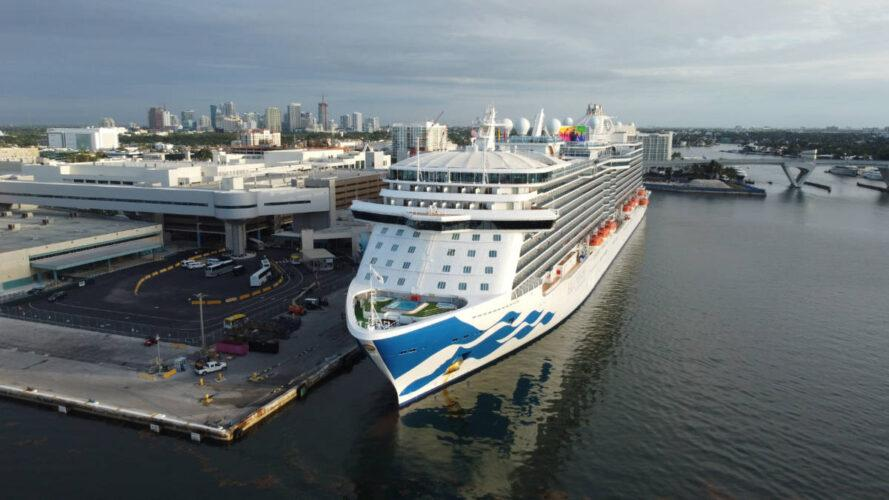
The Caribbean Princess is scheduled to return to Port Everglades on Monday, November 23.
That arrival will mark the end of the current 12-night sailing.
The CDC may receive additional illness information before or after the ship returns.
The cruise line may also carry out further sanitation procedures as part of its outbreak response.
No early termination of the voyage had been announced in the reports reviewed.
The ship's return will provide an opportunity for health authorities to assess the final reported case count.
It may also clarify whether laboratory testing has identified the causative organism.
Until then, the outbreak remains an active public health investigation.
The CDC's Vessel Sanitation Program can review final illness reports and information collected during the voyage.
Laboratory results may identify the pathogen responsible.
Officials can also examine whether the ship's sanitation and isolation measures were appropriate.
If additional investigation is warranted, the agency may determine what further steps are needed.
The CDC has not announced a final cause for the November outbreak.
It has also not reported a finding that the cruise line deliberately concealed cases.
The next significant developments will be the final illness total and the laboratory findings.
Those results will provide a stronger basis for understanding how the outbreak developed.
The November Caribbean Princess outbreak is documented by federal health authorities.
The ship departed Fort Lauderdale on November 11 for a 12-night Caribbean and Panama Canal voyage.
The outbreak was reported to the CDC on November 15.
By the agency's published update, 134 passengers and 14 crew members had reported gastrointestinal illness.
The predominant symptoms were vomiting and diarrhea.
The cause had not been identified.
Princess Cruises reported increased cleaning, isolation of affected people and collection of specimens.
The CDC was monitoring the response remotely.
The available evidence does not establish 200 confirmed illnesses, 44 deaths or deliberate suppression of cases.
The most important unanswered question is what caused the illnesses.
Laboratory testing may establish whether norovirus or another pathogen was responsible.
A second question concerns the final number of affected passengers and crew.
Because the voyage is still underway, the published count may change.
A third question concerns what the outbreak investigation may reveal about transmission and prevention.
The earlier May outbreak on the same ship adds context but does not establish a common cause.
For now, the official record documents a gastrointestinal outbreak affecting nearly 150 people during a scheduled cruise.
The ship is expected to return to Florida on November 23.
The Caribbean Princess outbreak has affected 148 passengers and crew members according to the CDC's latest published figures.
The cruise line has implemented additional sanitation and isolation measures.
Health officials are testing specimens and monitoring the situation.
The ship remains scheduled to complete its voyage.
The final illness total and the cause of the outbreak remain the key developments to watch as the vessel approaches Fort Lauderdale.
Comments (0)
Loading comments...
May You Like

PENTAGON'S DECLASSIFIED UFO FILES — THE MYSTERY OF AN UNDERGROUND STORAGE PROJECT!

CARIBBEAN PRINCESS: 5,000+ ABOARD, UNKNOWN VIRUS—CHINESE PASSENGER IS FIRST KNOWN CASE!

IRAN WARNS WASHINGTON — HOW SERIOUS IS THE THREAT TO U.S. MILITARY BASES?












