
RESIGNATION DEMAND — SHE'S FINISHED!
POLITICAL FIRESTORM: TRUMP DEMANDS ILHAN OMAR’S RESIGNATION OVER DISPUTED NAME ALLEGATIONS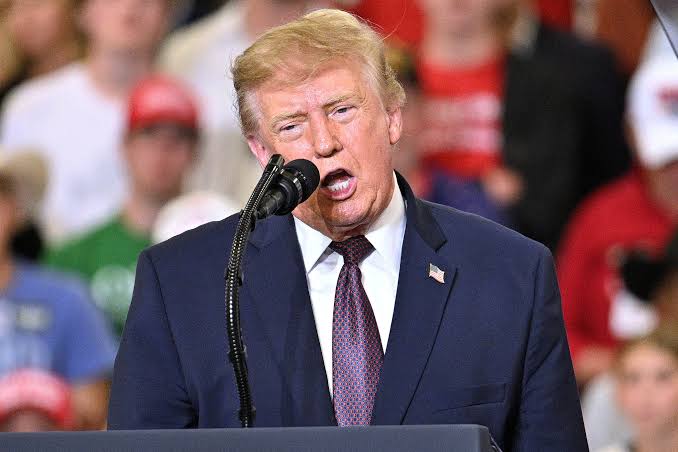
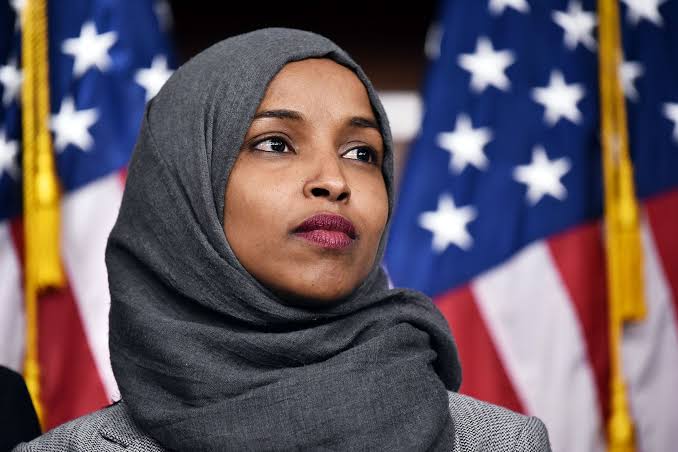
Washington has been plunged into another political controversy after President Donald Trump called for Representative Ilhan Omar to resign from Congress, accusing the Minnesota Democrat of using a false name when she entered public office. The dispute intensified after a Justice Department court filing identified Omar by an additional name, prompting renewed questions about her identity and immigration history.
Trump made his demand public on October 22 and reiterated his position the following day. His comments quickly attracted national attention, turning a dispute over a legal document into a broader confrontation involving the White House, congressional Democrats and the Justice Department.
At the center of the controversy is a court filing connected to a federal investigation involving Omar. The document referred to her as “Ilhan Nur Said Elmi, a/k/a Ilhan Abdullahi Omar.” The abbreviation “a/k/a” means “also known as,” but the filing did not establish that she had committed identity fraud or illegally used a different name to enter Congress.
Trump interpreted the additional name as evidence of wrongdoing and argued that Omar should immediately leave office. He also urged House Republican leaders to recognize what he described as a problem with her congressional eligibility. However, his demand remains a political position, not a formal determination that Omar has lost her seat.
Omar's office firmly rejected the allegation. The congresswoman has maintained that Ilhan Omar is her real name, and her spokesperson described claims to the contrary as false. She has also accused Trump of promoting politically motivated attacks rather than allowing the legal process to proceed independently.
The disagreement has revived longstanding disputes about Omar's personal history, including questions raised by political opponents about her former marriage. Those allegations have circulated for years, but renewed political attention does not itself establish their accuracy or demonstrate criminal wrongdoing.
The federal investigation adds another layer of uncertainty. Authorities are examining possible false statements involving immigration and citizenship records, according to published reports. Federal agents searched Omar's Washington-area residence on October 12, 2026, as part of the inquiry. Nevertheless, the existence of an investigation must be distinguished from proof of a crime.
The seizure of investigative materials and the appearance of an additional name in a court document have fueled speculation across the political landscape. Yet neither development, standing alone, establishes that Omar deliberately misrepresented her identity or violated federal law. Such conclusions would require supporting evidence and an appropriate legal determination.
Omar was born in Somalia, came to the United States as a refugee and became a naturalized American citizen in 2000. Her background has long been part of political debates surrounding immigration and representation. The current dispute has brought those issues back into the national spotlight at a particularly sensitive moment.
A NAME DISPUTE BECOMES A NATIONAL POLITICAL BATTLE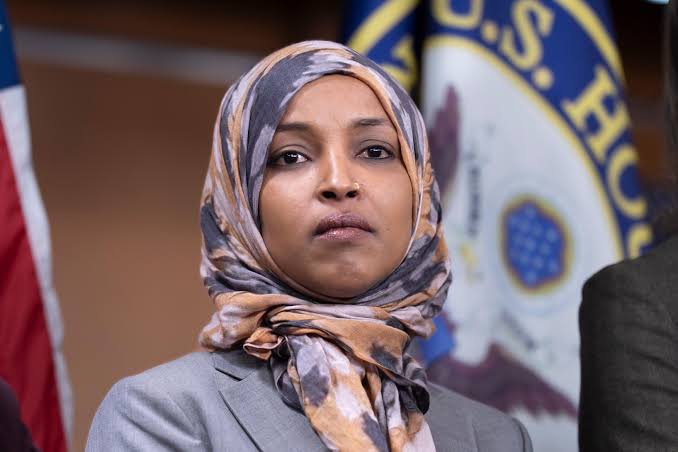
The controversy has also raised questions about the legal requirements for serving in Congress. The U.S. Constitution establishes specific eligibility requirements for members of the House of Representatives, including age, citizenship duration and state residency. A dispute over the name appearing in a document does not automatically invalidate an elected representative's position.
Removing a sitting member of Congress is also more complicated than issuing a public demand for resignation. The House has constitutional authority to expel one of its members, but doing so requires a two-thirds vote. Any attempt to challenge Omar's status would therefore face significant legal and political questions.
Republican critics argue that the allegations warrant a thorough investigation and that elected officials should be held to the same legal standards as everyone else. They contend that questions involving immigration records and official identity documents deserve clear answers, regardless of the political consequences.
Democratic supporters, meanwhile, warn that accusations should not be treated as established facts simply because they are repeated by the president. They argue that using unresolved allegations to demand an elected official's immediate removal risks undermining due process and public confidence in democratic institutions.
The dispute has become especially significant because the November 2026 midterm elections are approaching. Political controversies involving prominent lawmakers can influence campaign messaging, energize supporters and deepen divisions between voters. Both parties are likely to face pressure to explain their positions as the investigation develops.
For Trump, the demand for Omar's resignation represents another confrontation with a progressive Democrat who has frequently criticized his administration. His statements have ensured that the controversy remains in the national conversation, although political attention alone cannot determine the outcome of a legal investigation.
For Omar, the challenge is to respond to the allegations while continuing her work as an elected representative. Her denial places the emphasis on the need for evidence and a transparent process capable of distinguishing substantiated claims from political speculation.
The Justice Department now faces scrutiny over how the investigation proceeds and how its findings are communicated. Any eventual decision concerning charges, if warranted, would need to follow the applicable legal standards. Until then, the public should avoid treating allegations as a final judgment.
The controversy also illustrates how a single phrase in a legal document can become the center of a much larger political conflict. The distinction between an alternative name and a proven false identity is important, particularly when public accusations could affect a person's reputation, citizenship and elected position.
Ultimately, the most consequential developments will be those supported by verifiable evidence and formal legal findings. Trump's demand has intensified pressure on Omar, but it has not independently established that she committed fraud or that she is legally disqualified from Congress.
As Washington watches for further developments, the central questions remain unresolved: What do the underlying records establish, what conclusions will investigators reach, and will the dispute lead to any formal legal or congressional action? The answers will depend on the evidence and the procedures governing the case—not simply on the strength of political rhetoric.
For now, Omar has denied the allegation, the investigation remains ongoing, and no established finding of identity fraud has emerged from the cited court filing. The controversy is likely to continue shaping political debate, but its ultimate significance will depend on what the facts demonstrate.
Comments (0)
Loading comments...
May You Like

1,000+ MILITARY FAMILY RECORDS BREACHED, 200+ MILITARY SITES AT RISK!

WWE BRONSON REED DEAD AT 38, STIMULANTS DETECTED, $10M INSURANCE PAYOUT FROZEN!

EAST COAST MEGASTORM—2 MILLION HOUSES DAMAGED, 5 MILLION AT RISK OF BLACKOUTS, WATER FAILURES!








Popular Posts




