RFK Jr. Faces Backlash Over COVID Vaccine Claims and mRNA Debate
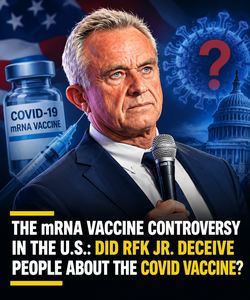
WASHINGTON — Robert F. Kennedy Jr.’s overhaul of U.S. vaccine policy has intensified debate over COVID-19 vaccines, scientific evidence, federal guidance and how Americans should evaluate competing claims.
A Controversial Health Secretary
Kennedy, who became U.S. health secretary in 2025, has spent years questioning aspects of vaccine policy and has pushed major changes since joining President Donald Trump’s administration.
His approach has included changing federal vaccine recommendations, restructuring advisory processes and questioning established assumptions about vaccine safety and effectiveness.
COVID Vaccines Remain Available
The controversy does not mean COVID-19 vaccines have disappeared from the United States. Federal agencies continue to authorize and monitor updated vaccines as the virus evolves.
For the 2026-2027 season, the FDA recommended an updated vaccine formula targeting the JN.1-lineage XFG variant, based on available evidence about circulating viruses and vaccine performance.
The FDA has also continued monitoring vaccine safety and effectiveness while manufacturers transition to updated formulations for the upcoming respiratory-virus season.
What Does the Evidence Say?
The image’s question about whether Kennedy “deceived” Americans requires distinguishing between documented statements, disputed interpretations and scientific findings rather than treating the allegation as an established fact.
FactCheck.org reported in September that Kennedy made several misleading claims about vaccines during a Children's Health Defense conference, including statements about safety testing and adverse events.
One example involved vaccine package inserts. Kennedy cited hundreds of reported medical conditions, but experts noted that adverse events appearing in such documents are not necessarily proven to have been caused by vaccination.
The FDA has nevertheless acknowledged specific risks associated with mRNA COVID-19 vaccines. In 2025, it required updated warnings concerning myocarditis and pericarditis following vaccination.
According to the FDA, the observed risk was highest among males ages 12 through 24, with an estimated incidence of approximately 27 cases per million doses during the specified period.
Kennedy’s Broader Policy Changes
Kennedy’s influence extends beyond COVID-19 vaccines. Reuters reported that he has pursued broader changes to childhood immunization policy, including restructuring the federal advisory system and reconsidering longstanding recommendations.
Some of those efforts have faced legal challenges. A federal judge blocked key parts of the administration’s attempt to reduce recommended childhood vaccines and restructure the advisory process.
The administration has continued seeking changes through executive actions and regulatory processes, while medical organizations and other groups have challenged several measures in court.
COVID Guidance Has Also Changed
Federal COVID vaccination guidance has shifted under the Trump administration. Current CDC information describes vaccination as based on individual or shared clinical decision-making rather than the earlier universal approach.
Reuters reported this month that the CDC had not yet begun accepting certain COVID vaccine orders for children through federal programs, amid continuing changes to vaccination policy.
The situation has created uncertainty for states and families relying on federal vaccination programs, although commercially insured patients can obtain COVID vaccines through pharmacies and other providers.
Why the Debate Matters
The dispute is larger than one politician’s statements. It concerns how federal health agencies evaluate scientific evidence, communicate uncertainty and balance individual choice with population-level vaccination policy.
Kennedy has argued that Americans deserve greater transparency and more scrutiny of vaccine safety, while medical organizations emphasize decades of clinical research and ongoing safety monitoring.
The two positions can overlap on the principle that vaccines should be carefully monitored, but they differ substantially over how existing evidence should be interpreted and how federal recommendations should change.
What Happens Next?
HHS is currently seeking public input on federal vaccine recommendation categories, including routine recommendations, risk-based recommendations and shared clinical decision-making.
That process could influence how future vaccine recommendations are categorized and communicated, particularly when evidence, individual circumstances and public trust become central considerations.
Meanwhile, federal agencies continue preparing updated COVID-19 vaccines for the 2026-2027 season, demonstrating that vaccine development and regulation remain active despite the political controversy.
For Americans, the central issue is therefore not simply whether Kennedy “deceived” the public, but which claims can be supported by evidence and how future policy should reflect that evidence.
Comments (0)
Loading comments...
May You Like

FIGHT OVER OBAMA’S IRAN POLICY
OBAMA STUNS ON INSTAGRAM: MESSAGE MARKING 34-YEAR MILESTONE SPARKS A BUZZ

South Korea–Ukraine Rift Deepens Over North Korean POW Transfer as PURL Draws New Scrutiny