
JD Vance Blames Middle East Tensions for Rising Gas Prices as Iran War Drives Energy Debate
October 29, 2026 | Howell, Michigan, United States | U.S. Politics & Energy
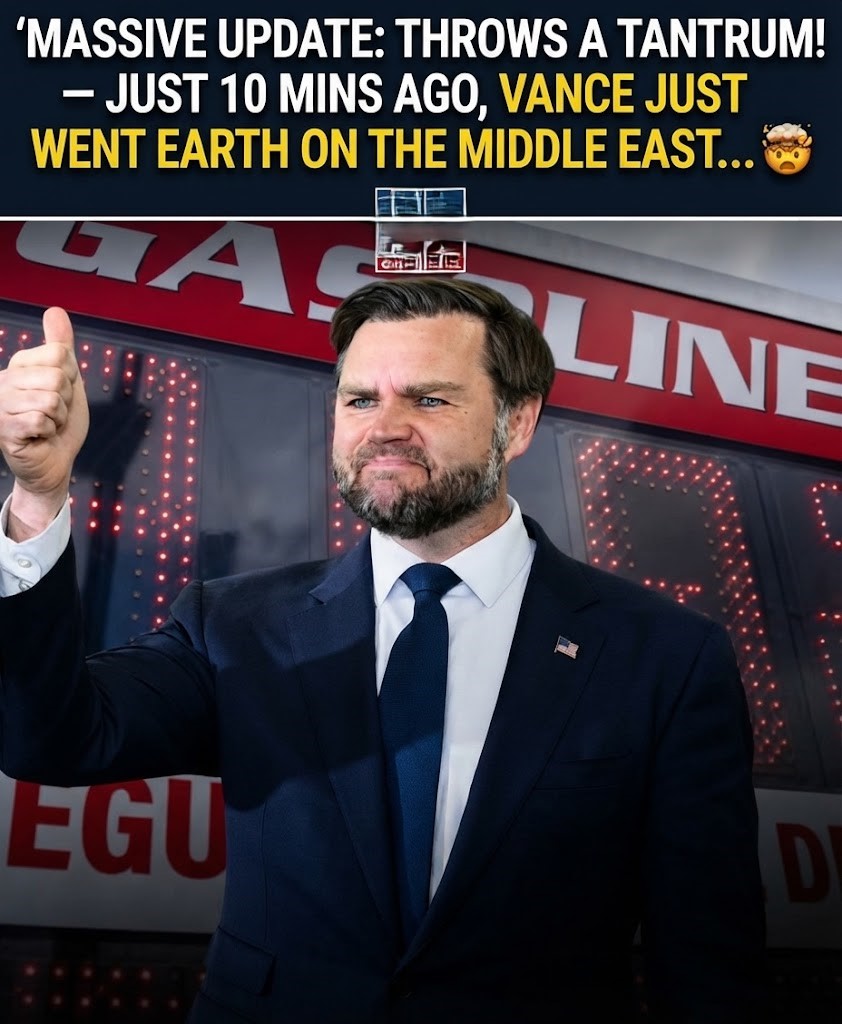
U.S. Vice President JD Vance has blamed rising gasoline prices on instability in the Middle East, saying prices climb whenever a regional leader “throws a tantrum.” The remark, delivered during a campaign rally in Michigan on October 27, comes as elevated fuel costs become a political liability ahead of the November midterm elections.
The quote in the image is substantially accurate, although it omits the surrounding argument. Vance acknowledged that gasoline prices were high, then blamed Democratic energy policies for leaving the United States more vulnerable to disruptions abroad.
What Vance Said in Michigan
Speaking to voters in Howell, Vance said the relationship between Middle Eastern instability and fuel prices had existed since the 1970s. He argued that the Trump administration’s energy agenda would reduce U.S. dependence on foreign suppliers and make domestic production more resilient.
Vance also criticized Democratic policies, including what he called the “Green New Scam,” and blamed the Biden administration for refinery closures. He pointed to a proposed expansion of U.S. refining capacity as evidence that the current administration was working to strengthen domestic energy production.
The remarks were part of a broader campaign message linking energy costs, national security and domestic industrial policy. Republicans have argued that expanding oil production and refining would help protect American consumers from geopolitical shocks.
But the claim that foreign leaders alone explain rising gasoline prices leaves out other important forces. Fuel costs depend on crude oil prices, refinery capacity, transportation, seasonal demand, taxes and conditions in international markets.
Why Gas Prices Are Rising
The conflict involving Iran has disrupted energy markets and raised concerns about commercial shipping through the Strait of Hormuz, a critical route for global oil supplies. Threats to shipping can raise oil prices because traders anticipate possible shortages and higher transportation costs.
PolitiFact’s October 19 review of Vance’s earlier comments found that the Iran war was the most obvious driver of the current increase in gasoline prices. Energy economist Kenneth Gillingham told the fact-checking outlet that reduced refinery capacity could contribute to higher prices, but was not the biggest cause of the increase.
That assessment complicates Vance’s attempt to place much of the blame on decisions made under former President Joe Biden. The conflict itself is a major source of the current market shock, meaning the administration’s foreign policy is also relevant to the price consumers pay at the pump.
Gasoline prices are not set by the president or by any single foreign leader. Political decisions can affect supply and expectations, but retail prices reflect a complex market shaped by global crude oil costs, refining margins, distribution expenses and local competition.
The Refinery Argument Under Scrutiny
Vance has repeatedly argued that the United States lost about 20% of its West Coast refining capacity under Biden and that this left the country more exposed to overseas disruptions. PolitiFact rated his broader claim that this was the biggest reason for current high gasoline prices false.
The fact-check found that the capacity reduction applied to California rather than the entire United States. It also noted that refinery closures often reflect business decisions and market conditions, rather than a direct order from the White House.
Refining capacity still matters: when refineries close or operate below capacity, regional fuel supplies can tighten and prices can rise. However, it does not follow that every closure is caused by federal policy or that domestic refining can insulate Americans from a global oil shock.
The administration has promoted new domestic energy investments as part of its effort to reduce vulnerability. Whether those projects will materially lower prices depends on their scale, completion dates, operating costs and the state of global markets.
A Political Challenge Before the Midterms
The remarks come as both parties seek to persuade voters that they have the better answer to the cost of living. High gasoline prices are especially visible to households because drivers encounter them regularly and can compare them with prices from previous months or years.
Democrats have pointed to the Iran conflict and its impact on energy markets as evidence that the administration’s policies carry economic costs. Republicans counter that the United States needs greater domestic production and refining capacity to reduce the influence of foreign governments.
Vance’s statement captures a genuine relationship between geopolitical tension and energy prices, but his broader explanation is a partisan interpretation. Market disruptions abroad can raise costs quickly, while domestic production and refining policies tend to affect supply over longer periods.
The bottom line: Vance did make the quoted remark at a Michigan rally on October 27. Middle East instability—particularly the Iran conflict—is putting upward pressure on fuel prices, but the image’s simplified explanation leaves out the role of U.S. policy and the wider global energy market.
Comments (0)
Loading comments...
May You Like


WWE BRONSON REED—STAR COLLAPSES AT COMPANY EVENT, FATAL DRUG REACTION SUSPECTED!

WEYMOUTH HORROR — FIRE TRUCK BRAKES TO SAVE DOG, ONE FIREFIGHTER DEAD, TWO CRITICAL!









Popular Posts




