Robert De Niro’s Explosive Trump Rebuke: “Keep Your F***ing Hands Off Our Vote” — Hollywood Enters the 2026 Midterm Fight
POLITICS • UNITED STATES • OCTOBER 28, 2026 • 8-MINUTE READ
The Oscar-winning actor’s fiery appearance at New York’s “Hands Off Our Vote” rally has intensified the debate over voting rights, presidential power and the growing role of celebrities in American politics.
NEW YORK — Robert De Niro has delivered another forceful rebuke of President Donald Trump, bringing his longstanding political feud into the spotlight just weeks before the November 2026 midterm elections.
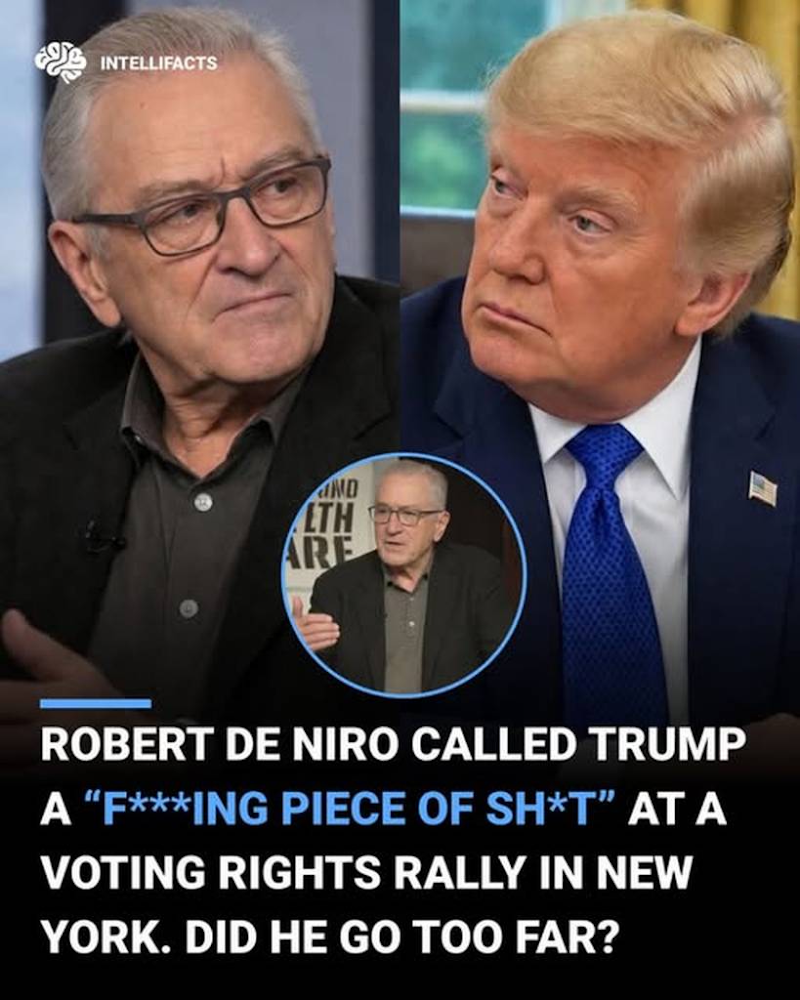
Speaking at the “Hands Off Our Vote” rally in New York City on October 4, the veteran actor used profanity, challenged Republican lawmakers and accused the Trump administration of attempting to undermine voters’ power. His speech quickly attracted national media attention, turning a campaign focused on election participation into another high-profile confrontation over American democracy.
“Keep your f***ing hands off our vote,” De Niro declared, delivering the line that would become the defining moment of the event.
The speech has reignited questions about how far celebrities should go when speaking about politics, whether forceful rhetoric helps mobilize voters, and how claims of voter suppression should be evaluated against verifiable evidence.
A rally turns into a political showdown
The rally took place amid mounting political tensions ahead of the 2026 midterm elections, when control of Congress and the direction of federal policy are major issues for voters.
De Niro argued that the administration's policies were alienating voters and accused its political allies of seeking to restrict their influence rather than win their support at the ballot box.
“The Trump administration knows that their policies are not only crazy and cruel, they're increasingly unpopular,” he said, according to reporting on the speech. He then challenged the crowd with the claim that the administration was trying to take voters’ power away.
The accusation was political rhetoric delivered at an advocacy event, not an independent finding that the administration had unlawfully suppressed votes. That distinction is central to understanding both the speech and the controversy surrounding it.
For De Niro, however, the message was unmistakable: protecting access to the ballot should be a priority, and voters should respond by participating in the coming election.
The moment that captured national attention
De Niro's speech grew more confrontational as he moved from criticizing government policy to directly addressing the president.
He called Trump a “coward” and used an explicit insult to describe him, prompting renewed coverage of the actor's outspoken opposition to the Republican president. Rather than delivering a conventional celebrity endorsement, De Niro framed his remarks as a warning about the future of voting rights and the balance of political power.
The language was deliberately blunt. Supporters of the rally's message may view it as an expression of frustration with political developments; critics may regard the profanity as unnecessarily inflammatory. Either way, the remarks moved beyond a routine appeal for voter participation and became a national talking point.
The central issue is bigger than one insult: can high-profile public figures bring meaningful attention to election policy without allowing the spectacle of confrontation to overshadow the facts?
Mark Ruffalo joins the fight over voting rights
De Niro was not the only Hollywood figure to speak at the event. Actor Mark Ruffalo also addressed the crowd, reinforcing the rally's call for political participation and warning against efforts he believes could limit voters' influence.
Ruffalo urged supporters to remain engaged through Election Day and beyond. Drawing on his best-known screen persona, he joked, “I’m going to Hulk out,” a reference to the Marvel character he portrays. The remark added a memorable moment to a speech centered on the stakes of the midterms.
Their joint appearance reflects a wider pattern in American politics: actors and other public figures increasingly use their platforms to advocate on issues ranging from voting access to constitutional rights.
Celebrity involvement can attract audiences who might otherwise pay little attention to policy debates. But fame alone does not establish whether a political allegation is accurate. That still requires evidence, context and scrutiny.
What is at stake in the voting-rights debate?
At the heart of the controversy is a fundamental question: how should the United States balance election security, consistent voting rules and convenient access to the ballot?
De Niro criticized congressional Republicans, the Supreme Court and the Justice Department, alleging that their actions threaten voters' ability to make their voices heard. Those statements represent his position at the rally; individual allegations need to be examined against court records, legislation, official decisions and election data.
The debate is especially consequential during a midterm election year. Voters will choose members of Congress, and the results will influence legislative priorities, oversight of the executive branch and the political direction of the country.
The Supreme Court is an important part of this discussion because its decisions can shape election administration and the interpretation of voting laws. Likewise, the Justice Department has responsibilities involving federal election law and civil-rights enforcement.
However, criticism of a government institution is not, by itself, proof of unlawful conduct. Assessing claims of voter suppression requires looking at the specific policy or action involved, who is affected, and what the available legal and factual record establishes.
For readers following the controversy, that distinction matters: defending election access and evaluating allegations fairly are compatible goals.
Why the November midterms matter
De Niro used the rally to urge Americans to vote early and encourage their families, friends and neighbors to participate.
“First, we're going to vote, and we're going to vote early,” he told the audience, according to coverage of the event.
The appeal was more than a sound bite. Early voting is an established feature of American election administration in many states, although the available methods, eligibility rules and deadlines differ by jurisdiction.
The November midterms will determine the next composition of the House of Representatives and part of the Senate. That makes voter turnout, campaign messaging and public confidence in the electoral process particularly prominent issues.
For Democrats, the elections offer an opportunity to contest Republican control and challenge the administration's agenda. Republicans, meanwhile, have their own reasons to mobilize voters and defend their legislative priorities.
The political significance of the election is clear, but its outcome remains for voters to decide. De Niro's speech is one part of a much larger national campaign in which policy, party organization, turnout and local concerns will all play a role.
The controversy continues beyond the rally
De Niro's political advocacy has continued beyond his appearance in Manhattan. On October 23, Fox News reported that the actor appeared in a new advertisement promoting the “Hands Off Our Vote” campaign and encouraging Americans to vote early.
The advertisement repeated his concerns about voting rights and the administration's approach to constitutional protections. The White House, according to the same report, criticized his rhetoric, saying he was engaging in hateful speech.
The exchange illustrates how the dispute has moved beyond a single rally. De Niro is using his public profile to encourage election participation, while the administration's critics and supporters continue to contest his characterization of its policies.
One point deserves particular attention: although the supplied social media post refers to a campaign team mocking De Niro's age and relevance, the sources reviewed for this article do not establish that specific response. It would therefore be premature to present that claim as a confirmed statement from the campaign.
For a credible account of the controversy, the actor's documented remarks and the White House's reported response provide a stronger foundation than unverified social media descriptions.
Does celebrity activism help or hurt political debate?
The question extends well beyond De Niro and Trump.
Celebrities can use their visibility to bring attention to complicated issues, encourage civic participation and direct audiences toward information about elections. Their public statements can also intensify partisan disagreements, particularly when personal insults compete with substantive arguments about policy.
For some Americans, De Niro's blunt language represents a willingness to confront political power directly. For others, the same language risks turning a serious debate into a personality-driven confrontation.
Neither reaction settles the underlying questions about election administration. Those questions must be answered through verifiable evidence, applicable law and transparent public institutions.
What the rally demonstrates is that voting rights remain a powerful point of political contention—and that celebrities continue to play a visible role in how those disputes reach the public.
The bottom line: A heated speech, a consequential election
Robert De Niro's October 4 appearance at the “Hands Off Our Vote” rally was unmistakably confrontational. His attack on Trump, his profanity-laced warning and his appeal for early voting made the event a major talking point in the run-up to the November midterms.
But the lasting significance of the controversy will not be determined by a viral quotation alone. It will depend on the policies under debate, the evidence supporting competing claims and the choices Americans make at the ballot box.
De Niro has made his position clear. Whether audiences agree with his language or his conclusions, the wider debate raises questions that deserve careful attention: how should voting access be protected, how should election rules be enforced, and what evidence should the public demand before accepting allegations of political misconduct?
As the midterms approach, those questions remain at the center of the national conversation.
Comments (0)
Loading comments...
May You Like
RUSSIA & IRAN UNITE! ★ THE DEAL IS ALMOST DONE...
TRUMP'S TARIFF CHAOS! ★ EXEMPTS CANADA — BUT ADDS NEW TAXES...
"THE WAR WON'T END"! ★ TRUMP'S DIRE MESSAGE...
Latest Posts

Popular Posts