URGENT: A New Trump–Mamdani Clash Raises Questions About Federal Intervention!
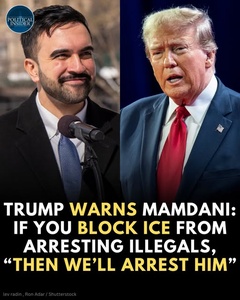
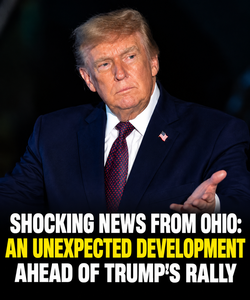
A new political dispute is drawing attention to the relationship between the federal government and local leaders over immigration enforcement. A message featured in a political graphic shows President Donald Trump warning New York City Mayor Zohran Mamdani about the consequences of blocking U.S. Immigration and Customs Enforcement (ICE) from carrying out arrests.
The statement raises a broader question at the center of America’s immigration debate: how far can local officials go in limiting cooperation with federal immigration authorities, and what options does the federal government have when disagreements escalate?
Although the graphic presents the warning in forceful terms, the exact wording and context should be verified before being treated as a direct quotation. The underlying dispute, however, reflects a longstanding tension between federal immigration enforcement and local policies designed to protect immigrant communities.
Why Is Mamdani at the Center of the Dispute?
Zohran Mamdani has become a prominent figure in debates over immigration policy and the responsibilities of city government. His position places him within a broader national discussion about how cities should respond to federal immigration operations.
Local officials who support limits on cooperation with ICE often argue that municipal police should focus on public safety rather than federal civil immigration enforcement. They may also contend that residents are less likely to report crimes or cooperate with authorities if they fear that contact with local agencies could lead to immigration consequences.
Supporters of stronger federal enforcement take a different view. They argue that federal immigration laws should be enforced consistently and that local policies should not obstruct lawful federal operations.
These competing arguments have made cooperation between local governments and federal agencies a recurring source of political and legal conflict.
What Does the Warning About ICE Mean?
The graphic attributes a warning to Trump suggesting that Mamdani could face arrest if he blocks ICE from carrying out arrests.
Such a statement would represent a serious escalation in the debate over immigration enforcement. However, a political warning is not the same as a formal criminal charge, an arrest warrant or a judicial determination.
Whether a local official’s actions violate federal law would depend on the specific conduct involved, the relevant statutes and the surrounding circumstances. Disagreement with federal immigration policy, by itself, does not automatically establish a criminal offense.
Any claim that an elected official could lawfully be arrested would therefore require careful examination of the alleged actions and the legal basis for enforcement.
Can a Mayor Prevent ICE From Making Arrests?
The answer depends on what the city does and what federal authorities are attempting to accomplish.
Federal immigration agencies generally have authority to enforce federal immigration law. At the same time, constitutional principles limit the federal government’s ability to require state and local officials to administer federal programs or use local resources to carry them out.
This distinction is important. A city may choose to limit the extent to which its own employees assist with federal immigration enforcement, subject to applicable law. That is not necessarily the same as physically obstructing federal officers who are carrying out a lawful operation.
The legal analysis can become more complicated when officials allegedly interfere directly with federal agents, violate a court order or take actions that fall within a specific federal offense.
Consequently, the phrase “blocking ICE” can describe very different situations. The precise conduct matters more than the political characterization used to describe it.
Why the Conflict Matters Beyond New York
The dispute reflects a national divide over immigration enforcement and the role of local government.
Some communities favor closer cooperation between local law enforcement and federal immigration agencies. Others support policies that restrict such cooperation, arguing that local resources should remain focused on community safety and that immigrant residents should feel comfortable accessing public services.
These approaches can affect relationships between city officials, federal agencies, law enforcement personnel and residents. They can also lead to disputes over funding, access to detention facilities, information-sharing practices and the limits of executive authority.
For the Trump administration, stronger federal enforcement is a central element of its immigration agenda. For local leaders who favor restrictions on cooperation, maintaining a distinction between local policing and federal immigration enforcement can be a key policy objective.
The disagreement is therefore about more than one public statement. It concerns the balance of power between federal and local authorities.
Could This Lead to a Legal Battle?
If federal officials believe a local government has unlawfully interfered with immigration enforcement, the dispute could lead to negotiations, administrative action or litigation, depending on the circumstances.
Courts may be asked to determine whether a particular policy conflicts with federal law or whether federal authorities are attempting to impose obligations that the Constitution does not permit.
An arrest, however, would require a separate legal basis. A public disagreement or a threat made during a political dispute does not, on its own, establish that an arrest is justified.
The distinction between political rhetoric and formal legal action is essential when assessing claims that a mayor or other elected official could face criminal consequences.
What Happens Next?
The key questions are whether the reported warning reflects an actual statement by Trump, what specific actions Mamdani is alleged to have taken or proposed, and whether federal authorities have identified a concrete legal violation.
Until those details are established, the graphic should be understood as presenting a political claim rather than proof that an arrest will occur.
The wider debate is likely to continue as federal officials and local governments confront disagreements over immigration enforcement, public safety and the limits of their respective powers.
The bottom line: The dispute highlights a fundamental question in American government: where does legitimate local control end, and where does unlawful interference with federal enforcement begin? The answer depends on the facts and the law—not simply on the strength of the political rhetoric.
Comments (0)
Loading comments...
May You Like
Jack Smith Defends His Integrity as Trump Investigations Face Renewed Political Firestorm
TRUMP HIT WITH 26 ARTICLES OF IMPEACHMENT
Barack Obama Draws Attention With New Literary Podcast