Russia and China Veto U.S.-Backed Iran Sanctions Monitoring Plan as Trump War Costs Reach $38 Billion
The U.N. Security Council has been thrown into a new dispute over Iran after Russia and China vetoed a U.S.-backed effort to keep international experts monitoring sanctions on Tehran. The vote came just days after a congressional analysis estimated that the U.S. military campaign against Iran had already cost about $38 billion.
A diplomatic confrontation over Iran escalated at the United Nations on September 17, when Russia and China vetoed a U.S.-backed resolution that would have extended the mandate of independent U.N. experts responsible for monitoring sanctions on Iran.
The resolution received 11 votes in favor, while Russia and China voted against it and Somalia and Pakistan abstained. Because Russia and China are permanent members of the Security Council, either veto was enough to block the measure.
The timing is significant. Just two days earlier, the nonpartisan Congressional Budget Office estimated that U.S. combat operations against Iran had cost the Department of Defense approximately $38 billion through August 1, with another $2 billion to $3 billion per month potentially required if the conflict continues.
But the U.N. veto and the $38 billion figure represent two separate developments. There is no evidence that Russia and China's decision was specifically a response to the cost of the American war. Rather, the vote reflects a long-running disagreement over the legality and future of the international sanctions regime against Iran.


What Exactly Did Russia and China Veto?
The U.S.-backed proposal sought to extend the mandate of a panel of experts that monitors implementation of international sanctions against Iran.
The experts' work is designed to provide independent information to the Security Council about potential sanctions violations, including efforts to circumvent restrictions involving Iran's nuclear and military activities.
Russia and China have argued that the underlying U.N. sanctions framework is no longer legally applicable.
The disagreement stems from the 2015 Iran nuclear agreement, formally known as the Joint Comprehensive Plan of Action, or JCPOA, and the Security Council resolution that supported it.
Western governments — particularly Britain, France and Germany — used the so-called “snapback” mechanism in 2025 to restore U.N. sanctions, arguing that Iran had failed to comply with its nuclear commitments.
Iran has rejected those allegations.
Russia and China have disputed the Western interpretation of the snapback process and have argued that the relevant Security Council framework expired in October 2025.
That disagreement is now directly affecting the Security Council's ability to maintain an independent sanctions-monitoring mechanism.
The Panel Was Already Facing Problems
One important detail is missing from many viral descriptions of the veto.
The sanctions-monitoring panel had not been fully operational for roughly a year, because the Security Council had been unable to agree on appointments to the expert body.
So Thursday's veto did not suddenly shut down a fully functioning investigative operation.
Instead, it effectively prevented the Council from renewing the mandate needed to maintain that independent monitoring structure going forward. Reuters reported that the panel had already been inactive because of the dispute over appointments.
That distinction matters when assessing what the vote actually changes.
Why Washington Wanted the Monitoring Mechanism Extended
The United States and its European allies argue that independent monitoring remains important because sanctions only have practical force if violations can be identified and documented.
The U.S. position is that Iran has continued activities that raise concerns over nuclear proliferation and sanctions evasion.
Washington has also accused Russia and China of undermining international pressure on Tehran.
During earlier Security Council discussions, the United States argued that Russia and China were attempting to prevent the Council from maintaining an effective sanctions committee and monitoring mechanism. Russia and China rejected that interpretation, saying Western governments were using the Security Council for political purposes and insisting that the Iranian nuclear issue should return to diplomacy.
The disagreement therefore goes beyond one vote.
It reflects two competing interpretations of the international legal framework surrounding Iran's nuclear program and sanctions.
What Does the $38 Billion Figure Actually Mean?
The second major element of the viral headline is based on a real and recently released figure.
On September 15, the Congressional Budget Office estimated that the Department of Defense had spent approximately $38 billion on the armed conflict with Iran through August 1, 2026.
However, the figure does not represent every economic cost associated with the war.
CBO's estimate covers categories including:
- Expended munitions
- Equipment lost in combat
- Increased military flying hours
- Other operational and logistical costs
- Increased fuel expenses
The CBO specifically warned that its different categories of economic and budgetary effects should not simply be added together because they use different methodologies and time periods.
The $38 billion therefore should be understood as an estimate of direct Department of Defense combat-related costs, rather than a complete bill for the entire conflict.


Where Did the Money Go?
According to the CBO analysis, the largest expenses involve replacing weapons and equipment used or lost during the conflict.
One particularly important cost is the use of missile-defense interceptors.
The CBO said the conflict has significantly reduced U.S. inventories of certain missile-defense systems, with rebuilding those stocks potentially taking years.
The financial cost therefore represents more than a number on a federal spreadsheet.
Some of the expenditure reflects the replacement of military hardware and ammunition that can take considerable time to manufacture.
That has raised questions about the opportunity cost of maintaining the campaign while the United States also has military commitments elsewhere.
The War Could Add Billions More
The CBO estimated that continuing combat operations could cost roughly $2 billion to $3 billion per month, depending on the intensity of the fighting.
That means the $38 billion figure is already a historical estimate rather than a projection of the final cost.
If fighting continues for several more months, the direct Pentagon cost could rise substantially.
The CBO also projected that disruptions caused by the conflict could push U.S. inflation approximately 0.5 percentage points higher in the first quarter of 2027 than it otherwise would have been, largely because of disruptions to energy and shipping markets.
Did Russia and China “Blindside” Trump?
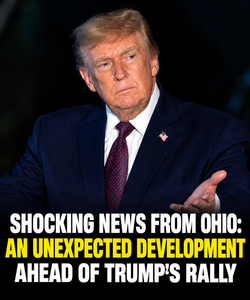
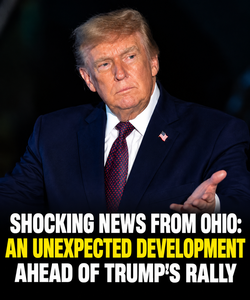
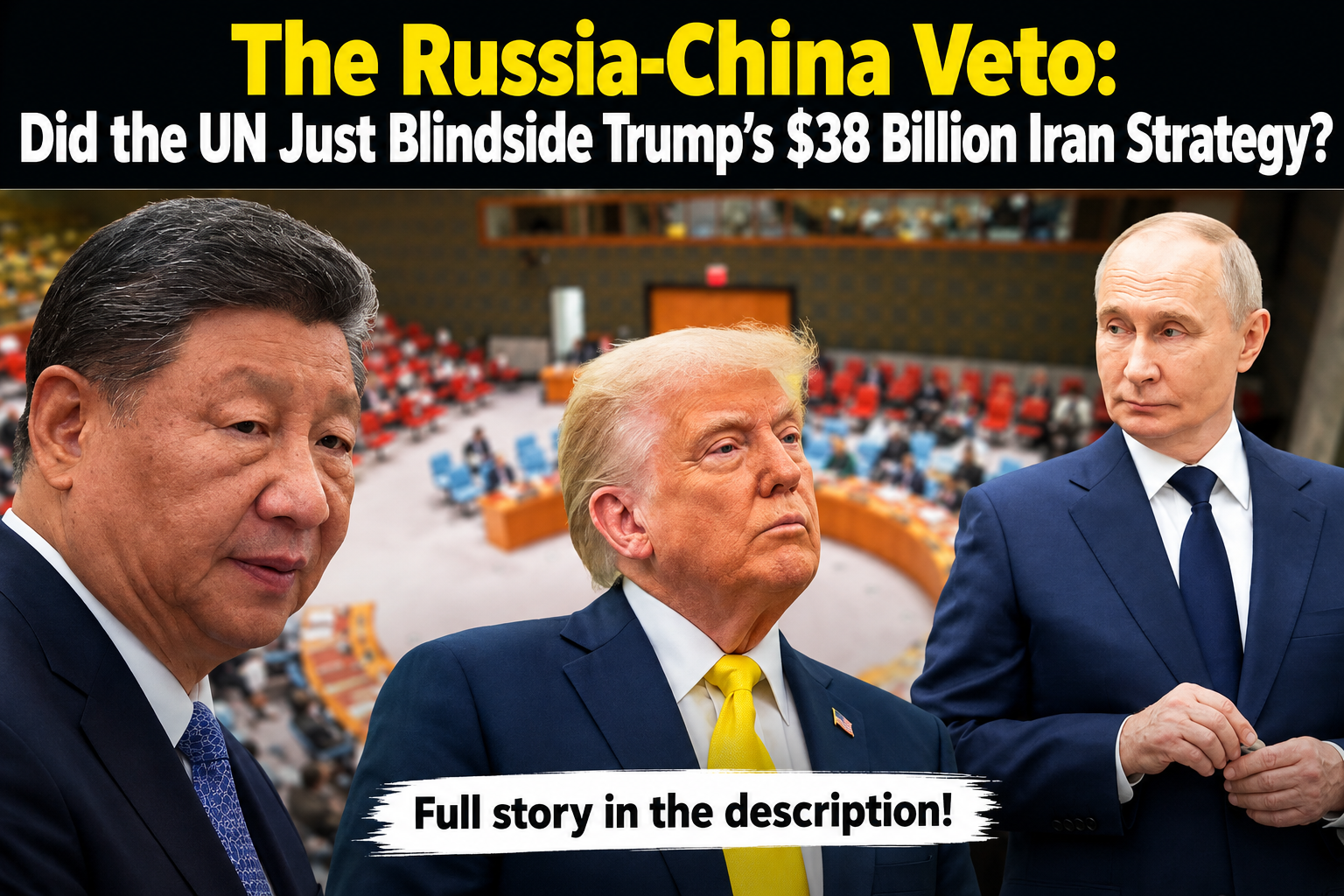
The image's wording suggests that the Russian and Chinese veto was an unexpected move that directly undermined Trump's $38 billion Iran strategy.
The underlying facts are more complicated.
Russia and China had already opposed the continuation of the sanctions-monitoring framework and had publicly disputed the Western interpretation of the 2025 snapback process.
Reuters reported earlier in September that the upcoming vote was expected to produce a confrontation because Moscow and Beijing opposed renewing the panel.
In other words, the veto was not entirely without warning.
The vote was nevertheless significant because it demonstrated that Washington cannot count on Security Council consensus for every component of its Iran policy.
Russia and China can use their permanent-member vetoes to block resolutions they oppose.
Russia's Position
Moscow has argued that the sanctions framework has no continuing legal basis following the expiration of the relevant provisions of Security Council Resolution 2231.
Russian officials have also criticized Western governments for what they describe as political manipulation of the Security Council.
Russia's position is that the Iranian nuclear issue should be addressed through diplomacy rather than additional sanctions pressure.
China's Position
Beijing has taken a similar legal position.
Chinese officials have argued that Resolution 2231 expired in October 2025 and that the Security Council should focus on diplomatic negotiations and de-escalation.
China has also emphasized its support for Iran's right to peaceful nuclear energy while calling for international monitoring and negotiations over the nuclear issue.
At the same time, China's interests are not limited to its relationship with Iran.
China is a major energy importer and has strong economic interests in stability across the Middle East and the Persian Gulf.
Reuters reported on September 17 that Beijing had privately urged Iran to restrain Houthi forces because continued instability could threaten regional shipping and energy routes important to China.
That illustrates why describing the Russia-China relationship with Iran simply as an anti-American bloc can obscure important differences in their individual interests.
The Veto Comes as Washington Faces a Wider Iran Challenge
The Security Council confrontation is occurring alongside broader pressure on the Trump administration over the cost and consequences of the war.
The CBO's $38 billion estimate came after Defense Secretary Pete Hegseth had previously put the cost at approximately $37.5 billion during congressional testimony.
The CBO's independent calculation therefore landed in roughly the same range as the Pentagon's earlier public estimate.
The report also highlighted the strain on military inventories and the continuing cost of operations.
Meanwhile, the conflict has disrupted energy shipments through the region, with the Strait of Hormuz becoming a particularly important pressure point.
Trump has said he hopes the war is approaching an end, while Washington and Tehran have continued intermittent diplomatic contacts. Reuters reported that Trump was also expected to meet Gulf leaders around the U.N. General Assembly to discuss the conflict and possible postwar arrangements.


What Happens to Iran Sanctions Now?
The immediate consequence is a reduction in the ability of the Security Council to maintain the disputed independent expert-monitoring mechanism.
That does not automatically mean that every international sanction against Iran disappears.
The legal status of the sanctions themselves is a separate and highly contested question.
Britain, France and Germany maintain that the snapback mechanism restored sanctions in 2025. Russia, China and Iran dispute that interpretation.
The disagreement could therefore continue through other U.N. mechanisms and diplomatic negotiations.
It also leaves individual countries to determine how they interpret and enforce the sanctions framework under their own legal systems and international obligations.
Why the Vote Matters Beyond Iran
The dispute is also a test of the Security Council's ability to reach agreement on major nuclear and nonproliferation questions.
The council's five permanent members — the United States, Russia, China, Britain and France — have veto power.
When Russia and China block a U.S.-backed resolution, Washington can still pursue sanctions and other measures outside the Security Council, but the absence of consensus makes coordinated international enforcement more difficult.
The result is a familiar pattern in the U.N.: the Security Council becomes not only a mechanism for collective action but also a venue where competing interpretations of international law collide.
What the Viral Image Gets Right — and What It Leaves Out
What is accurate
- Russia and China did veto a U.S.-backed Security Council resolution on September 17.
- The resolution sought to extend independent U.N. monitoring of sanctions involving Iran.
- The vote occurred amid the ongoing U.S.-Iran conflict.
- The Congressional Budget Office estimated that U.S. combat operations against Iran had cost approximately $38 billion through August 1.
- CBO estimated that continuing operations could cost another $2 billion to $3 billion per month.
What requires context
- The Russian and Chinese veto was not itself a $38 billion decision; the CBO estimate concerns U.S. military spending, while the U.N. vote concerned sanctions monitoring.
- Russia and China had opposed the sanctions-monitoring framework before the vote, so the decision was not entirely unexpected.
- The sanctions-monitoring panel had already been unable to operate fully because of a dispute over appointments.
- The $38 billion figure is an estimate of Department of Defense costs, not the total economic cost of the war.
- The legal status of the underlying Iran sanctions remains disputed between Western governments on one side and Russia, China and Iran on the other.
The Bigger Picture
The September 17 veto does not by itself overturn Trump's Iran policy, end U.S. sanctions or determine the outcome of the war.
What it does demonstrate is the depth of the disagreement inside the U.N. Security Council over how Iran's nuclear program, sanctions and international obligations should be handled.
At the same time, the newly released CBO estimate puts a concrete price tag on the American military campaign: approximately $38 billion through August 1, with billions more potentially required every month the fighting continues.
Those two developments are connected by the broader question confronting Washington: how long the United States can sustain military and economic pressure on Iran while facing disagreement from other major powers and rising costs at home.
For now, Russia and China have made clear that they will use their Security Council vetoes to challenge the U.S.-backed approach to Iran.
And the $38 billion figure shows that the war itself is becoming an increasingly significant financial commitment for the United States.
Comments (0)
Loading comments...
May You Like
Jack Smith Defends His Integrity as Trump Investigations Face Renewed Political Firestorm
Jack Smith Defends His Integrity as Trump Investigations Face Renewed Political Firestorm