
Russia Bars Transgender People From Adopting Children as Kremlin Expands “Traditional Values” Policies
Russia’s restrictions on transgender people now extend from gender-affirming healthcare and legal identity changes to adoption and guardianship, while newer legislation also targets prospective parents from foreign countries.
MOSCOW — Russia has imposed sweeping restrictions preventing transgender people from adopting children or becoming guardians, part of a broader series of measures promoted by President Vladimir Putin under “traditional family values.”
The restriction became law in July 2023 when Putin signed legislation prohibiting most medical procedures intended to change a person’s sex and preventing changes to gender markers in official documents.
The legislation went considerably further than medical treatment, explicitly barring transgender people from becoming adoptive or foster parents and preventing them from establishing legal guardianship over children in Russia.
It also provided that marriages could be annulled when one spouse had changed gender, making the measure one of Russia’s most consequential pieces of legislation affecting transgender citizens.

The State Duma, Russia’s lower house of parliament, approved the legislation unanimously before the Federation Council endorsed it and Putin completed the process by signing the measure into law.
Russian lawmakers portrayed the legislation as protection against what they described as “Western anti-family ideology,” reflecting the Kremlin’s increasingly explicit effort to distinguish Russian social policy from Western liberal values.
The law contains limited medical exceptions involving congenital conditions, but otherwise effectively eliminated legal gender transition and severely restricted access to gender-affirming medical care within the Russian healthcare system.
Human Rights Watch described the legislation as part of an intensifying crackdown on LGBT people, noting that it simultaneously affected healthcare, legal documents, marriages, adoption and guardianship rights.
The Russian government subsequently expanded its adoption policy beyond transgender Russian citizens, introducing restrictions that affect prospective parents based on the laws of the foreign country where they live.
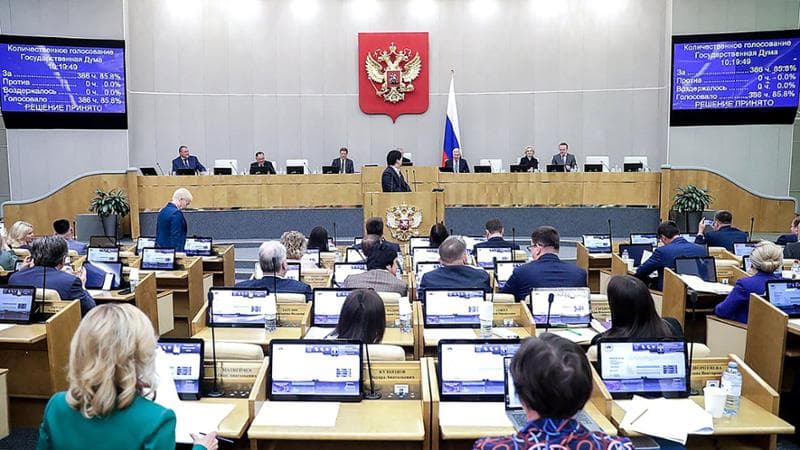
On November 23, 2024, Putin signed Federal Law No. 405-FZ, changing Russia’s Family Code and creating another category of people prohibited from adopting Russian children or becoming guardians.
The law bars citizens of countries where gender transition is legally permitted from adopting Russian children, regardless of whether those prospective parents are themselves transgender.
It also applies to stateless people permanently residing in countries permitting medical gender transition or allowing citizens to change their legally recorded sex without undergoing a medical procedure.
That distinction makes some viral headlines incomplete. The 2023 measure directly restricts transgender people, while the 2024 legislation additionally targets prospective adoptive parents according to the policies of their home countries.

Duma Speaker Vyacheslav Volodin, a close Putin ally involved in the legislation, argued that Russia needed to protect adopted children from potential exposure to gender transition in foreign countries.
When lawmakers advanced the 2024 measure, Volodin described it as necessary for protecting childhood and traditional values, themes repeatedly invoked by Russian officials when defending restrictions involving LGBT rights.
The restrictions initially affected citizens from at least 15 countries, including several European nations, Australia, Argentina and Canada, according to reporting by the Associated Press.
Americans were already unable to adopt Russian children under a separate prohibition enacted in 2012, meaning the newer restriction did not create the existing adoption ban affecting U.S. citizens.
The adoption measures form part of a substantially wider transformation of Russian policy toward LGBT people that has accelerated during Putin’s presidency, particularly since Russia’s invasion of Ukraine.
In 2022, Putin signed legislation expanding restrictions on what Russian law describes as “propaganda of nontraditional sexual relations,” extending rules previously focused on minors to information accessible to adults.
Russia’s Supreme Court went further in November 2023 by designating what authorities called the “international LGBT movement” an extremist organization, despite critics questioning what specific organization the label represented.
That ruling exposed LGBT activists and people accused of participating in related organizations to potentially serious criminal penalties and contributed to increased fear within Russia’s LGBT community.
AP later interviewed Russian LGBT activists who described growing fear and social isolation following the combination of legislation and the Supreme Court’s extremism ruling. Some requested anonymity because of security concerns.
Russian officials defend the policies differently, arguing they protect children, families and national cultural traditions against social ideas that the Kremlin increasingly characterizes as imported from Western countries.
Putin has repeatedly made “traditional values” a central element of his political message, while Russian authorities have increasingly connected family policy with the country’s broader ideological confrontation with Western governments.
The adoption restrictions therefore represent more than a standalone rule governing prospective parents. They sit within a much broader legal framework governing gender transition, family recognition, public expression and LGBT activism.
Current country assessments confirm the 2023 restrictions remain in place: transgender people cannot legally transition under ordinary procedures and are prohibited from adopting, fostering or assuming guardianship over children.
The 2024 foreign-adoption restriction also remains law, having taken effect immediately when Putin signed Federal Law No. 405-FZ on November 23, according to Russian legal records.
Comments (0)
Loading comments...
May You Like

Obama Steps Back Into the Political Spotlight as Democrats Target Trump’s

Russian Drone Strikes Kyiv Bridge as German Chancellor Arrives in Ukraine

Shocking news from Ohio: an unexpected development ahead of Trump's rally












