
RUSSIA BRINGS A SECOND MYSTERY BRIEFCASE TO APEC—12 U.S. TARGETS REVEALED!
RUSSIA BRINGS A SECOND MYSTERY BRIEFCASE TO APEC—12 U.S. TARGETS REVEALED!
SHENZHEN, China — November 20, 2026 — A Russian naval officer carrying a black briefcase associated with President Vladimir Putin's nuclear command system drew international attention at the APEC summit in Shenzhen, where the leaders of Russia, China and the United States met to discuss nuclear risks and global security.
The November 18 footage, broadcast by Russian state television, showed journalist Yevgeny Popov approaching the officer and asking whether the case was Russia's nuclear briefcase.
The officer confirmed that it was.
The equipment, known as Cheget, is a portable communications terminal used within Russia's nuclear command structure.
Reuters documented the exchange, while Al Jazeera and the South China Morning Post examined the device's function and its appearance during the summit.
The recording raised questions about what the case contained, why it appeared so visibly and whether Russia had introduced a new military capability.
The evidence points to an established nuclear command device rather than a newly unveiled weapon.
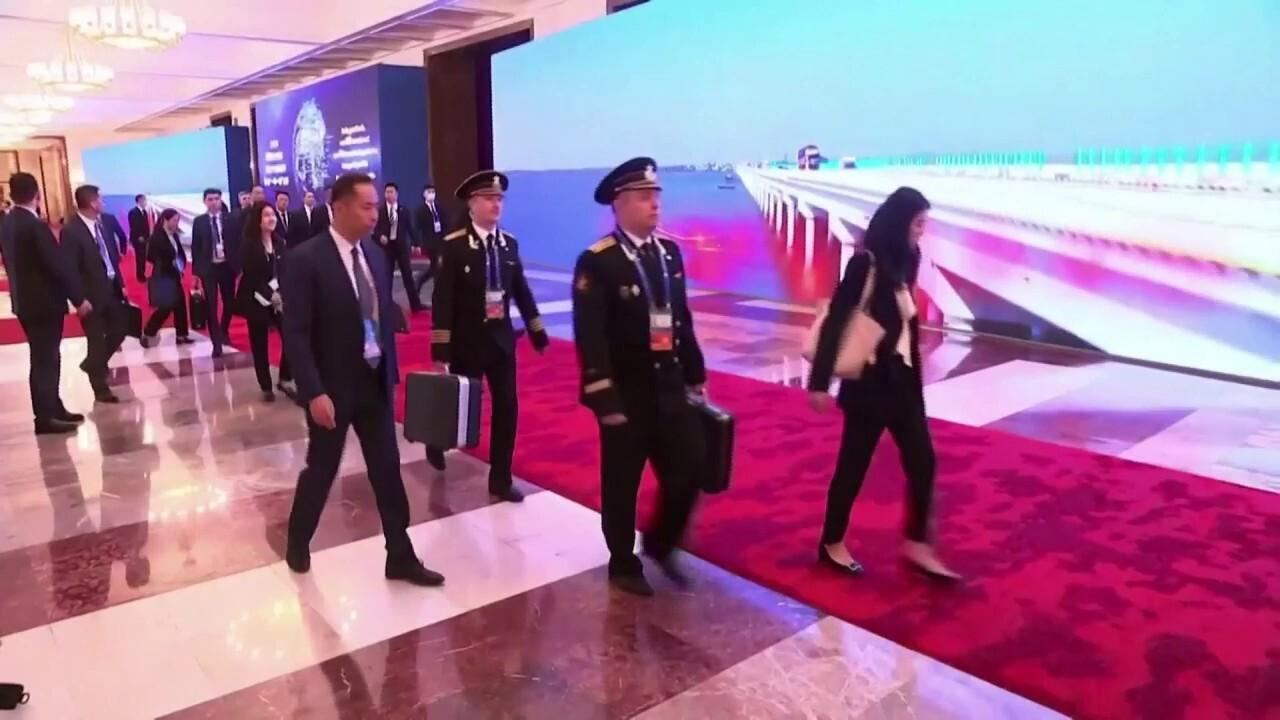
The footage began outside an APEC venue, where members of Putin's delegation were moving through a secured area.
Popov noticed a uniformed officer carrying a black case.
He drew the camera's attention to the object and approached the officer.
The journalist asked whether it was the nuclear briefcase.
The officer answered affirmatively.
Popov repeated the question to establish that it was the same device associated with Putin's nuclear command authority.
The officer confirmed the identification again.
The exchange was brief.
The case remained closed, and no internal equipment was displayed.
Nevertheless, the recording became international news because nuclear command devices are rarely identified so openly on camera.
The footage provided a rare public glimpse of equipment normally associated with the highest levels of military command.
The object was identified as Cheget, Russia's portable nuclear command communications terminal.
Its function is to connect authorized senior officials to the country's strategic military command network.
It is not a suitcase containing a nuclear warhead.
Nor is it an independent missile-launching machine.
Cheget supports communications and authorization procedures involving nuclear forces.
The exact internal configuration of the case seen in Shenzhen was not independently inspected.
That limits what can be established about its contents.
However, the device's known role provides a clear explanation for why it accompanies Putin.
It helps preserve access to strategic command communications when the Russian president is away from permanent government facilities.
The most significant feature of the case is therefore its connection to military authority, not the presence of a newly discovered weapon.
Russia's nuclear command system is generally understood to include three Cheget terminals.
Public accounts associate them with the president, the defense minister and the chief of the General Staff.
That arrangement reflects the involvement of senior political and military authorities in strategic command procedures.
It also helps explain why references to multiple Russian nuclear briefcases can be misleading.
The existence of several Cheget terminals does not mean that each contains a different secret weapon.
They are associated with a common command-and-control system.
Al Jazeera reported that the devices communicate through Russia's Kazbek network.
The exact procedures for authenticating nuclear orders remain sensitive, and public descriptions differ on some details.
But the distinction between multiple command terminals and multiple weapons is fundamental.
Reports from Reuters and other established news organizations documented the appearance of a Cheget case carried by a Russian naval officer.
They did not establish that a second, previously undisclosed weapon was presented during the summit.
Russian nuclear command arrangements involve more than one terminal, but that general fact cannot be used to identify an additional object in Shenzhen.
A second case would require separate visual evidence, an official identification or another reliable account.
The available recording does not show Putin opening two cases or presenting their contents to other leaders.
It shows a journalist questioning an officer about one visible briefcase.
The difference matters because claims about a second weapon imply a new military development.
The documented event was the public identification of existing command equipment.
The officer's response gave the footage an unusually direct source of identification.
A black case carried by a military aide could otherwise have several possible functions.
In this instance, the journalist asked specifically whether it was Cheget.
The officer confirmed that it was.
That exchange supports the identification of the object.
It does not establish every detail about the equipment inside.
Nor does it demonstrate that the device was being used to prepare a military operation.
The officer did not announce a new weapons system.
Putin did not personally reveal a list of targets.
The recording was significant because it showed a normally discreet element of Russia's nuclear command structure during a major international summit.
A nuclear weapon is a military device designed to produce a nuclear explosion.
A delivery system, such as a missile or bomber, carries that weapon toward a target.
A command-and-control system performs a different function.
It allows authorized officials to communicate decisions and transmit orders.
Cheget belongs to that third category.
It is associated with Russia's ability to maintain command over its strategic forces.
That makes it important to national security.
But its role should not be confused with the destructive capability of the weapons it helps command.
The case itself is not known to possess the explosive power of a nuclear warhead.
Its strategic significance comes from its connection to a much larger military system.
Cheget emerged during the Soviet era as part of a wider effort to maintain reliable nuclear command communications.
Al Jazeera traces its introduction to 1983.
The device is associated with the Kazbek command-and-control network.
That network links senior decision-makers to Russia's strategic military infrastructure.
The system exists because a nuclear emergency could occur while the president is traveling.
In such circumstances, authorized leaders would need secure channels to communicate with military command.
Cheget helps support that requirement.
Its exact operational procedures are not fully public.
But available descriptions agree that the case cannot independently launch nuclear weapons.
An order would have to move through a broader military command structure.
That distinction separates the physical briefcase from the weapons systems to which it is connected.
The phrase nuclear button is frequently used to describe presidential authority over nuclear weapons.
It suggests that a single button could immediately launch missiles.
The actual process involves communications, authentication and military command procedures.
Public information about Russia's arrangements remains incomplete.
However, the Cheget is generally described as a device for transmitting authorized instructions.
It does not operate as a self-contained launch system.
This matters when interpreting footage of a closed case.
The recording does not show an activation sequence.
It does not show a military order being transmitted.
It does not establish that a nuclear strike was being prepared.
The officer's confirmation identifies the device, but it does not demonstrate any operational use during the summit.
Russian nuclear briefcases are traditionally carried by military aides.
A naval officer commonly accompanies the president with the device.
The arrangement helps ensure that secure communications equipment remains close to the country's highest political authority.
The officer's role is therefore associated with maintaining access to the system.
It is not evidence that the officer personally controls Russia's nuclear arsenal.
The Russian president holds the highest authority under the country's published nuclear doctrine.
Other senior military officials participate in command procedures.
The aide carrying the case performs a different function.
The Shenzhen footage drew attention to that normally discreet arrangement.
It showed the officer in public, carrying equipment associated with one of the most consequential responsibilities of the Russian presidency.
Heads of state frequently travel outside their capitals.
They attend summits, conduct state visits and meet foreign leaders.
Those movements do not eliminate their responsibilities during emergencies.
For a nuclear-armed country, maintaining command communications during presidential travel is a longstanding security requirement.
Cheget provides part of Russia's solution.
The device has previously appeared during Putin's foreign visits.
Russian media showed naval officers carrying nuclear briefcases during his 2023 trip to Beijing.
That earlier appearance provides useful context.
The sighting in Shenzhen was unusual because of the direct television exchange, not because Putin had never traveled with the equipment before.
Its presence was consistent with established presidential security arrangements.
The Cheget recording emerged on November 18.
Trump, Putin and Chinese President Xi Jinping held their trilateral meeting the following day.
The timing made the footage particularly notable.
The leaders were preparing to discuss nuclear arms control, strategic stability and major international conflicts.
A device associated with nuclear command authority appeared publicly just before those discussions.
That juxtaposition gave the image considerable symbolic force.
But the timing alone does not establish that Putin intended to threaten the United States.
The Kremlin did not announce that the case represented a new weapons capability.
The recording also did not identify any American cities or installations as targets.
The documented event was a public appearance of strategic communications equipment during a period of intense diplomatic attention.
The claim that Putin revealed 12 American targets would require specific evidence.
That could include an authenticated official statement, a published military document or a verified recording of the announcement.
The Reuters footage contains no such list.
The officer identifies the briefcase but does not discuss targeting information.
Putin's public remarks at the summit also did not disclose a list of 12 U.S. targets in the reporting reviewed.
Nuclear-armed countries maintain strategic planning capabilities, but their existence does not authenticate a particular alleged target list.
The distinction is especially important because naming supposed targets could create unnecessary public alarm.
The confirmed story concerns the presence of Cheget.
It does not establish a new Russian announcement identifying American locations for attack.
Russia possesses a large strategic nuclear arsenal.
Its forces include land-based missiles, submarine-launched missiles and nuclear-capable aircraft.
These categories form the basis of what is commonly called a nuclear triad.
Each provides a different method of maintaining a potential retaliatory capability.
The existence of several delivery systems makes nuclear deterrence more complex than a single weapon or launch site.
Cheget does not replace these systems.
Instead, it belongs to the command infrastructure associated with decisions involving strategic forces.
That is why the case can be important without being a weapon itself.
Understanding the distinction helps explain the seriousness of the Shenzhen footage without attributing capabilities to the briefcase that have not been demonstrated.
The briefcase was not the only Russian military development attracting attention during the summit.
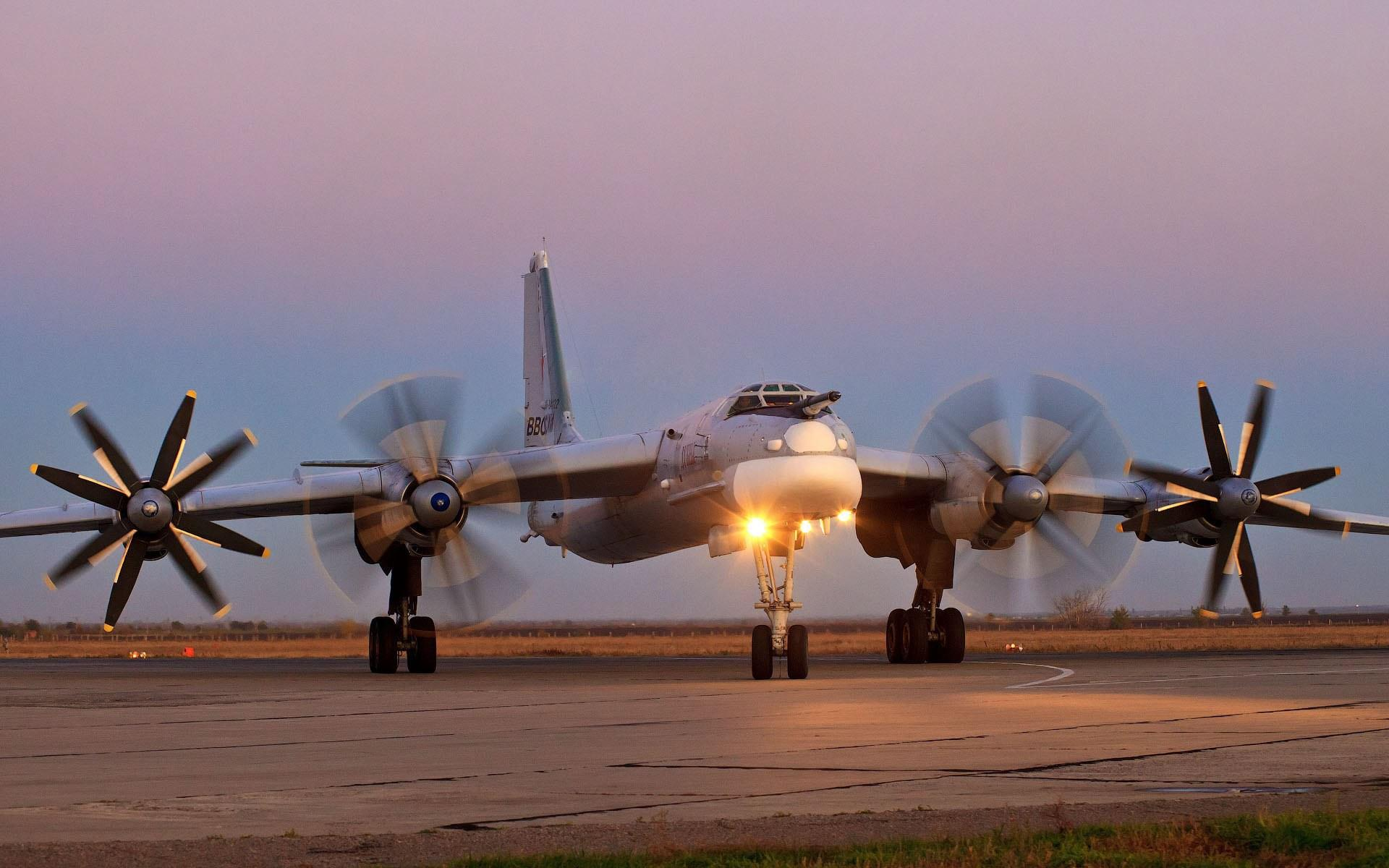
Associated Press reported that two Russian Tu-95 nuclear-capable strategic bombers and two support aircraft departed Vietnam on November 19 after arriving in Da Nang earlier in the week.
The aircraft's presence was interpreted as a demonstration of Russia's ability to operate across the region.
Taiwan reported tracking Russian Tu-95 aircraft off its eastern coast.
Japan said Russian aircraft had violated its airspace near Fukuoka, prompting a response by fighter jets.
South Korea also reported Russian aircraft entering its air defense identification zone without breaching sovereign airspace.
These developments occurred alongside the diplomatic meetings in Shenzhen.
They illustrated Russia's visible military presence in the region, but did not establish a connection to a new weapon inside the Cheget case.
Strategic bombers can carry conventional or nuclear weapons, depending on their configuration and mission.
Their movements therefore attract attention from neighboring governments.
A bomber deployment may serve training, operational or signaling purposes.
Determining its precise intention requires evidence beyond the aircraft's location.
The Russian flights near East Asia occurred as Putin participated in high-level diplomacy.
That timing increased interest in Russia's military posture.
However, the presence of nuclear-capable aircraft does not mean they were carrying nuclear weapons.
Nor does it establish that they were preparing to strike specific American targets.
The reported flights and the Cheget footage are separate developments.
Both illustrate aspects of Russian military capability, but neither verifies the existence of a newly announced target list.
The United States maintains its own portable presidential emergency communications system.
It is commonly known as the nuclear football.
A military aide carries the equipment near the American president.
The system supports emergency command procedures and access to relevant military information.
The American president also uses separate authentication arrangements.
Like Cheget, the nuclear football is associated with the authority to direct nuclear operations.
It is not itself a nuclear weapon.
The South China Morning Post reported that Trump's nuclear football had not been publicly sighted in Shenzhen when the Russian footage emerged.
That observation does not establish that the American system was absent.
It means comparable images had not appeared in the reporting.
The two countries maintain different arrangements, but both seek to preserve command continuity during presidential travel.
China also possesses nuclear weapons and maintains its own command-and-control arrangements.
However, considerably less public information is available about portable equipment that might accompany Xi Jinping.
Al Jazeera reported that it was unclear whether Xi travels with a dedicated nuclear briefcase.
China maintains a declared no-first-use nuclear policy.
Beijing says it would use nuclear weapons only in response to a nuclear attack.
That position differs from some aspects of American and Russian nuclear doctrine.
The three countries also possess arsenals of different sizes.
Those differences complicate negotiations over future restrictions.
The presence of the Russian case at APEC provided a visible reminder of nuclear command systems, but it did not establish how China's corresponding arrangements operate.
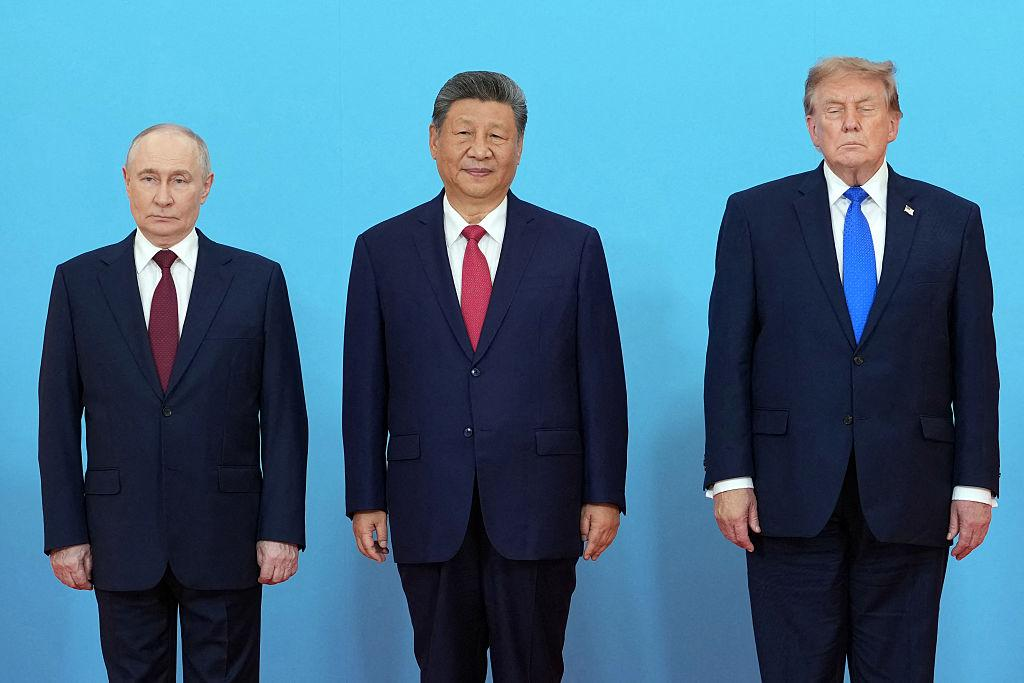
The three leaders met on November 19 at Kylin Villa in Shenzhen.
Their discussions addressed nuclear risks, international security and several major diplomatic disagreements.
Associated Press reported that the meeting lasted approximately 70 minutes and produced no major breakthrough on nuclear arms control.
The summit nevertheless resulted in a joint declaration outlining several areas of cooperation.
The statement called for dialogue on reducing nuclear risks and preventing the spread of nuclear weapons.
That outcome was significant because the three countries possess major strategic capabilities.
However, the declaration did not establish a new treaty limiting their arsenals.
Nor did it announce a timetable for reducing weapons.
The distinction between a political commitment to dialogue and a binding arms-control agreement remains important.
The joint declaration issued after the meeting contained four principal commitments.
The leaders supported reforming the United Nations to improve its ability to respond to international challenges.
They expressed an intention to increase supplies of refined petroleum products and maintain stable energy flows.
They emphasized state consent and protections involving the immunity of government officials, while criticizing what they described as abuses of jurisdiction by the International Criminal Court and similar bodies.
Finally, they reaffirmed that nuclear war must be prevented.
The declaration committed the three countries to dialogue on reducing nuclear risks and preventing proliferation.
It did not contain a list of American targets.
It also did not describe a newly unveiled Russian weapon.
The published document therefore provides a concrete account of what the leaders formally announced.
The most consequential security language concerned nuclear war.
The leaders reaffirmed the principle that a nuclear war cannot be won and must never be fought.
That formulation has appeared in previous international arms-control discussions.
It reflects the catastrophic consequences of nuclear conflict.
The statement also committed the governments to further dialogue.
However, it did not specify how many weapons would be reduced or when negotiations would begin.
It did not establish inspection arrangements.
It did not create a new verification system.
The agreement was therefore a political statement rather than a detailed disarmament treaty.
The contrast with the Cheget footage was notable.
A Russian nuclear command device appeared publicly just as the three leaders emphasized the importance of preventing nuclear war.
The summit followed the expiration of New START in February 2026.
The treaty had limited deployed strategic nuclear weapons held by the United States and Russia.
It also provided arrangements for exchanging information and verifying compliance.
Its expiration removed an important part of the bilateral arms-control framework.
That development increased concern about future nuclear deployments and transparency.
Trump has argued that China should participate in a broader agreement.
Beijing has questioned the fairness of accepting restrictions comparable to those of countries with substantially larger arsenals.
Russia has its own strategic priorities.
The result is a complicated negotiating environment.
The Shenzhen declaration opened the possibility of further dialogue but did not replace the expired treaty.
China's nuclear arsenal is smaller than those of the United States and Russia.
That difference shapes Beijing's approach to arms control.
Chinese officials have argued that the larger nuclear powers should bear greater responsibility for reductions.
Washington is concerned about China's military modernization and future arsenal growth.
Moscow must consider how any agreement would affect its own strategic position.
A three-country framework would therefore need to account for unequal arsenals and different security priorities.
Negotiators would also need to decide which weapons and delivery systems should be covered.
Verification would present further challenges.
A broad commitment to dialogue is easier to achieve than a detailed treaty acceptable to all three governments.
That helps explain why the summit produced general principles rather than immediate numerical limits.
The public record from Shenzhen does not establish that Putin unveiled a previously undisclosed weapon.
The Cheget case was already known.
Its origins date to the Soviet period.
Its general purpose has been described in public reporting for decades.
The device's appearance on camera was unusual, but that does not make the equipment new.
The summit declaration also did not announce a new Russian weapons system.
Russia continues to develop and maintain strategic military capabilities, but each specific claim about a new weapon requires independent evidence.
A statement about destructive capability is not enough to establish a particular device's existence.
The available APEC footage supports a narrower conclusion: Russia publicly displayed equipment associated with its existing nuclear command structure.
The Cheget case became a symbol of the strategic power represented at the summit.
Russia, China and the United States have major military capabilities.
Their decisions affect security far beyond their borders.
The appearance of nuclear command equipment highlighted the responsibilities carried by their leaders.
But symbolism should not be confused with an operational military announcement.
The case did not demonstrate a new weapon.
The footage did not reveal a strike plan.
The summit itself ended with a declaration emphasizing dialogue and the prevention of nuclear war.
Those developments show two sides of the same strategic reality.
The governments maintain powerful military forces while also recognizing the need to manage the risks those forces create.
The next question is whether the three governments will establish a sustained process for nuclear arms-control discussions.
A meaningful agreement would require detailed negotiations.
Officials would need to define which weapons were covered, how restrictions would be measured and what procedures would verify compliance.
They would also need to address disagreements over the size and composition of national arsenals.
The Shenzhen declaration did not resolve those issues.
It established a general commitment to continue dialogue.
The military developments surrounding the summit, including the Cheget footage and Russian bomber movements, illustrated the capabilities involved.
Whether diplomacy can produce enforceable limits will depend on subsequent negotiations and decisions by the participating governments.
The mystery began with a Russian naval officer carrying a black case at APEC.
When a journalist asked what it was, the officer confirmed that it was Russia's nuclear briefcase.
The device was identified as Cheget, a portable communications terminal associated with the country's nuclear command system.
Russia is believed to maintain three such terminals for senior officials.
That fact does not establish the presence of a second secret weapon at the summit.
Nor does the footage reveal 12 American targets.
The documented developments were significant without those additional claims.
A rarely filmed nuclear command device appeared during a summit involving the leaders of three major powers.
Russian nuclear-capable bombers also attracted attention in East Asia.
And Trump, Xi and Putin issued a declaration supporting dialogue on reducing nuclear risks.
The unanswered question is whether the commitment to dialogue will eventually produce concrete limits on weapons.
Comments (0)
Loading comments...
May You Like

$1 BILLION DISASTER AT BANGCHAK REFINERY, THAILAND—40 BURNED, 8 AMERICANS DEAD!

AMERICA'S LUCAS DRONE — A POTENTIAL GAME CHANGER IN THE SOUTH CHINA SEA?

TRUMP'S NVIDIA STOCK DEALINGS — IS THERE ANY TRUTH TO THE $14 MILLION PROFIT CLAIM?








Popular Posts




