
Bernie Sanders Calls Trump’s Administration the Most Corrupt
Bernie Sanders Calls Trump’s Administration the Most Corrupt in American History
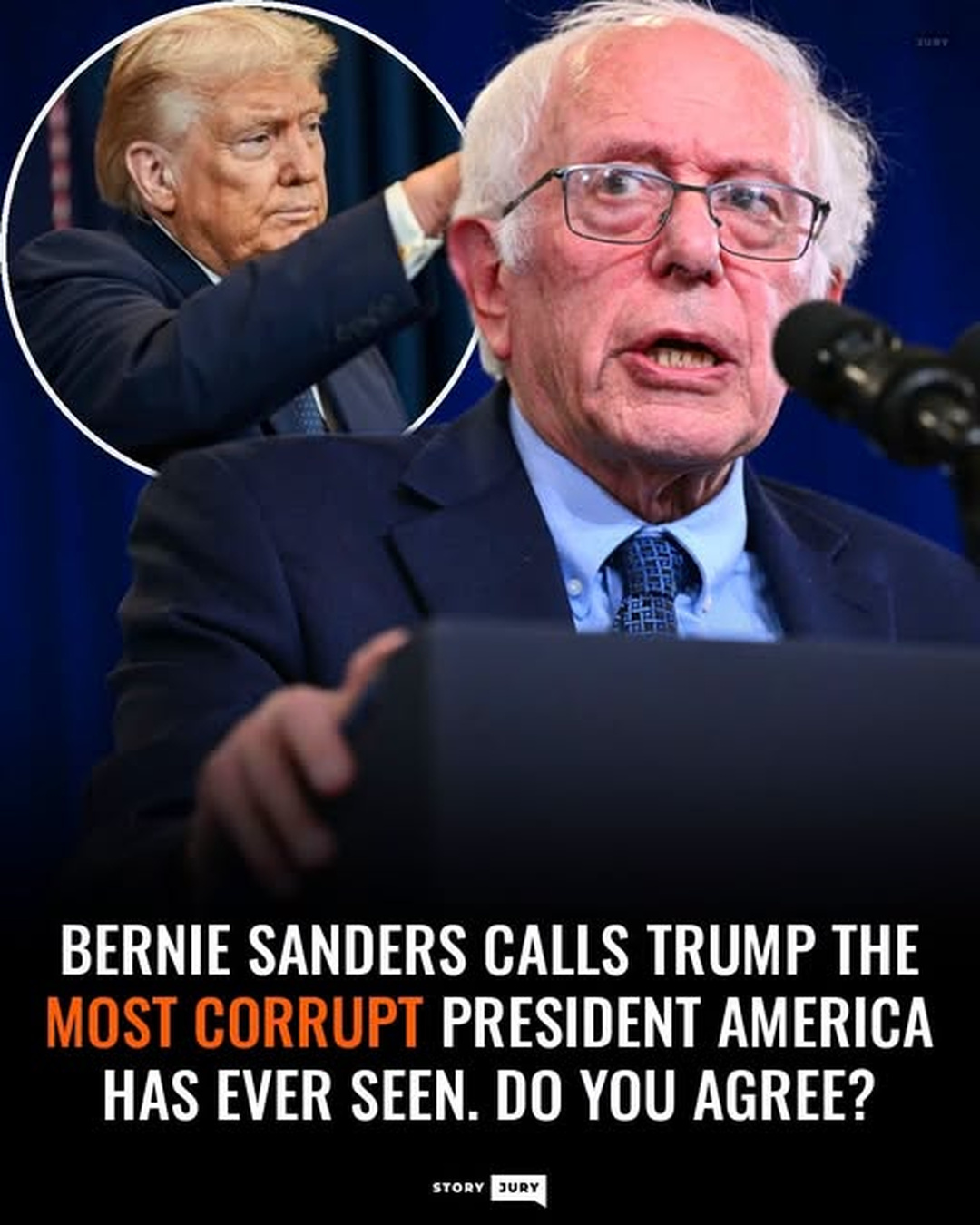


Senator Bernie Sanders has intensified his criticism of President Donald Trump, accusing his administration of corruption, favoring wealthy interests, and placing enormous pressure on working families across the United States.
In a series of public statements and campaign appearances ahead of the November midterm elections, the Vermont independent has urged voters to challenge what he describes as an increasingly unaccountable administration.
Sanders has repeatedly questioned whether Trump’s policies serve ordinary Americans or primarily benefit billionaires, major corporations, and politically influential individuals with access to the White House.
The senator’s criticism has become part of a broader Democratic effort to make government accountability, economic inequality, and the cost of living central issues in the upcoming elections.
Sanders argued in an October 25 commentary that Trump was running what he called the most corrupt administration in American history, renewing a charge he had made during Trump’s first presidency.
His earlier criticism dates back to 2019, when Sanders described Trump as the most corrupt president in history while supporting congressional impeachment proceedings.
The latest accusations focus partly on concerns about potential financial conflicts of interest involving the president, his family, and individuals connected to major business enterprises.
Sanders has pointed to cryptocurrency ventures and other financial interests as examples of activities that, in his view, demand closer scrutiny from lawmakers and the American public.
He has also criticized what he describes as policies that favor the wealthiest Americans while leaving working families struggling with housing expenses, healthcare costs, and everyday necessities.
According to Sanders, economic inequality remains one of the most serious challenges facing the country, particularly as many households continue to worry about financial security and retirement.
The senator has repeatedly argued that government should prioritize workers, families, and vulnerable communities rather than allowing wealthy donors and corporate interests to exercise disproportionate influence over public policy.
Healthcare has become another major part of his criticism. Sanders opposes reductions in federal healthcare support and argues that changes to existing programs could leave millions of Americans with fewer affordable options.
He has also attacked the administration’s approach to Iran, arguing that military action has increased regional instability, endangered lives, and contributed to higher energy costs.
Trump and his supporters have defended the administration’s policies, presenting their actions as efforts to advance national security, economic growth, and the interests of American citizens.
The dispute illustrates a fundamental disagreement over how the administration’s decisions should be evaluated, with Democrats emphasizing accountability and economic fairness while Republicans defend their policy priorities.
Sanders has called on voters to make these issues central to their decisions in the November 3 midterm elections, describing the contests as an opportunity to change the balance of power in Congress.
He argues that stronger congressional oversight could force greater transparency, scrutinize executive decisions, and create obstacles for policies that lawmakers believe are harmful to ordinary Americans.
However, describing a government as corrupt is a political judgment that requires careful examination of specific allegations, documented conduct, and relevant legal findings.
Accusations involving financial conflicts, misuse of public resources, or improper influence must be distinguished from proven violations established through investigations or judicial proceedings.
The debate has nevertheless intensified as prominent Democratic figures campaign across the country, hoping to turn public frustration over economic pressures and government accountability into greater voter engagement.
For Sanders, the central question is whether American democracy is working for the majority of citizens or increasingly serving a small group of wealthy and politically connected individuals.
Trump’s supporters reject the broader Democratic narrative and continue to defend his leadership, setting the stage for a fierce political contest over the administration’s record.
As Election Day approaches, allegations of corruption, concerns about inequality, and competing visions of government are likely to remain prominent issues in the national conversation.
Ultimately, Sanders’s remarks represent a forceful political indictment of Trump’s leadership. Whether individual allegations withstand scrutiny depends on the available evidence, independent investigations, and the outcomes of any relevant legal proceedings.
Comments (0)
Loading comments...
May You Like

EAST COAST MEGASTORM—2 MILLION HOUSES DAMAGED, 5 MILLION AT RISK OF BLACKOUTS, WATER FAILURES!


1,000+ MILITARY FAMILY RECORDS BREACHED, 200+ MILITARY SITES AT RISK!








Popular Posts




