
SCHOOL BUS: 40 STUDENTS ESCAPE IN SECONDS—PLANE ERUPTS ON CROWDED HIGHWAY!
Six Escape Burning Plane Near Busy Mexican Highway After Emergency Turns Into Fiery Crash
MONTERREY, Mexico — November 20, 2026 — Six people escaped with minor injuries after a small aircraft lost power near Monterrey International Airport and crashed beside a busy highway in northern Mexico, erupting in flames as motorists passed nearby. The November 18 accident triggered an emergency response and an investigation into what caused the aircraft to lose power.
The Piper PA-46 Malibu, operated by Casago, was departing the Monterrey area for Atizapán, near Mexico City, when it encountered trouble.
The aircraft veered away from its intended path, struck a perimeter fence and came down near the Monterrey–Nuevo Laredo highway in Apodaca, Nuevo León.
Footage of the aftermath shows flames consuming the wreckage and thick black smoke rising near the roadway.
All four passengers and both crew members escaped. None required hospital treatment, according to reports identifying the occupants and describing the emergency response.
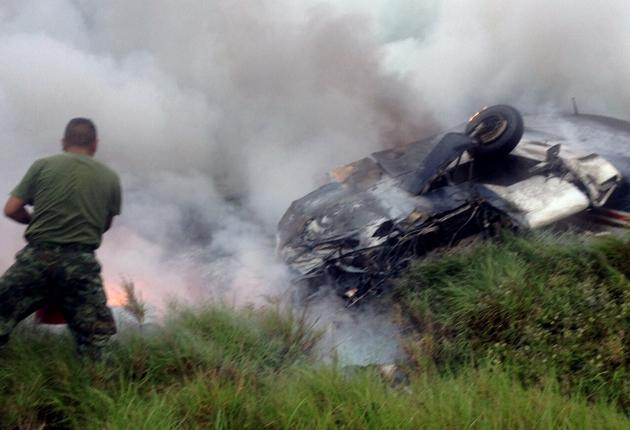
The aircraft was scheduled to travel from the Monterrey area toward Atizapán, in the Mexico City metropolitan region.
It was a small private aircraft rather than a commercial passenger jet.
Six people were aboard.
The flight encountered a problem near the airport, leaving little time and altitude for the crew to respond.
Reports describe a loss of power before the aircraft veered away from the runway area.
The plane struck a fence and crashed near the highway.
The sequence unfolded in an area where aviation infrastructure and road traffic are close together.
That geography is important because a runway departure can place an aircraft near roads, industrial facilities and other populated areas.
The crash damaged the plane and started a fire, but all occupants survived.
The aircraft was identified as a Piper PA-46 Malibu.
The PA-46 family includes single-engine aircraft used for private and business transportation.
These planes are considerably smaller than commercial airliners.
The aircraft involved in the Monterrey accident was operated by Casago, according to published reports.
It was carrying four passengers and two crew members.
The plane's registration was reported as XB-MKC.
That identification helps distinguish this accident from other aviation incidents involving highway traffic.
The aircraft was not a large commercial passenger plane.
Its six occupants were not traveling on a scheduled airline service.
The flight was bound for Atizapán, near Mexico City, when the emergency occurred.
The aircraft lost power and veered away from its intended flight path.
It then struck a perimeter fence and came down near the Monterrey–Nuevo Laredo highway.
The impact was followed by a fire.
Footage circulated online showing flames and heavy smoke rising from the wreckage.
Vehicles continued moving on the nearby roadway as the emergency unfolded.
The scene was dangerous because the aircraft had come down close to an active traffic corridor.
However, the published reports do not establish that the aircraft struck a school bus or another road vehicle.
They also do not provide a verified count of 40 vehicles immediately beside the impact site.
The documented event is a fiery aircraft crash near a busy highway.
The two crew members were identified in reporting as David Corona Cabrero, 41, and Alan Adrián Cuevas Loo, 25.
The four passengers were José Luis Villaseñor Sánchez, 56; Armando Ezequiel Mata, 42; Carlos Alejandro Castillo Pérez, 40; and Priscila Guadalupe Carrillo Fragoso, 36.
All six escaped the aircraft.
Their injuries were described as minor.
None required hospitalization.
That outcome is especially notable because the aircraft was engulfed in flames after the crash.
The public reporting does not provide a detailed second-by-second account of how each occupant exited.
It also does not establish exactly how long the aircraft burned before firefighters controlled the scene.
The confirmed result is that everyone aboard survived.
A video recorded from a vehicle traveling on the Monterrey–Nuevo Laredo highway provides a clearer view of the aircraft's final movements.
The footage shows vehicles occupying the roadway immediately before the plane appears.
Two SUVs are visible in a faster-moving lane, while a large truck travels nearby.
Traffic in the opposite direction includes cars and heavy vehicles.
As the aircraft approaches, the two SUVs slow or stop.
The plane then crosses the highway and reaches the lanes carrying traffic in the opposite direction.
According to Mexican broadcaster N+, the aircraft passed within several meters of a bus used to transport personnel.
That bus is an important detail in the footage.
The bus visible in the recording was described by N+ as a personnel transport bus.
The broadcaster reported that the aircraft came down a few meters from it.
That places a large passenger-carrying vehicle close to the crash.
However, the available reports do not identify the bus operator, its passenger count or its destination.
They do not establish that it was transporting schoolchildren.
Nor do they show that 40 students were aboard.
The distinction matters because the presence of a bus is documented, while its alleged use as a school bus is not.
The recording shows a dangerous encounter between an aircraft and highway traffic.
The footage shows the aircraft crossing an active highway as nearby motorists slow or stop.
N+ reported that the plane passed within several meters of the personnel transport bus.
That is a meaningful proximity for an aircraft that has lost control.
A collision with a road vehicle could have created additional injuries and complicated the emergency response.
However, the recording does not establish a clearance of only a few inches.
Precise distances would require measurements from the crash site or a technical analysis of the video.
Camera perspective can make objects appear closer together than they are.
The available evidence supports the conclusion that traffic was nearby.
It does not support an exact inch-level measurement.
The highway was busy when the aircraft crashed.
The video shows multiple vehicles in both directions.
The surrounding traffic included passenger vehicles, SUVs and heavy trucks.
But the recording does not provide an official count of 40 vehicles in the immediate impact area.
The number of vehicles on a road at a particular moment can depend on where the counting area begins and ends.
A vehicle visible in the distance is not necessarily exposed to the same level of danger as one directly beside the aircraft.
The strongest supported observation is that the plane crossed a busy highway near moving traffic.
Authorities did not report injuries among motorists in the area.
According to Nuevo León Civil Protection, the aircraft experienced a loss of power during takeoff.
The agency's preliminary account places the accident at approximately 1:52 p.m. on November 18.
The plane crossed the perimeter fence of the Aeropuerto del Norte before reaching the highway.
The fence was damaged.
The aircraft then came down on or near the roadway and caught fire.
The sequence suggests that the crew encountered difficulty during the initial departure phase.
But a report of lost power is not the same as a final explanation of the underlying mechanical problem.
Investigators still need to determine what caused the loss of power and why the aircraft could not remain within the airport area.
A single-engine aircraft depends on its engine to generate thrust.
During takeoff, sufficient power is particularly important because the aircraft is accelerating and gaining altitude.
A significant loss of power at low altitude can sharply limit the crew's available options.
Pilots may have little time to identify the problem or select a suitable landing area.
However, the term “loss of power” does not identify a particular mechanical failure.
Possible causes can involve several aircraft systems, but no specific cause has been established in the public reporting.
The investigation must examine the aircraft and relevant operational records.
The immediate fact is that authorities reported a loss of power before the plane crossed the airport boundary.
The aircraft struck or crossed the perimeter fence surrounding the Aeropuerto del Norte.
That detail helps establish its path from the airport environment toward the highway.
Airport perimeter fences separate aviation operations from surrounding roads and property.
They are not designed to function as primary aircraft arresting systems.
A plane that leaves the intended operating area can therefore reach nearby infrastructure.
The damaged fence became part of the crash scene.
It may help investigators reconstruct the aircraft's direction and movement.
However, the public reporting does not establish the exact speed at which the plane crossed the boundary.
Nor does it identify a final measured distance from the runway to the impact site.
Those details require a technical reconstruction.
The aircraft caught fire after coming down near the roadway.
Video and photographs show flames spreading through the wreckage.
Thick black smoke rose above the crash site.
The fire prompted a substantial emergency response.
Aviation fuel can create a serious fire hazard after an impact, although the precise ignition sequence has not been established.
The images show the consequences rather than the exact moment when a particular fuel source ignited.
Firefighters worked to extinguish the flames.
Nuevo León Civil Protection later confirmed that the fire was under control.
The plane sustained extensive damage.
Despite the visible destruction, the six occupants survived with minor injuries.
A crash followed by fire presents several dangers to people aboard an aircraft.
The initial impact can cause injuries.
Damaged exits or surrounding wreckage can obstruct evacuation.
Smoke and flames can make the remaining time to escape extremely limited.
In this case, all six occupants survived.
Authorities reported only minor injuries.
That outcome is especially notable because the plane was severely damaged and burned after the crash.
However, the public reports do not establish which person opened the aircraft's exit or the order in which occupants escaped.
They also do not identify a particular rescue action as the decisive reason everyone survived.
The documented result is a successful escape by all six people.
Reports differ on whether the six survivors were transported to a hospital for medical evaluation.
La Jornada and ABC Noticias reported that emergency personnel assessed the occupants at the scene and that hospital transport was not necessary.
N+ reported that they were taken to a nearby hospital for medical attention.
The accounts agree on the most important medical findings.
Their injuries were minor.
No deaths or serious injuries were reported.
The difference concerns whether additional medical evaluation occurred at a hospital.
That detail should not be confused with the severity of the injuries.
The consistent finding is that the crash did not result in a reported fatality or serious injury.
Multiple agencies responded to the accident.
They included Nuevo León Civil Protection, municipal civil protection teams, firefighters, the Red Cross and emergency medical services.
State security forces and federal personnel also attended the scene.
The response involved both aviation and highway safety concerns.
Firefighters had to control the burning wreckage.
Medical personnel assessed the occupants.
Police and other authorities secured the surrounding area.
The crash also required traffic management because the aircraft had come down near an important roadway.
The presence of multiple agencies reflects the complexity of an accident involving an aircraft, an airport boundary and public highway traffic.
Authorities later began the process of removing the damaged plane.
The crash disrupted the Monterrey–Nuevo Laredo highway in both directions.
Traffic was stopped while emergency personnel responded and investigators examined the scene.
The closure created substantial congestion.
ABC Noticias reported that crews removed the damaged aircraft from the roadside area around 5:30 p.m.
The roadway was fully reopened shortly after 6 p.m.
However, congestion continued for several more hours.
Traffic did not fully return to normal until after 8 p.m., according to the report.
The disruption demonstrates how an aviation accident can affect transportation systems beyond the airport.
Even without injuries to motorists, a crash near a highway can interrupt regional travel for hours.
The aircraft departed from the Aeropuerto Internacional del Norte, commonly called Aeropuerto del Norte.
The airport serves general aviation operations in the Monterrey metropolitan area.
After the accident, Mexico's Federal Civil Aviation Agency, known as AFAC, activated its emergency operations center.
The agency also reported the temporary closure of runway 11/29.
The closure allowed authorities to address the accident and assess relevant operational conditions.
An airport investigation may involve the aircraft's departure, the runway environment and the circumstances leading to the loss of control.
The public reporting does not establish that other aircraft were involved.
Nor does it describe a collision with an aircraft on the ground.
The incident concerned one Piper PA-46 and its departure from the airport area.
The aircraft was traveling toward the Aeródromo Dr. Jorge Jiménez Cantú in Atizapán, State of Mexico.
That destination lies in the wider Mexico City region.
The flight was operated by Casago, S.A. de C.V., according to Mexican aviation reporting.
The aircraft's planned destination is relevant because it helps establish the intended journey.
However, the public reports do not provide a detailed account of the passengers' purpose for traveling.
They also do not establish a connection between the flight and any special event or government mission.
The accident occurred during the departure phase, before the aircraft could complete its intended journey.
Investigators will focus on the circumstances that caused the flight to end near the airport.
The preliminary explanation centers on a reported loss of engine power.
But investigators need to establish why the aircraft lost power.
That may require examination of the engine, fuel system and maintenance records.
They may also review the flight's operational history and relevant communications.
The aircraft's final movement across the airport boundary will be important.
Investigators may examine the damaged fence and the wreckage's final position.
Video recordings can help reconstruct the path across the highway.
However, video cannot reveal every technical condition inside the aircraft.
A final determination must connect physical evidence, operational information and witness accounts.
As of November 20, the underlying cause had not been publicly established.
The vehicle camera recording provides an unusually clear view of the aircraft's movement across the highway.
It shows surrounding traffic and the plane's proximity to other vehicles.
That information may help investigators establish the sequence of events after the aircraft crossed the airport boundary.
The footage also helps distinguish the accident from exaggerated descriptions circulating online.
It shows a personnel transport bus near the aircraft.
It does not identify a school bus carrying 40 students.
It shows multiple vehicles.
It does not establish an official count of 40 vehicles in the impact area.
And while the plane came close to traffic, the recording does not provide a precise clearance measured in inches.
The strongest evidence is the visible sequence itself.
The aircraft crossed a roadway carrying traffic in both directions.
That created a potential hazard for motorists who had little warning.
Drivers normally expect other vehicles, not an aircraft moving across their lanes.
The footage shows some motorists slowing or stopping as the plane approached.
A large truck and other vehicles were nearby.
The aircraft ultimately came down without a reported collision involving a road vehicle.
That outcome avoided an additional emergency.
But the risk was evident.
An aircraft crossing a busy highway can create danger even when the final impact occurs outside the main flow of traffic.
The crash illustrates how quickly an aviation emergency can affect people on the ground.
The bus was close enough to appear in the crash footage.
However, the public reporting does not include an authenticated interview with its driver.
It does not establish when the driver first saw the aircraft.
Nor does it describe the driver's actions immediately before the plane crossed the road.
The camera angle shows the bus from another vehicle's perspective.
That view cannot establish everything visible from the bus driver's seat.
The driver may have had a different line of sight or faced different traffic conditions.
Investigators could seek statements from motorists to understand their reactions.
The published video descriptions show the plane crossing the highway near traffic.
They do not establish a confirmed collision with a bus, car or truck.
Mexican news outlets reported no significant injuries among motorists.
The aircraft struck the airport perimeter fence and sustained extensive damage during the crash.
The available reports do not identify a vehicle damaged by direct contact with the plane.
That distinction is important because a near miss and a collision have different consequences.
The footage documents a dangerous proximity.
It does not establish that road users were physically struck.
Authorities focused their response on the aircraft, its occupants, the fire and the resulting highway disruption.
Aviation accident investigations require careful reconstruction.
The most visible evidence may be the wreckage and the fire.
But the underlying cause may involve conditions that existed before the crash.
Investigators may need to examine the aircraft's mechanical condition and maintenance history.
They may also consider the departure sequence and the crew's response.
Witness accounts and video recordings can help establish timing.
However, a preliminary statement about lost power is not necessarily a final technical conclusion.
The investigation must distinguish what happened from why it happened.
That process can take longer than the initial emergency response.
The immediate findings establish the accident's location, aircraft identity, occupant count and reported loss of power.
The deeper cause remains under examination.
The crash illustrates a broader challenge for airports located near roads and developed areas.
Aircraft normally remain within controlled operating environments.
But an emergency during takeoff or landing can place them near surrounding infrastructure.
That can create risks for people who have no connection to the flight.
Road users may have only seconds to react.
Emergency personnel must manage both aviation hazards and ordinary traffic.
The Monterrey accident did not result in reported injuries to motorists.
Nevertheless, it shows why airport boundaries, emergency planning and coordination with local authorities are important.
The case may provide lessons once investigators establish the precise circumstances of the aircraft's loss of power.
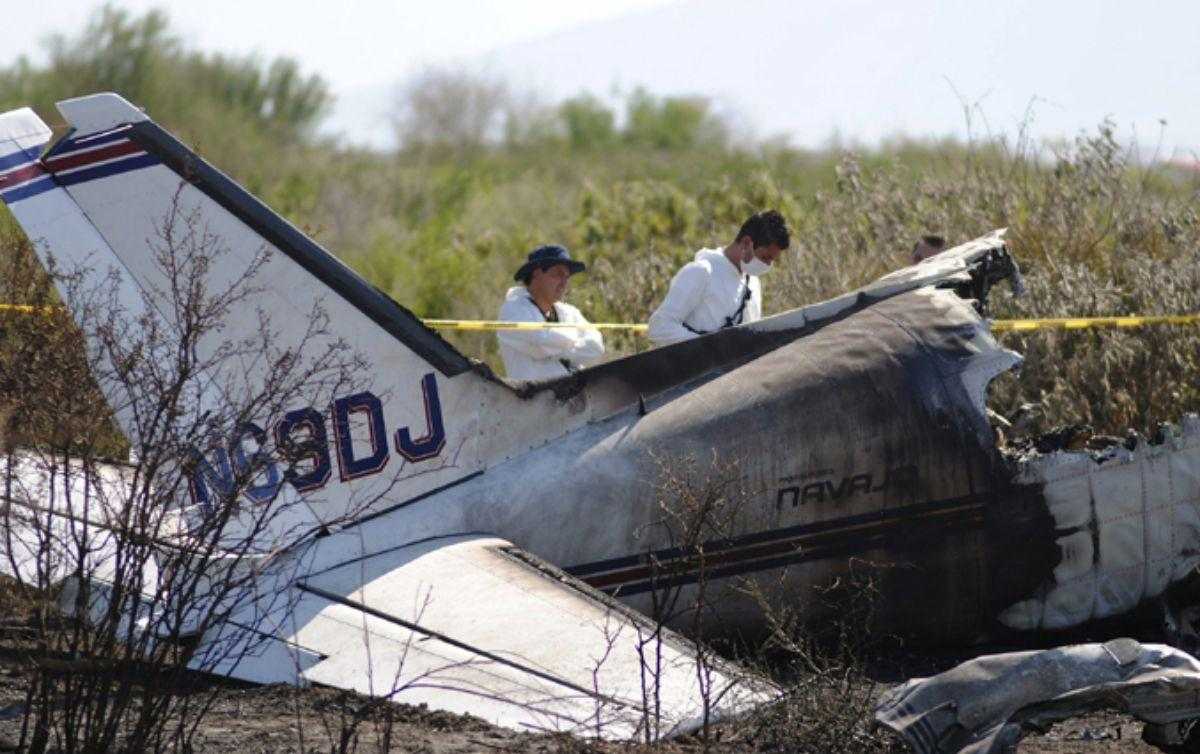
After firefighters extinguished the flames, emergency personnel continued working around the wreckage.
The aircraft had sustained extensive damage.
The perimeter fence was also damaged where the plane crossed from the airport area toward the road.
Crews needed to secure the site before removing the aircraft.
The work affected highway traffic for several hours.
Authorities later cleared the roadway and allowed vehicles to resume normal travel.
The physical aftermath provides evidence of the aircraft's movement and the force of the crash.
That remains a matter for the aviation investigation.
The accident required a coordinated response involving firefighters, medical personnel, police and aviation authorities.
The immediate priorities were to protect the occupants, control the fire and secure the highway.
Those tasks were complicated by the crash's location near an active traffic corridor.
The emergency teams also needed to prevent motorists from entering the affected area.
Once the fire was controlled, attention shifted toward wreckage removal and investigation.
The absence of reported fatalities was a major outcome.
The successful response also limited further disruption to the surrounding area.
But the case remains significant because the aircraft crossed a public highway during an emergency.
That created a hazard extending beyond the six people aboard.
Several details remain unresolved.
The underlying cause of the reported power loss has not been established in a final public investigation report.
The exact sequence of actions taken by the crew has not been fully documented.
The available reports do not provide a precise measurement of the aircraft's clearance from nearby vehicles.
They also do not establish how many people were inside the personnel transport bus.
Those questions may be clarified by additional official findings or authenticated witness accounts.
The existing evidence already establishes the essential sequence.
The aircraft lost power during takeoff, crossed the airport boundary, came down near the highway and caught fire.
All six occupants survived.
No deaths or serious injuries were reported.
The November 18 accident involved a Piper PA-46 Malibu departing the Aeropuerto del Norte near Monterrey.
The aircraft reportedly lost power during takeoff.
It crossed the airport perimeter fence and crashed on the Monterrey–Nuevo Laredo highway.
A vehicle camera captured the plane moving across traffic lanes near cars, trucks and a personnel transport bus.
The aircraft caught fire.
All six people aboard escaped with minor injuries.
The crash disrupted traffic for hours and prompted an aviation investigation.
The central unanswered question is what caused the aircraft to lose power during takeoff.
The final investigation will determine whether the emergency resulted from a mechanical problem or another established factor.
Comments (0)
Loading comments...
May You Like

TRUMP'S NVIDIA STOCK DEALINGS — IS THERE ANY TRUTH TO THE $14 MILLION PROFIT CLAIM?

CARIBBEAN PRINCESS: 5,000+ ABOARD, UNKNOWN VIRUS—CHINESE PASSENGER IS FIRST KNOWN CASE!

PUTIN RAISES LUKOIL DEAL WITH TRUMP’S ENVOYS AS UKRAINE PEACE TALKS CONTINUE














