Senate Deadlocks 50-50 on SAVE Act — What the Viral Graphic Leaves Out
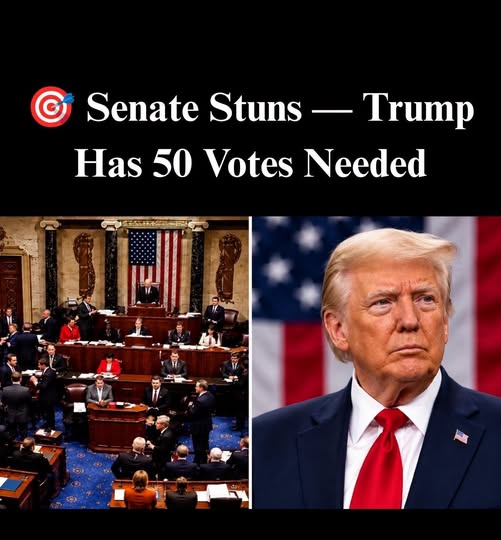
A viral graphic circulating online claims the Senate is deadlocked 50-50 on the SAVE Act, the sweeping election integrity bill that would mandate voter ID and proof of citizenship nationwide. The graphic is accurate about the split — but what it leaves out is that the tie is not a defeat. It is the result of a deliberate Democratic blockade that has killed the bill at least five times since March.
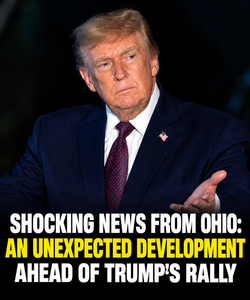
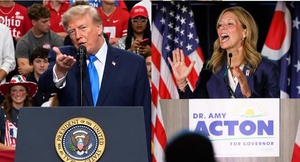
WASHINGTON – A new viral graphic features a collage of the U.S. Senate chamber and President Donald Trump, with the headline: "Senate Stuns — Trump Has 50 Votes Needed." The post has sparked a wave of speculation about whether the SAVE Act is on the verge of passing.
The answer is more complicated than a simple vote count suggests.
The 50-50 Split Is Real — But It's Not New
Sen. Mike Lee (R-Utah) took to the Senate floor on September 22, 2026, to push the Safeguard American Voter Eligibility (SAVE) Act once again. He noted that the Senate is indeed split 50-50 on the bill, despite polling showing that 83 percent of Americans support voter ID laws .
"Let's make it easy to vote and let's make it hard to cheat," Lee said, outlining the bill's two core mechanisms: requiring proof of U.S. citizenship at the time of new voter registration, and requiring a photo ID at the polls on Election Day .
Lee argued that Americans use ID for everything from banking to doctor's visits, and that the "honor system" approach "must not be allowed to work in the context of our sacred elections" .
Why the SAVE Act Has Not Passed
The 50-50 split reflects a procedural blockade, not a vote on final passage. Republicans have tried multiple paths since March 2026:
-
A talking filibuster
Two reconciliation amendments (by Sen. John Kennedy and the late Sen. Lindsey Graham)
Lee's unanimous consent request
None has resulted in passage .
The most recent attempt failed on September 22, when Sen. Alex Padilla (D-Calif.) blocked Lee's unanimous consent request. Padilla's objection centered on the timing — with early voting already underway in several states and Election Day just 41 days away.
"The 2026 midterm election has already begun — it's in full swing," Padilla said. "Trying to change the rules... creates chaos in the middle of an election that's already underway" .
Padilla also noted that Utah's Republican Lt. Gov. Deidre Henderson — the state's chief election officer — has said the bill's mail-ballot provision would "violate our constitutional right to a secret ballot" .
The Timing Argument — and the Counterargument
Democrats argue the bill is being pushed too close to the midterms. Padilla accused Republicans of a "desperate attempt to hold on to power," citing polls showing Trump and the GOP facing a rough November .
Lee dismissed those arguments as distractions.
"Fine, let's talk about tariffs on another occasion, but that's not what we're talking about here. This is a distraction," Lee said. He also noted that Democrats have spent months calling the bill "racist, sexist" and claiming it would deny access to voting — and now "they've secured the delay" .
What the SAVE Act Would Actually Do
The SAVE Act would:
-
Require proof of citizenship at the time of new voter registration
Require photo ID on Election Day to prove identity
Sen. Lee pointed out that the bill has already passed the U.S. House multiple times, but has stalled in the Senate .
Supporters argue the bill addresses a genuine vulnerability in the system. Critics — including voting rights groups and Democratic senators — argue that non-citizen voting is already illegal and exceptionally rare, and that the bill would impose burdens on eligible voters, particularly those who vote by mail, the elderly, and minority communities.
The Broader Context: State-Level Action
While the federal SAVE Act remains blocked, a network of state conservatives is advancing their own versions of the legislation. The State Freedom Caucus Network is leading efforts in Arizona, South Dakota, and Wyoming, with more states expected to follow .
Multiple red states — including South Dakota, Wyoming, Florida, Mississippi, Utah, Kansas, and Ohio — have already passed their own SAVE laws. Arizona voters will decide on a constitutional amendment in November .
Rep. Keith Self (R-Texas) told the Daily Signal that states must take action because federal legislation is so difficult to pass.
"The states are more flexible," Self said. "I think the states are where we've got to encourage them to actually take action" .
What Happens Next
The SAVE Act remains stalled in the Senate. With the midterm elections less than six weeks away, the window for passage is effectively closed.
Sen. Lee and Republicans have vowed to continue pushing the bill. Democrats have vowed to continue blocking it.
For now, the viral graphic's claim that "Trump has 50 votes needed" is technically accurate — but misleading. The 50 votes exist. The question is whether they can ever be brought to a final vote.
The Bottom Line:
| What the graphic says | What we know |
|---|---|
| Senate is split 50-50 | True — but it's a procedural blockade, not a final vote |
| Trump has 50 votes needed | The votes exist, but Democrats have blocked the bill at least 5 times |
| The bill is on the verge of passing | No — early voting has begun, and the timing argument has stalled it |
The SAVE Act's fate will likely be decided not in Washington, but in state capitols — and at the ballot box in November.
Comments (0)
Loading comments...
May You Like
Obama Steps Back Into the Political Spotlight as Democrats Target Trump’s

South Korea–Ukraine Rift Deepens Over North Korean POW Transfer as PURL Draws New Scrutiny
OBAMA STEPS BACK INTO THE POLITICAL SPOTLIGHT