Senate Did Pass a Major Russia Sanctions Bill — But the Viral “90–10, Democrats Caved” Graphic Gets the Vote Wrong
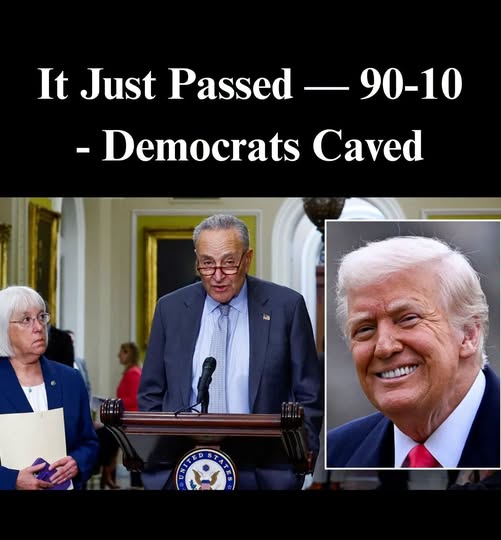
A viral graphic circulating online claims that Democrats “caved” and gave President Donald Trump more power after a 90–10 Senate vote. The underlying event is real: the Senate overwhelmingly approved a Russia sanctions package that gives Trump limited new tariff authority. But the actual final vote was 86–11, not 90–10 — and the legislation is more narrowly targeted than the graphic suggests.
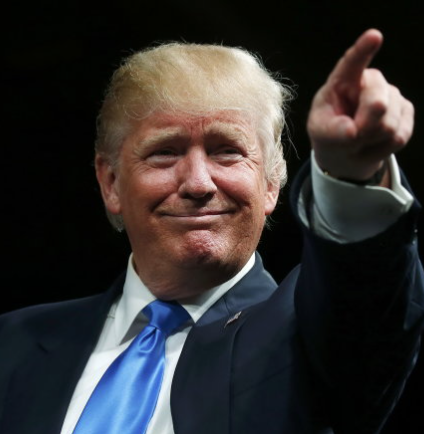
The image uploaded here declares: “It Just Passed — 90-10 — Democrats Caved.” It features Senate Democratic Leader Chuck Schumer alongside President Trump.
The post is referring to the Senate's consideration of the Lindsey O. Graham Sanctioning Russia and Iran Act of 2026, legislation designed to increase economic pressure on Russia and extend sanctions involving Iran.
There was indeed overwhelming Democratic support.
But the headline number in the graphic is wrong.
The Senate actually voted 86–11
On August 7, 2026, the Senate passed the sanctions legislation by a vote of 86–11, with three senators not voting. The official Congressional Record records 86 senators voting yes and 11 voting no.
The Senate had previously taken several procedural votes as the bill moved forward:
- 86–12 to invoke cloture on July 28;
- 84–12 to advance the measure on July 29;
- 86–11 for final Senate passage on August 7.
So 90–10 is not the final passage vote.
That is the first major problem with the viral graphic.
Fact-check on the number
“90–10” — False.
The final vote was 86–11.
The difference isn't enormous politically — the legislation still passed by an overwhelming bipartisan margin — but the specific vote count presented in the graphic is inaccurate.
What Democrats actually voted for
The legislation does something significant: it gives the president additional tools to impose economic pressure on countries continuing to purchase Russian oil and natural gas.
The Senate version authorizes tariffs of up to 100% on goods from certain major purchasers of Russian oil or natural gas, as well as countries identified as facilitating Russian sanctions evasion. The bill also contains much broader sanctions targeting Russian officials, financial institutions and other entities.
The Trump administration explicitly supported the legislation.
In a July 28 statement, the White House said the administration supported the Senate amendment and believed the bill would strengthen Trump's ability to pressure Russia toward a negotiated end to the war in Ukraine. It also said the president would retain waiver authority and the ability to terminate sanctions following a peace agreement.
That makes the basic premise behind the graphic — Congress giving Trump additional authority — legitimate.
But there is an important qualification.
It was not a blank check for Trump's tariffs
The viral wording can leave the impression that Democrats simply handed Trump unrestricted tariff power.
That isn't what the legislation does.
The tariff authority is tied to specific circumstances involving Russian oil and gas.
The Senate version limits the relevant targets to countries that fall within defined categories, including major importers of Russian energy and countries facilitating sanctions evasion.
Sen. Raphael Warnock, a Georgia Democrat who supported the legislation, specifically sought assurances that the tariff provisions would be restricted to the top five Russian energy trading partners.
The Congressional Record includes a letter from U.S. Trade Representative Jamieson Greer stating that the legal basis for the tariff authority exists only when a country satisfies the statutory description.
That was one reason some Democrats were willing to support the bill despite their broader opposition to Trump's tariff strategy.
Why did Democrats support it?
This is where the phrase “Democrats caved” becomes more political than factual.
Many Democrats have strongly criticized Trump's use of tariffs as a general economic tool.
But the Russia sanctions legislation presented a different calculation.
The bill was designed to make it more expensive for countries to continue purchasing Russian energy and thereby help fund Moscow's war effort against Ukraine.
The measure had unusually broad bipartisan backing well before the final vote. Senate Foreign Relations Committee leaders described it as an effort to target Russia's leadership, financial system, energy sector and so-called shadow fleet.
The White House also supported it.
And Democrats were deeply involved in developing the legislation.
That matters because the bill wasn't simply a Republican measure that Democrats suddenly surrendered and accepted. It had been negotiated on a bipartisan basis for months.
The bill was closely associated with Lindsey Graham
The legislation carries the name of the late Sen. Lindsey Graham, who had spent considerable time pushing Russia sanctions.
Senate Republicans and Democrats worked together on the measure, and the White House ultimately endorsed the revised version.
After Senate passage, Democratic Sen. Jeanne Shaheen praised the bipartisan vote and said the legislation would increase pressure on the Kremlin.
The House then introduced a companion version on August 11, led by Republican Rep. Michael McCaul and Democratic Rep. Steny Hoyer.
Shaheen specifically praised that House bipartisan effort and noted that the House legislation was identical to the Senate version.
So describing the entire episode simply as “Democrats caved” leaves out the bipartisan origins of the bill.
But some Democrats warned about giving Trump tariff power
There was nevertheless a real disagreement among Democrats.
Sen. Ron Wyden opposed the tariff provisions and warned that giving Trump additional authority could allow him to threaten trading partners and increase prices for Americans.
Sen. Elizabeth Warren also opposed the package.
And Republican Sen. Rand Paul joined Democrats in opposing the final bill, making the final vote 86–11 rather than a unanimous or near-unanimous partisan vote.
That dissent illustrates the real policy debate:
Should Congress give Trump additional tariff authority if the authority is specifically designed to punish countries supporting Russia?
Supporters said yes, because Russia's energy revenues help sustain the war.
Opponents argued that tariffs ultimately function as taxes on imports and feared that presidential authority could be expanded or abused.
The Russia connection is the key
The legislation's central purpose is not to give Trump general authority to impose tariffs on whatever country he wants.
It is principally a Russia sanctions bill.
Among its provisions are sanctions targeting Russian political leadership and people supporting the Russian government, restrictions involving financial institutions, measures targeting the Russian energy sector and additional pressure on Russia's shadow fleet.
The tariff component is intended to pressure countries that continue to purchase Russian energy.
The Senate Foreign Relations Committee described the measure as targeting major purchasers of Russian oil and gas that support Russia's war against Ukraine.
What happened after the Senate vote?
The Senate's action did not immediately make the measure federal law.
The House still needed to act.
A House companion was introduced on August 11 by McCaul and Hoyer, with bipartisan cosponsors. The Senate's legislation had been transmitted to the House on August 10.
As of September 4, 2026, the House measure remains the next major step toward enactment.
That means another important distinction:
The Senate passed the legislation; Congress had not yet completed the process of turning it into law.
Did Democrats really “give Trump more power”?
Yes, in a limited and specific sense.
The Senate bill would give the president additional statutory authority to impose tariffs in connection with countries purchasing Russian oil and natural gas.
That is a real expansion of presidential tariff authority.
But “gave Trump more power” is a political characterization. The authority is written into legislation with defined conditions and targets.
And Democrats didn't unanimously surrender.
Eleven senators voted against final passage, including nine Democrats and Republican Rand Paul; three senators did not vote.
What the viral graphic gets right — and what it leaves out
What it gets right
- The Senate really did pass major Russia sanctions legislation.
- The legislation gives Trump additional tariff authority.
- The vote was overwhelmingly bipartisan.
- Most Senate Democrats supported the bill.
- The legislation targets countries purchasing Russian energy and seeks to increase economic pressure on Moscow.
What it gets wrong or exaggerates
- The vote was not 90–10. It was 86–11.
- “Democrats caved” is political commentary, not an objective description of the vote.
- The tariff authority is not unlimited.
- The bill is principally a Russia sanctions package, not simply a bill expanding Trump's general tariff powers.
- Senate passage did not by itself make the legislation law.
Why the vote matters for Trump, Russia and global trade
The legislation represents an unusual convergence between Trump's trade policy and congressional efforts to pressure Russia.
Trump has repeatedly used tariffs as a tool of economic and foreign policy. Democrats have generally opposed or challenged broad applications of that power.
Yet the Russia sanctions bill created a circumstance in which many Democrats concluded that additional presidential tariff authority could be justified if it was narrowly tied to pressuring Russia and its major energy customers.
That distinction could become increasingly important if the legislation reaches Trump's desk.
The bill could give the administration a powerful tool to pressure major Russian-energy buyers such as China and India, while potentially affecting American trade relationships with those countries as well. Analysts have noted that the legislation could permit tariffs as high as 100% against qualifying major purchasers.
The House therefore faces a consequential choice: approve the Senate framework, alter it, or delay it.
Bottom Line
The viral image is based on a real Senate vote but contains a false vote count and a partisan interpretation.
The Senate did pass the Lindsey O. Graham Sanctioning Russia and Iran Act, and most Democrats voted for it. The legislation gives President Trump new, but limited, tariff authority aimed at countries that continue to buy Russian energy.
But the actual final vote was 86–11, not 90–10, and calling the Democratic vote a simple “cave” ignores the bipartisan negotiations and the legislation's specific purpose of increasing pressure on Russia.
Fact-check verdict: Mostly True, but Misleading
The underlying event is real. The vote count is wrong, and the “Democrats caved” framing strips away important context about the bill's bipartisan origins and limits on presidential authority.
Comments (0)
Loading comments...
May You Like
Shocking news from Ohio: an unexpected development ahead of Trump's rally
OBAMA STEPS BACK INTO THE POLITICAL SPOTLIGHT