SENATORS COULD FINALLY PAY A PRICE FOR SHUTDOWNS — KENNEDY’S BILL PASSES THE SENATE, BUT A BIGGER QUESTION REMAINS
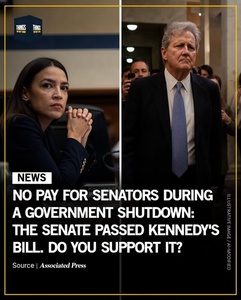
A new fight over government shutdowns is putting members of the U.S. Senate under an unusually bright spotlight. The message featured in the image is blunt: “NO PAY FOR SENATORS DURING A GOVERNMENT SHUTDOWN.” Behind that message is a resolution pushed by Sen. John Kennedy of Louisiana that seeks to make senators share at least part of the financial consequences when Congress allows a shutdown to occur.
The Senate moved on Kennedy’s proposal in May 2026, when lawmakers approved S.Res. 526, a resolution requiring the Secretary of the Senate to withhold senators’ pay during a government shutdown. Senate records show that the measure was scheduled for a vote after Kennedy had repeatedly argued that lawmakers should not continue collecting their salaries while federal employees are left without normal paychecks because of a funding lapse.
The argument behind the measure is straightforward but politically powerful. When the federal government shuts down, thousands of federal workers can face furloughs, delayed pay or uncertainty over when their next paycheck will arrive. Kennedy has argued that senators should not be insulated from the consequences of the political battles that produce those shutdowns. In his view, if lawmakers are unable to keep the government funded, they should at least experience some of the financial pressure created by that failure.
That idea has obvious political appeal, particularly at a time when frustration over Washington's repeated budget confrontations remains high. Kennedy's resolution was designed around the concept of “shared sacrifice” — the idea that senators should not be able to continue receiving their compensation as though nothing has happened while other government workers are dealing with the consequences of a shutdown. His office has described the measure as an attempt to put lawmakers' own financial interests closer to those of the people affected by shutdowns.
But there is an important detail behind the dramatic headline in the image.
The measure does not simply erase senators' salaries forever. Instead, it establishes a mechanism for withholding their pay during a period in which a government shutdown is in effect. That distinction matters because congressional compensation is protected by constitutional rules, including the 27th Amendment, which places restrictions on changing lawmakers' compensation during a congressional term. Earlier congressional research has documented the long-running legal and political debate surrounding attempts to stop or withhold congressional pay during shutdowns.
Kennedy has been pushing this idea for months rather than introducing it as a one-time response to a political crisis. An earlier Kennedy resolution, S.Res. 493, was introduced in November 2025 and similarly sought to reduce or withhold senators' pay when a government shutdown occurs. The proposal was specifically structured around the number of days a shutdown remains in effect.
The political symbolism is just as important as the mechanics.
For ordinary Americans, a government shutdown can feel like a contradiction: Washington's political system stops functioning normally, federal workers may go without timely pay, government services can be disrupted, yet elected officials are often perceived as being protected from the same consequences. Kennedy's proposal attempts to attack exactly that perception by putting senators' pay directly into the shutdown debate.
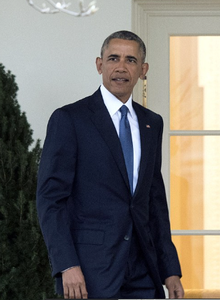
And that helps explain why the image places a Democratic lawmaker alongside Kennedy. The visual contrast turns what might otherwise be a procedural Senate resolution into a much broader political question: Should the people responsible for keeping the government open be financially punished when they fail?
There is also a partisan dimension to the debate. Shutdowns rarely happen because of one individual senator or one political party acting alone. They generally emerge from larger disputes over spending priorities, policy demands and the willingness of opposing factions to accept a temporary funding agreement. That means a “no pay during shutdowns” policy could affect senators from both parties, regardless of who ultimately receives the blame for a particular funding crisis.
The Senate's action therefore creates an unusual political incentive. If lawmakers know that every day of a shutdown could affect their own compensation, supporters of the measure argue that they may have greater motivation to negotiate before a funding deadline turns into a full-blown shutdown.
Yet critics could raise a different question: Would withholding congressional pay actually prevent shutdowns, or would it simply give politicians another weapon to use against one another?
The resolution's passage is significant, but it also highlights a larger problem that Washington has struggled with for years. Government funding fights are rarely just about money. They can become battles over immigration, national security, health care, spending priorities, executive power and the political direction of the country. A rule affecting senators' pay cannot by itself resolve those disagreements.
Still, Kennedy's measure changes the optics. Instead of federal employees being the only workers visibly affected by a shutdown, senators themselves would face a direct financial consequence under the Senate's new policy. The Senate's passage of S.Res. 526 by voice vote marked a clear step in that direction.
Comments (0)
Loading comments...
May You Like
TRUMP HIT WITH 26 ARTICLES OF IMPEACHMENT
gfnhgmnghnmfgnbvvvvvvvvv

South Korea–Ukraine Rift Deepens Over North Korean POW Transfer as PURL Draws New Scrutiny