
SHOCKING DIPLOMATIC MELTDOWN
Trump Calls Iran a ‘Failed Nation’ — But the Facts Tell a More Complicated Story
A stark White House message collides with Iran's continuing military capabilities, diplomatic negotiations and economic pressures.
President Donald Trump's description of Iran as a country that is effectively finished has resurfaced in a heated debate over the U.S.-Iran war. His declaration was unusually sweeping, but the political and military reality is more complicated than the words suggest.
On August 31, 2026, Trump wrote on Truth Social that Iran was officially a failed nation and described its condition in stark terms. He claimed the country's armed forces, currency and government institutions had suffered devastating losses.
The statement came amid months of warfare, threats to regional shipping and unsuccessful efforts to establish a durable diplomatic settlement. Trump framed his assessment as evidence that U.S. pressure had achieved much of its strategic objective.
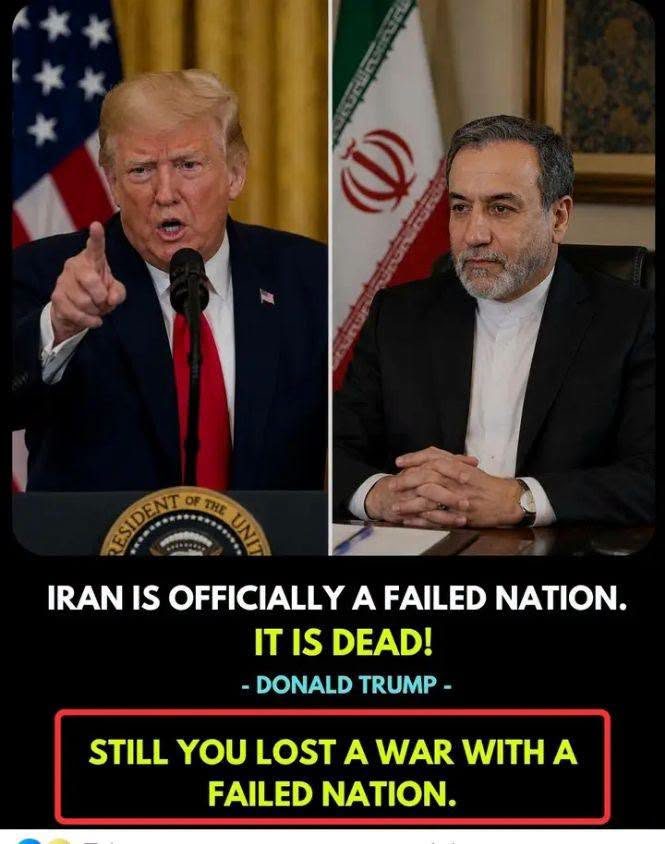
One phrase from the post became particularly prominent online: Iran, in Trump's view, was dead. That was a political characterization, not an independently established measure of the country's functioning.
Trump's broader message alleged that Iran had lost its naval and air power, that its currency had collapsed and that government personnel were not being paid. He also cited an extraordinary inflation figure. Each of those assertions requires separate evidence rather than being accepted as a single verified conclusion.
The war has caused major damage to Iranian military infrastructure. Yet damage to an air base, ship or missile installation does not by itself demonstrate that an entire country's armed forces have ceased to exist.
Iran has also retained a leadership structure and the ability to make demands through negotiators. Its continuing role in regional security disputes is one reason U.S. and allied officials remain concerned about further retaliation.
Economic pressure is another key part of the story. Conflict, sanctions and disruption to international trade can sharply weaken a currency and raise household costs, placing intense pressure on ordinary families.
Still, describing a country as economically dead is different from documenting specific indicators such as inflation, employment, purchasing power, currency exchange rates or the ability of government agencies to operate.
Trump's remarks also contained allegations about the number of protesters killed inside Iran. Such casualty claims must be checked against transparent methodology and independent documentation, particularly during conflict when reliable reporting can be difficult.
Iran's foreign minister, Abbas Araghchi, has insisted that Tehran's core demands must be met before a comprehensive agreement can move forward. Those demands have included relief from sanctions and an end to restrictions affecting maritime commerce.
By early November, indirect negotiations mediated by Qatar were still underway. The talks focused on how to end hostilities and address shipping through the Strait of Hormuz, a vital corridor for global energy supplies.
That strategic waterway is a reminder that even a weakened Iran can affect markets well beyond its borders. Insurance costs, tanker movements and fears of fresh attacks can raise the economic price of continued confrontation.
For the White House, emphasizing Iranian weakness has a political purpose. The administration wants to portray military pressure as successful while preserving the option to demand further concessions at the negotiating table.
For Tehran, accepting that narrative would undermine its bargaining position. Iranian leaders have instead stressed sovereignty, resistance to outside pressure and what they portray as their right to negotiate without coercion.
The domestic U.S. debate is equally intense. Critics question the costs of the conflict and the administration's claims of decisive victory, while supporters argue that military pressure has reduced threats to American interests and allies.
The November 3 midterm elections added another political dimension. Iranian officials interpreted Democratic gains as a rebuke of Trump's war policy, though election results cannot be reduced to a single foreign-policy issue.
Recent reporting also indicates that both sides continue preparing for the possibility of more fighting even as intermediaries explore a deal. Military readiness and diplomatic contact can occur at the same time.
The essential distinction is between an emphatic presidential claim and verifiable outcomes. Iran has suffered serious losses, but the existence of its institutions, armed forces, diplomats and ability to disrupt the region means the country cannot simply be treated as nonexistent.
Whether Trump ultimately secures a negotiated settlement or chooses more force will matter far more than the language of one social media post. For the region and the wider economy, the unresolved question remains whether this confrontation ends at the negotiating table or moves into another cycle of attacks.
Comments (0)
Loading comments...
May You Like

TRUMP CALLS GDP FIGURE “FAKE” AFTER GOVERNMENT’S SCHEDULED REVISION

$1 BILLION DISASTER AT BANGCHAK REFINERY, THAILAND—40 BURNED, 8 AMERICANS DEAD!

NYC EMERGENCY—MILLIONS FACE EVACUATION RISKS, MACY'S GIANT BALLOONS REMOVED FOR SAFETY!

Latest Posts






Popular Posts





