SHOCKING ELECTION UPSET! A major blue state just flipped red. Read the story. #USPolitics
Election Shock or Viral Hype? The Truth Behind Claims That a Blue State Has Turned Red


WASHINGTON, D.C. — October 26, 2026
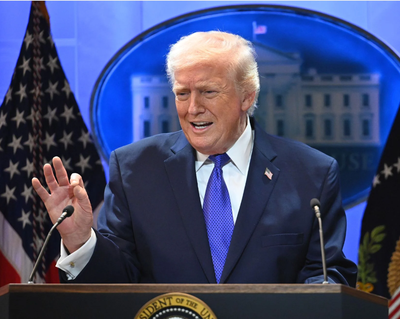
A dramatic political headline is circulating online, declaring an election stunner and claiming that a blue state has suddenly flipped red. Featuring President Donald Trump alongside a red-and-blue electoral map, the graphic suggests a major Republican breakthrough that could reshape America's political landscape.
But beneath the bold typography and confident message lies a crucial question: Which state supposedly changed political allegiance, and what election produced the result?
The image provides no state name, candidate, vote totals, election date, or identifiable race. Without those essential details, readers cannot independently determine what event the headline is describing or whether the claim is accurate.
The timing makes the claim particularly important. Americans are approaching the November 3 midterm elections, a contest that will determine the balance of power in Congress and influence the final two years of Trump's current presidential term.
Unlike a presidential election, the midterms do not determine who occupies the White House. Instead, voters choose members of the House of Representatives, a portion of the Senate, and various state and local officials.
The results could significantly affect Trump's ability to advance his legislative agenda. If Republicans retain control of Congress, the administration could find it easier to pursue its priorities. If Democrats gain seats and take control of one or both chambers, congressional oversight and legislative negotiations could become considerably more difficult.
Trump remains a central figure in the Republican Party. His endorsements, campaign appearances, and ability to mobilize loyal supporters continue to influence Republican candidates across the country.
However, his political influence does not automatically translate into victories in every state. Local concerns, candidate quality, economic conditions, turnout, and the political preferences of independent voters can all affect election results.
Recent special elections have offered Democrats reasons for optimism. According to published election tracking through September 2026, Democrats had flipped 13 previously Republican-held state legislative seats since Trump returned to office, while Republicans had not flipped any Democratic-held state legislative seats during that period.
Those results do not guarantee a Democratic victory in November. Special elections typically attract fewer voters than general elections, and individual legislative districts can behave differently from an entire state. Nevertheless, the pattern challenges any suggestion that Republicans have already achieved a sweeping series of victories over traditionally Democratic territory.
The distinction between a state changing party control and an individual legislative seat changing hands is equally important. A Democrat winning a previously Republican-held district does not turn the entire state blue, just as a Republican victory in one Democratic-held district does not necessarily make the state red.
Political maps can also be misleading when presented without context. Some maps display presidential results from a previous election, while others illustrate congressional districts, state legislative seats, polling averages, or hypothetical electoral scenarios.
A map dominated by red therefore does not necessarily show a new Republican victory. It might represent historical voting patterns, an earlier election, or a graphic designed to communicate a political argument rather than report a newly confirmed result.
For Republicans, the central challenge is turning Trump's continued influence into broad electoral support. The party must defend competitive congressional districts while persuading voters that its policies address their concerns about the economy, immigration, public safety, and government spending.
Democrats face a different but equally demanding task. They must convince voters that they offer credible alternatives on household costs, health care, employment, and the country's economic direction. Criticizing Trump may energize their base, but winning competitive races will require support beyond committed Democratic voters.
The economy could play a decisive role in determining which party gains ground. Families continue to evaluate political leaders through everyday experiences, including grocery bills, rent, mortgage payments, fuel costs, and access to affordable health care.
Campaign messaging will also matter. Republicans are likely to emphasize their legislative achievements and argue that continued control of Congress would protect the administration's agenda. Democrats will seek to frame the election as an opportunity to impose greater accountability and change the direction of federal policy.
For Trump personally, the midterms represent a test of his political standing beyond the Republican primary electorate. A strong Republican performance would strengthen his claim that his agenda retains broad support, while substantial Democratic gains would increase pressure on his administration.
Yet neither party can claim victory before voters have cast their ballots and election officials have counted the results. Polls can indicate trends, but they are not election results, and political predictions should never be confused with confirmed outcomes.
The viral headline illustrates a wider problem in modern political communication: dramatic claims can travel much faster than the evidence needed to evaluate them. A compelling image can attract millions of views even when it leaves out the basic information required to establish what happened.
Readers should therefore look for the name of the state, the specific office being contested, the election date, and verified results from election authorities or reliable reporting. If those details are missing, the most responsible response is to withhold judgment rather than accept the headline at face value.
As November 3 approaches, both parties have reasons to believe they can shape the next chapter of American politics. Republicans are counting on Trump's influence and their existing electoral strengths, while Democrats are hoping voter dissatisfaction will translate into meaningful gains.
The bottom line: The image does not establish that a blue state has flipped red. The real election story is still unfolding, and the results of the November midterms will provide a far clearer measure of Trump's political strength and the country's changing electoral mood.
Comments (0)
Loading comments...
May You Like


Latest Posts










Popular Posts